10 Thoughts After Finally Watching ‘The Notebook’
Think everyone has seen 'The Notebook'? Think again. Here are some thoughts from a 'Notebook' first-timer 20+ years after it became a hit.


I’m not sure when I first realized The Notebook had become a big deal. I missed Nick Cassavetes’ adaptation of Nicholas Sparks’ bestseller—the third Sparks novel to make it to the big screen after Message in a Bottle and A Walk to Remember—when it played theaters in 2004, and Scott’s review for The A.V. Club didn’t make me want to rush out to see it. In fact, at both The A.V. Club and The Dissolve, Scott tended to be put on the Nicholas Sparks adaptation beat, and his reports back from the frontline didn’t suggest I needed to seek out, say, Dear John, when I had other options. (Though I did review The Lucky One and I know I saw Safe Haven because I’ll never forget its nutty twist, which makes Remain, Sparks’ upcoming collaboration with M. Night Shyamalan, seem like a less-random pairing than it might appear at first.)
Still, just because I ignore a movie doesn’t mean everyone else does, and rather than fading slowly over the horizon like gulls swooping over the picturesque Outer Banks beach community of Rodanthe, The Notebook has stuck around, becoming one of the defining romantic dramas of its era. At some point, The Notebook became one of those “What do you mean you haven’t seen it?” movies and, as I sometimes like to do with such movies here at The Reveal, I decided to catch up with it, see what I’ve been missing, and offer some thoughts.
It’s more or less the movie I imagined it would be but not the movie I feared.
Let me state up front that I found The Notebook more compelling than I thought I might despite not being that different from the soppy romance I assumed it would be. I knew going in, for instance, that the plot hinged (spoiler that the film doesn’t do too much to hide ahead) on an elderly man reading an autobiographical reminiscence to the love of his life, whose dementia makes it impossible (at first) for her to realize she’s hearing their shared love story. That’s a premise that suggests toxic levels of sentimentality and while The Notebook doesn’t do that much to reduce those levels, it at least lowers them to a point where they make the eyes water without burning the skin.
The Notebook often reminded me of The Bridges of Madison County. It’s not as good as Clint Eastwood’s 1995 adaptation of James Waller’s inescapable bestseller, which I would rank (and have ranked) quite high in Eastwood’s formidable filmography. But, like Bridges, The Notebook feels like a film in which everyone involved is trying in earnest to mine what’s true and resonant from the source material, even if that requires a lot of digging.
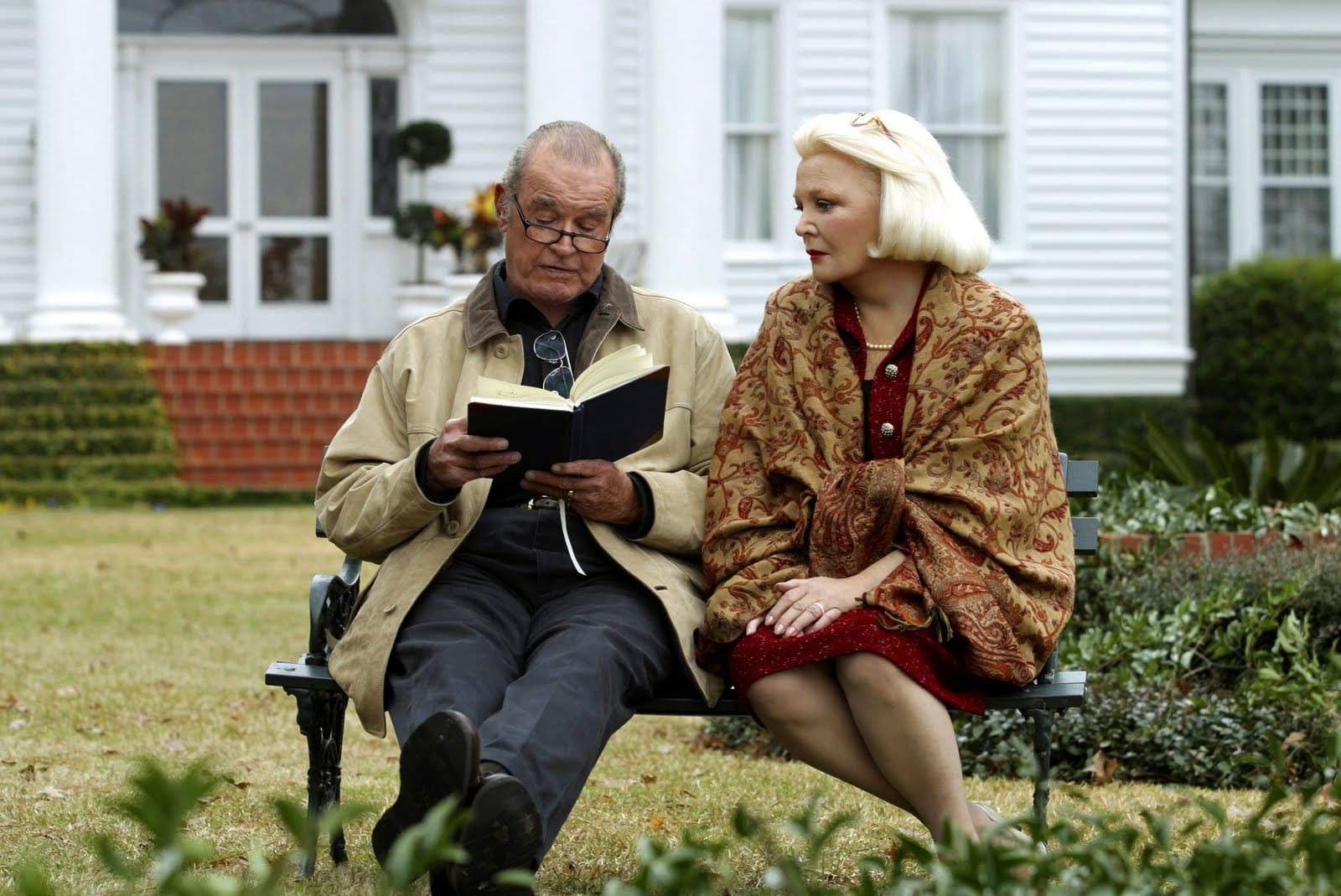
Time has made its framing device even more bittersweet.
One advantage The Notebook has over Eastwood’s film: where Eastwood brought in a bunch of stiffs to play the grown children of Meryl Streep’s character for its present-day scenes, The Notebook features James Garner and Gena Rowlands as, respectively, the senior citizen versions of the film’s protagonists Noah (Ryan Gosling) and Allie (Rachel McAdams). Seeing them play characters near the end of their lives has an added resonance now that they’re no longer with us.
Garner was 76 when The Notebook arrived in theaters. Rowlands was 73. But they still seemed like titans who’d be around forever. Garner died in 2014 and, apart from a role in the obscure 2006 film The Ultimate Gift (which was apparently produced as part of a Ponzi scheme), this was his last live-action work. Rowlands died in 2024 at the age of 94, ten years after making her final film. We’ve also lost Sam Shepard, who plays Noah’s father in the 1940s segments that make up the lion’s share of the movie. In 2004 their presence couldn’t have had quite the effect it has now. Now they’re further reminders of the passing of time and the inevitability of loss in the midst of a film that explores the same themes.
Time has also cast Ryan Gosling and Rachel McAdams’ performances in a different light.
In 2004, Gosling and McAdams were both relative newcomers to the big screen. Gosling had done time as part of The New Mickey Mouse Club, guest starred on numerous TV series, and played the hero of the short-lived Young Hercules before back-to-back roles in Remember the Titans and, especially, The Believer, established him as a formidable young talent. The Notebook debuted mere weeks after Mean Girls, the film that gave McAdams her breakout role (unless you count The Hot Chick).
That both were good was already obvious in the early ’00s. Less obvious: just how compelling they’d remain more than two decades later. Watching The Notebook now, it’s easy to appreciate Gosling and McAdams’ performances as part of a larger body of work. Gosling mixes impishness with intensity. His performance suggests Noah’s love for Allie might become a dangerous obsession, even if it never quite does. (It does inspire him to grow a scraggly beard, however.) As a character who seemingly can’t help expressing every emotion the moment it comes to the surface, McAdams delivers a movingly openhearted performance. These are skills that would serve both well in the work that followed and go a long way toward making The Notebook feel like the story of human beings, not stock characters stuck in the familiar plot mechanics of a tale of forbidden love.
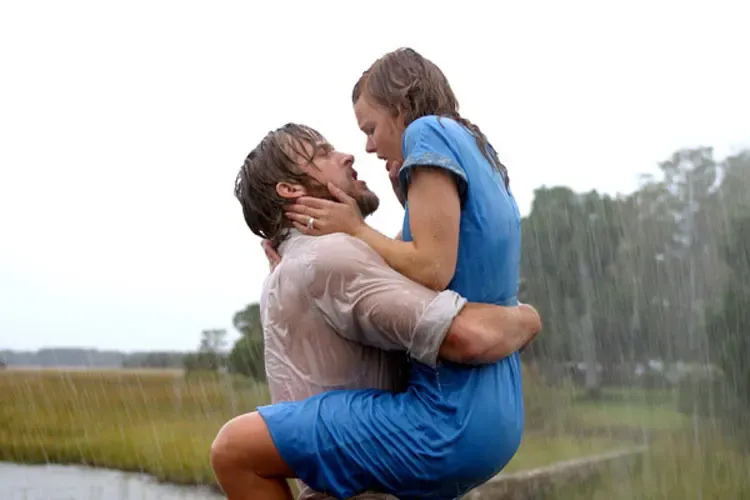
It’s tastefully horny.
This post is for paying members only
Sign up now to read the post and get access to the full library of posts for subscribers only.
✦ Sign up