Drive-In ’76: ‘Family Plot,’ ‘Sparkle,’ and ‘Goodbye Bruce Lee’
The debut of a new miniseries surveying movies debuting in the warmer months of the Bicentennial kicks off with Hitchcock’s swan song, a Supremes-inspired rise-and-fall story, and a tacky “tribute” to a fallen star.


Each month, from April through September, Drive-In ’76 will feature a triple feature (or maybe more) drawn from drive-in fare fifty years past, from big Hollywood releases to low-budget exploitation movies that played in the wee hours of the night.
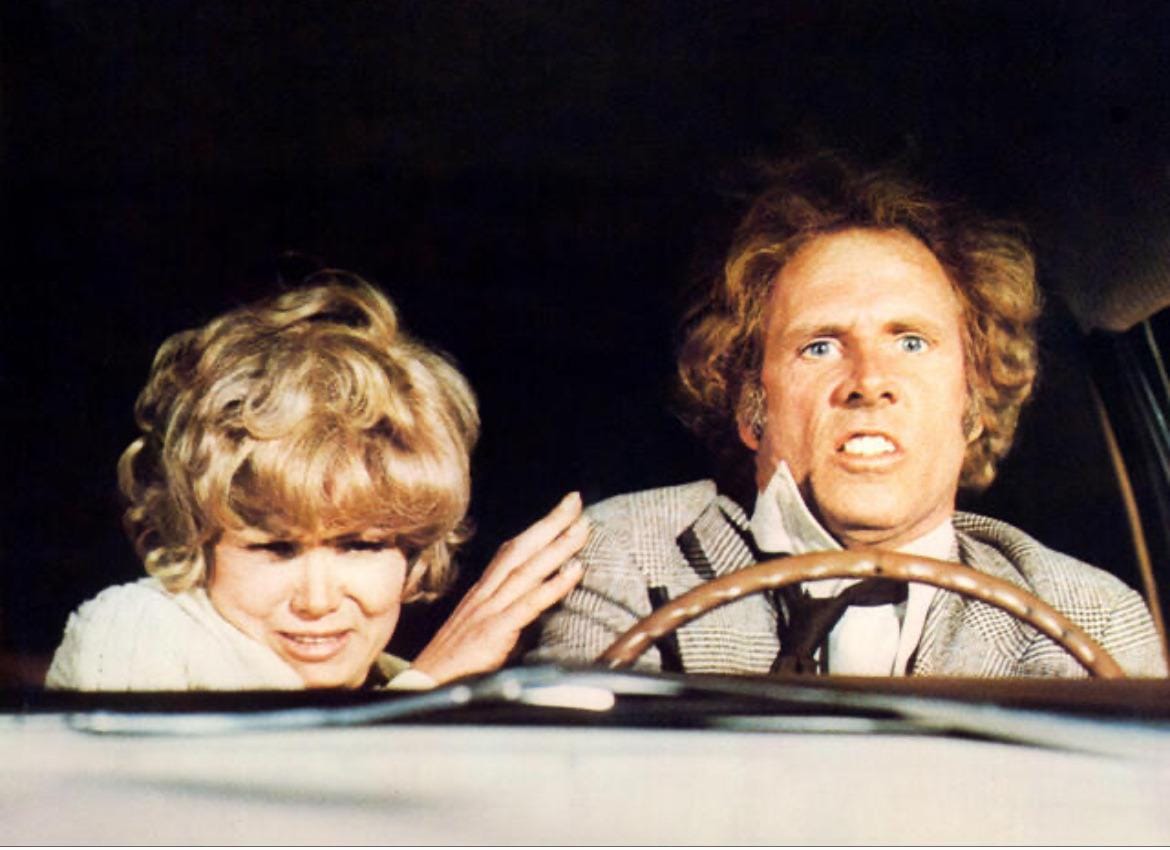
Feature One: Family Plot (released April 9, 1976)
The night begins with a major motion picture from a big Hollywood studio.
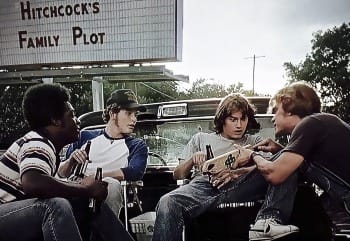
As the sun starts to set on their unnamed Texas town, the teenaged characters of Richard Linklater’s Dazed and Confused make plans for the night, last-day-of-school acts of debauchery involving booze, weed, and hazing. They don’t even seem to notice the drive-in marquee looming over the parking lot where senior girls are subjecting incoming freshmen to ritualized humiliation. But chances are, they’ll get around to seeing Family Plot, Alfred Hitchcock’s final film, sooner or later, if they haven’t already. There’s only so much to do in a town like that, and in towns like it across America. And while drive-in theaters, though not as popular as at their post-War heights, would soon experience a severe blow with the popularization of home video, that was a few years in the future. In the summer of 1976, the drive-in remained a spot to see a movie. Or two or three.
It was destined to be a strange movie summer. The previous year, Jaws had set the stage for the blockbuster era. One year later, Star Wars would fully usher it in. The end of 1976 would see the arrival of one film designed to be a gargantuan global event—Dino De Laureanitis' remake of King Kong—and Rocky, a less-expected hit that became an unlikely franchise-starter, despite originating as a personal film in an era when no one thought in terms of franchises. The blockbuster future might have been inevitable, but the late spring, summer, and early autumn still felt like an in-between era. For some types of film, it also served as a kind of last hurrah, or at least the last moment they could be the center of the moviegoing world. The middle months of 1976 played host to late New Hollywood classics like All the President’s Men and humongous old Hollywood-style efforts like Midway but also Logan’s Run, a dystopian ’70s science fiction film of the sort Star Wars would effectively make obsolete, and an assortment of low-budget genre films of the sort, in time, the success of Jaws and the blockbusters that followed would help elevate.
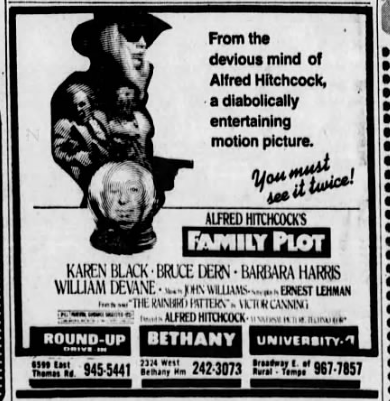
Yet nothing now marks 1976 as the end of an era quite as strikingly as the release of Family Plot, Hitchcock’s swan song, albeit one its director did not plan as such. In many respects, Hitchcock had already made an ideal last movie. Released in 1972, Frenzy returned Hitchcock to his London birthplace after a long absence for a story of a serial killer, the subject of his first great success in 1927, the Jack the Ripper-inspired The Lodger: A Story of the London Fog. Received more warmly than other recent Hitchcock efforts like Topaz and Torn Curtain, Frenzy circled back to Hitchcock’s beginnings via a film filled with tricks and obsessions picked up over the decades—and one whose violence proved Hitchcock could still push boundaries and stir controversy.
Enjoying this free piece from The Reveal? Now's a great time to become a paid subscriber. You'll get access to everything we publish—from articles to audio commentaries—and help support independent film criticism.
As neat an ending as Frenzy might have provided, real life isn’t as fond of tying things up with a bow as movies are. Hitch pressed on, despite his accumulating health problems and those of his wife and collaborator Alma Reville. For his next project, he turned to his North by Northwest screenwriter to help him adapt Victor Canning’s 1972 novel The Rainbird Pattern, which he hoped to reshape into a light, comedic work. It was, by Lehman’s account, a difficult collaboration, one that began pleasantly enough with long brainstorming sessions but devolved into the two primarily communicating with each other via notes.
That breakdown might at least partly be responsible for the film’s looseness as it tells a story that follows two tracks, though the film gets more compelling as those tracks begin to converge. Barbara Harris and Bruce Dern play, respectively, George and Blanche, a California couple who scrape together a living in a variety of ways. George is an out-of-work actor who drives a cab. Blanche is a phony psychic who, as the film opens, has been hired by the wealthy Julia Rainbird (Catherine Nesbitt) to track down the long-lost nephew her sister gave up for adoption as an infant in the hopes of making him her heir. No one is aware that the boy has done pretty well for himself, albeit via shady means, having grown up to become Arthur Adamson (William Devane), the proprietor of a jewelry store who’s developed a sideline in for-profit kidnappings that he performs with the help of his lover Fran (Karen Black, reuniting with Harris one year after Nashville).
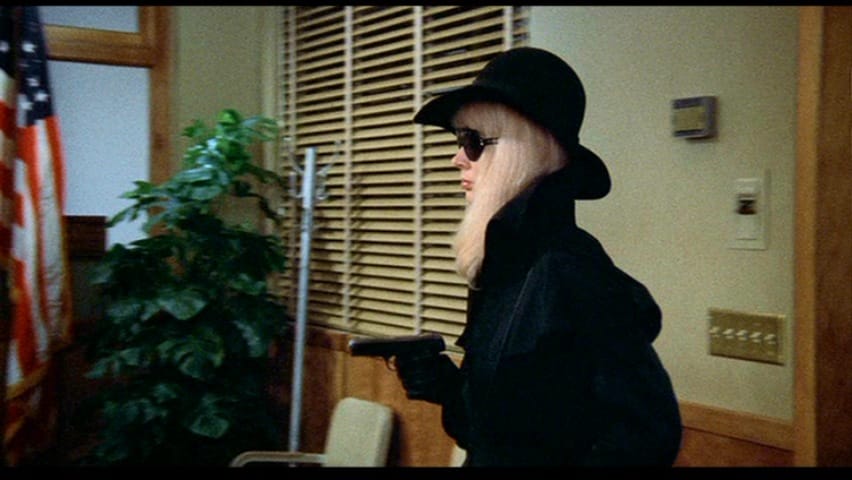
Hitchcock’s 53rd feature plays less like the work of a filmmaker attempting a grand final statement than of one just making another movie aligned with his well-established abilities. (And the director, who died in 1980, had hoped to make a follow-up, even calling in Lehman again for an unrealized project that sounds like it was better off never being made.) Though it can be a little disorienting to see a Hitchcock film filled with shaggy ’70s types, none shaggier than Dern, Family Plot still bears its creator’s unmistakable stamp. That’s not always evident in draggy, unremarkably staged expository scenes or a seemingly endless descent down a mountainside road in a car with sabotaged brakes that the film attempts to play for laughs. But key set pieces, like one in which Arthur and Fran drug and abduct a bishop in front of his entire congregation, have an audacious flare that recalls the director in his prime.
Not everyone was persuaded. Family Plot performed modestly and attracted mixed notices. (Gene Siskel opened his Chicago Tribune review bluntly: “The new Alfred Hitchcock film is a disappointment.”) But the film has a breezy charm in spite of its slack pace. It also feels like an attempt to retreat while others pressed on. The graphic violence of Frenzy, most of it directed at women, saw Hitchcock taking advantage of the era’s relaxed standards, but the film also suggested that the subtext of his work often worked best as just that: subtext. Patrick McGilligan’s 2003 biography Alfred Hitchcock: A Life in Darkness and Light describes Hitchcock’s habit of keeping up with the films of the day. Did he recognize that those he’d influenced—Brian De Palma, but also all the giallo films and lurid thrillers made possible by Psycho—were better equipped to explore some of the dark cinematic territory he’d helped carve out? Perhaps that explains Family Plot’s swerve to blitheness and why it ends with a touch that Lehman hated but Hitchcock insisted upon: a smiling Blanche, having escaped a dire fate, turns directly to the camera and winks. The moment caps the director’s career with a mischievous, fourth wall-breaking gesture that—as some at the time might have suspected, but nobody knew for sure—doubles as a last goodbye.
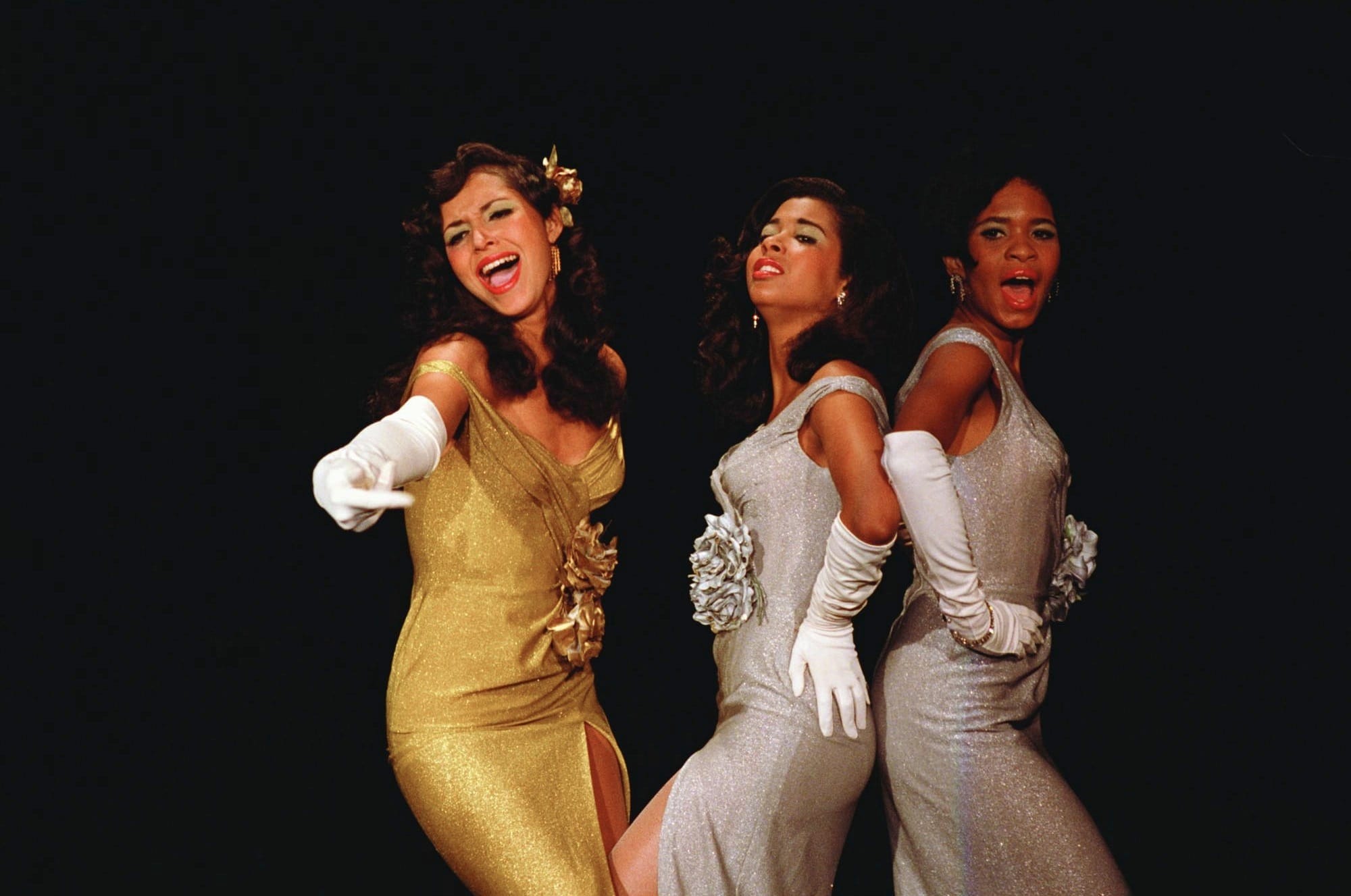
Second Feature: Sparkle (released April 9, 1976)
Let’s all go to the concession stand and get ourselves a snack before the next movie begins.
“Are Black Films Losing Their Blackness?,” asked the headline of an April 25th Sunday-edition thinkpiece by New York Times critic Vincent Canby, partly inspired by the recent release of Sparkle. The core of Canby’s argument concerned his sense that “the bottom has dropped out of the market for black exploitation films,” specifically:
those supercharged, bad‐talking, highly romanticized melodramas about Harlem superstuds, the pimps, the private eyes and the pushers who more or less singlehandedly make whitey's corrupt world safe for black pimping, black private‐eyeing and black pushing.
Taking their place? In Canby’s words, “black films that you don't have to be black to respond to favorably, or to find dreary and pretentious or foolish and inept.”
That is, to put it kindly, a clunky and reductive description of blaxploitation movies, to say nothing of such films’ crossover appeal, the assumed taste of Black moviegoers, and the meaning of the word “blackness,” but Canby’s observations weren’t entirely off base about the moment’s trends. Blaxploitation had peaked by 1976, but its success helped open the door for a wider variety of films with Black talent (in front of, if not always behind the camera). It’s a door that the failure of The Wiz in 1978 would more or less slam shut for years. Hollywood has rarely needed much of an excuse not to foreground Black voices. But the mid-1970s still made room for a mid-budget musical melodrama like Sparkle, a film inspired by the experiences of Black artists in the music industry of the 1950s and 1960s.
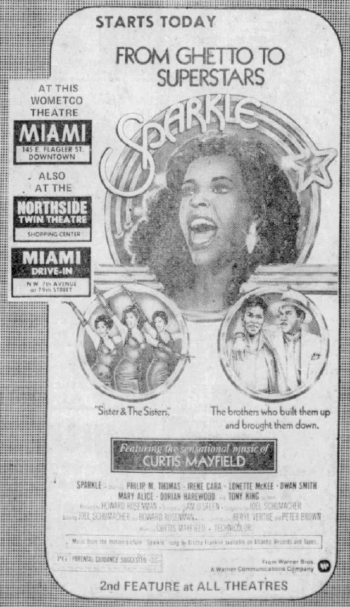
Directed by ace editor Sam O’Steen (who’d won his second Oscar two years earlier for his work on Chinatown and really excels at the montage sequences here) and written by debuting screenwriter Joel Schumacher, Sparkle is the story of three singing sisters—Sister (Lonette McKee), Sparkle (Irene Cara), and Delores (Dwan Smith)—who put together an act in late ’50s Harlem. As the title suggests, it’s Sparkle who emerges as the star, but only after Sister embarks on a tragic relationship with an ambitious hustler named Satin (Tony King). Philip Michael Thomas co-stars as Stix, Sparkle’s love interest, who becomes her chief professional champion.
The film packs a lot of plot into a 98-minute running time that already (rightly) gives a lot of space to performances of Curtis Mayfield’s original songs. (Aretha Franklin would score a hit album with her covers of the songs and “Something He Can Feel” would later be a hit for En Vogue.) After a strong beginning, Sparkle starts to feel rushed and overcrowded while also leaving several seemingly important subplots unresolved, but McKee and Cara are quite good as temperamentally opposed siblings. And apart from an abrupt happy ending that doesn’t make much sense in context, Sparkle doesn’t sugarcoat the abuse and exploitation its female characters face—both within and without the racist music industry—or draw a line between the bad old days of the recent past and its ’70s present. What’s more, it certainly gives audiences plenty to hum on the way home.
Final Feature: Goodbye Bruce Lee: His Last Game of Death (released April 16, 1976)
But wait. There’s more. And this one’s a weird one.
Bruce Lee’s death in 1973 created a vacuum that no one could fill. That didn’t stop scores from trying anyway, via a dozens of homages, tributes, and rip-offs now known as “Bruceploitation,” featuring stars like Bruce Tai, Bruce K.L. Lea, Bruce Ly, Bruce Le, Bruce Lei, Dragon Lee, and so on. It’s tempting to call Goodbye Bruce Lee: His Last Game of Death one of the more bizarre and tasteless examples of the subgenre, but when a film like Bruce Lee Fights Back from the Grave exists, is that really fair?
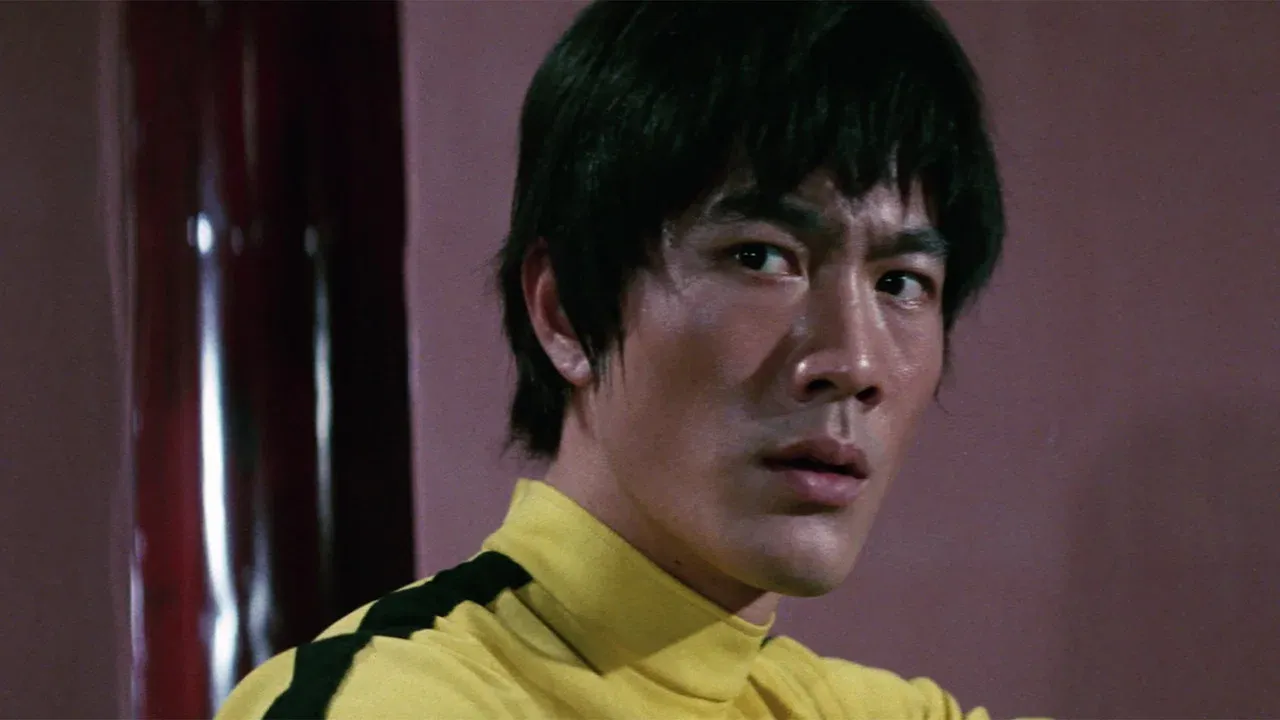
Before Lee died, he planned to resume work on the unfinished film Game of Death. The film was eventually completed, tackily, with a stand-in, in 1978, but images from Lee's unfinished version, in which Lee wears a striking yellow jumpsuit and matching Onitsuka Tiger Mexico 66 sneakers, had already been widely circulated by then. So had both Game of Death’s basic plot—in which Lee’s character ascends a tower and fights a new style of foe on each level—and the fact that it featured a fight scene with Lee’s friend Kareem Abdul-Jabbar.
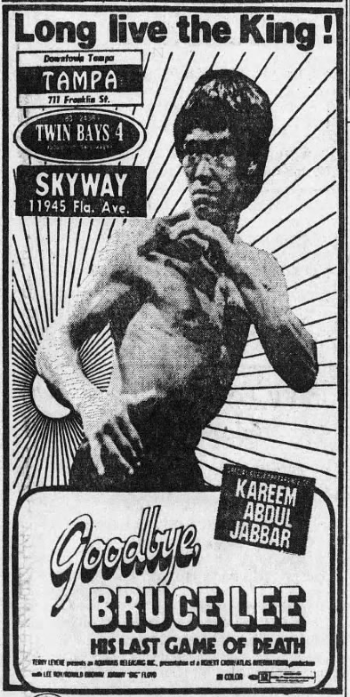
Enter Goodbye Bruce Lee: His Last Game of Death, which opens with some documentary footage about Lee, including a few seconds of an interview with Abdul-Jabbar (enough, the film’s marketing seems to have agreed, for the film’s ads to feature his name prominently), then segues into a story in which Taiwan’s Bruce Li, one of the more prolific Bruceploitation stars, is hired to replace him in Game of Death because of the striking resemblance between the two. (YMMV on that.) This in turn segues into a story in which Li’s character gets drawn into a criminal web and has to ascend a tower in which he fights a different variety of foe on each level—in actuality, the same cheap set barely redressed for each scene—while wearing a yellow jumpsuit. Earlier in the film, he fights an enemy wearing a basketball jersey who handles the film’s MacGuffin, a cardboard box filled with cash, like a basketball. If you squint and look at him from a great distance, the actor might be Kareem Abdul-Jabbar’s distant cousin.
Nonetheless, Goodbye Bruce Lee does have a catchy theme song called “King of Kung Fu,” recorded by the German rock band Kandy and co-written by an aspiring young lyricist named Rebecca DeMornay, who would eventually find other ways to appear in movies.
Sun’s coming up. Time to go home.
Discussion