No, But Seriously, War is Hell: John Woo’s ‘Bullet in the Head’
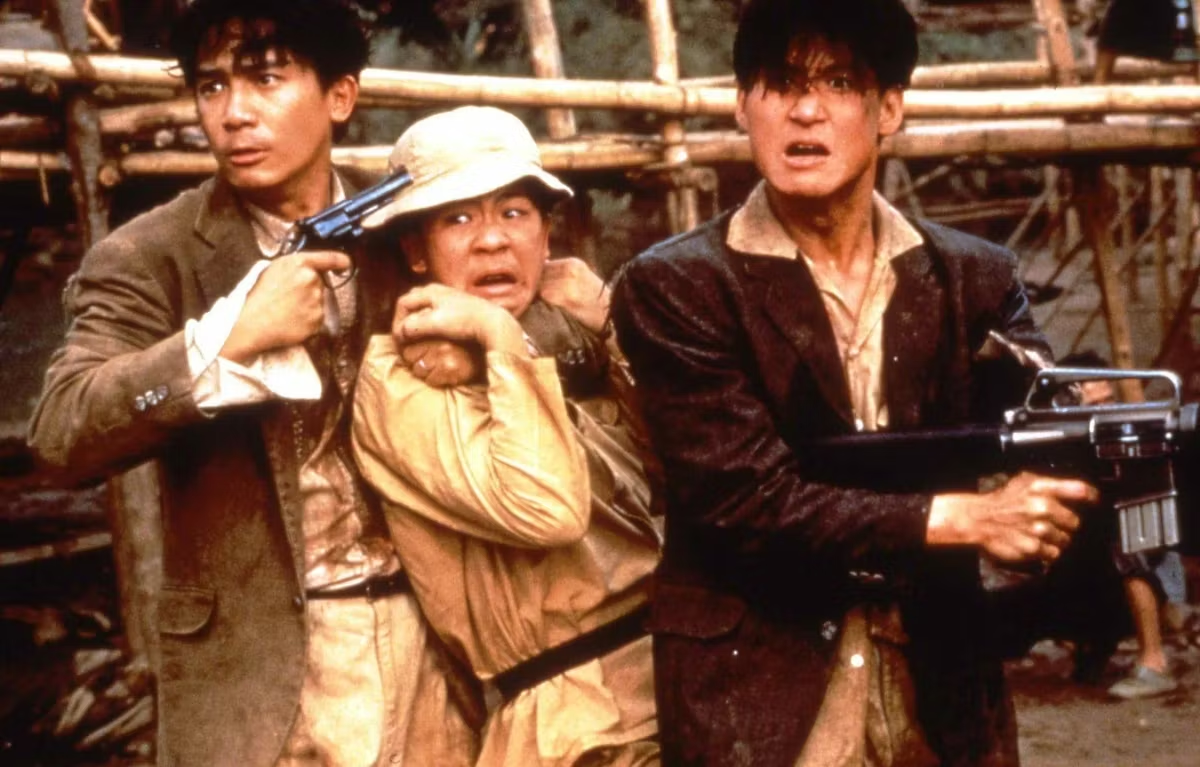
John Woo's 1990 film depicts the Vietnam War and, by extension, all wars, as hellishly anti-human.

In 2004, I found myself angry at Troy. This wasn’t entirely Troy’s fault. Written by David Benioff and directed by Wolfgang Petersen, the star-packed film restages the story of the Trojan War in the Lord of the Rings-inspired blockbuster style of the time. But Troy lacks the moral weight of Jackson’s Tolkien adaptation, to say nothing of that found in Homer and the other classical sources from which it borrows its plot. It depicts war as a tremendous spectacle, with only a few superficial nods to its costs. At another moment, that might not have bothered me as much, but Troy arrived in theaters as wars raged in Iraq and Afghanistan, conflicts that asked for the service and sacrifice of young men and women and their families with seemingly no end in sight. At the time, I suggested Troy’s depiction of war looked like “a particularly bloody spring-break excursion.” In 2004, it felt like a movie retelling a story that’s shaped our understanding of war for millennia had a responsibility to be more than that.
That might not have been fair. Speaking to Gene Siskel in 1973, Francois Truffaut said “some films claim to be antiwar, but I don’t think I’ve really seen an antiwar film.” Even war movies with more on their mind than Troy have a terrible glamor and invest the horrors they depict with discomforting excitement. In Jarhead, Anthony Swofford describes soldiers getting pumped up for the prospect of battle by watching Apocalypse Now and Full Metal Jacket. That seems like an application outside the hopes of their creators, but it’s also understandable. As horrifying as those films are, they're also thrilling.
I can’t think of a successful war movie that doesn’t fit that description in one way or another. Even a film like Come and See has an awful allure, making viewers bear witness to events they’d never want to experience in a place they’d never want to go but also, as the title suggests, making it hard to look away. And what’s true of film is no less true of literature. The final stretch of the Iliad uses a single body, the corpse of the Trojan hero Hector, as a focal point for the dehumanizing excesses of war. Homer swells on the despair into which Hector’s death and the subsequent abuse of his corpse—which Iliad describes at length—sends those who loved him. Even so, Homer’s battle scenes, in a word, rip.

This post is for paying members only
Sign up now to read the post and get access to the full library of posts for subscribers only.
✦ Sign up