Stallone Between the Rockys
'Rocky' put Sylvester Stallone on top of the world. Staying there would prove to be difficult.

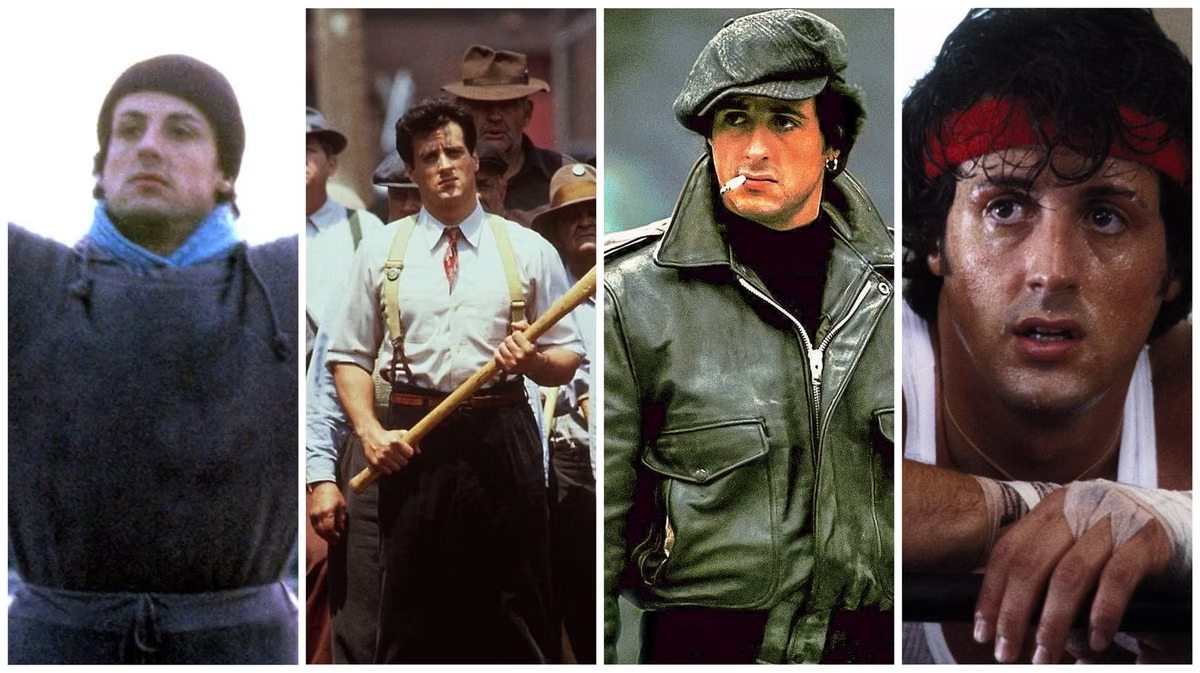
I Play Rocky doesn’t need that much legend-burnishing to turn Sylvester Stallone’s struggle to star in the 1976 classic Rocky into an inspiring story of unlikely success. (That doesn’t mean the film doesn’t indulge in some anyway). It’s a scrappy underdog tale about a down-on-his-luck actor who writes and stars in a longshot movie that goes on to become a tremendous hit and win three Oscars, including one for Best Picture. The film ends on a high note: Rocky is clearly destined for success. Stallone’s marriage to his wife Sasha is as solid as a marriage can be. And, in producers Irwin Winkler and Robert Chartoff, Stallone has found partners who believe in and support him in ways his abusive father never could. But where Rocky inspired numerous sequels and spin-offs, don’t expect I Play Rocky to do the same. Stallone’s story got a little less feel-good and a lot thornier in the years immediately after Rocky became a phenomenon.
That’s true professionally. To this day, Stallone is locked in a nasty (if seemingly one-sided) feud with Winkler over a lack of an equity stake in the Rocky franchise. It’s true personally. The Stallones were living apart by 1978 due to, in Sasha’s words, her husband wanting “more freedom to experience things.” They reconciled but eventually split for good in 1985. And it’s true creatively. Stallone proved, despite the doubts of the Hollywood establishment, that he could play Rocky. But what else could he do?
Enjoying The Reveal? Now's a great time to become a paid subscriber. You'll get access to everything we publish—from articles to audio commentaries—and help support independent film criticism.
In truth, he was already locked into his next project before Rocky even arrived in theaters. Stallone had started to pick up heat in the space between the completion of Rocky and the film’s release. He wasn’t yet a star, but those in the industry who’d seen the film sensed he would be. In his 2005 memoir This Terrible Business Has Been Good to Me, director Norman Jewison recalls getting a greenlight to make what would become his 1978 film F.I.S.T. on the condition that he could get Stallone as its star. He did, leading to what Jewison said was “the least fun I ever had directing.”
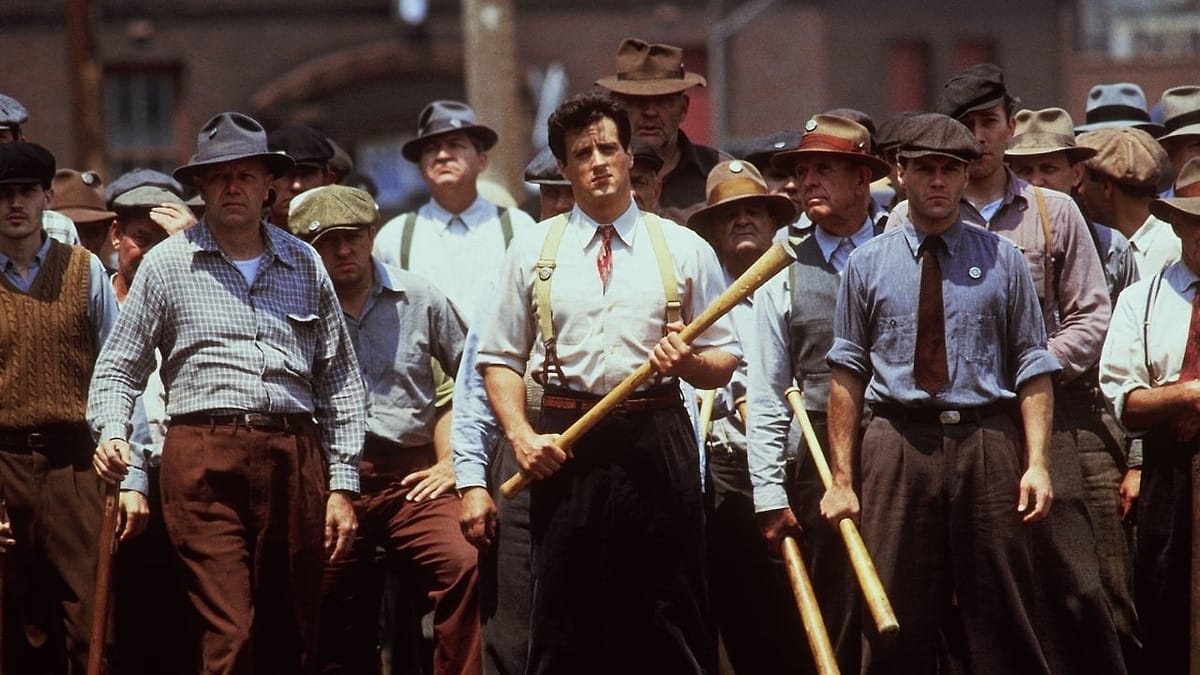
F.I.S.T. began as a series of articles for Rolling Stone by Joe Esztherhas, an investigative journalist who would soon pivot into full-time screenwriting. It’s a decades-spanning rise-and-fall story following the career of Johnny Kovak (Stallone), a loading dock worker in 1930s Cleveland whose charisma leads to him becoming a powerful leader of the Federation of Inter-State Truckers. But Kovak’s success comes at a price, as he gets drawn into the corruption beneath F.I.S.T.’s public-facing work. This includes a deal with the mob that leads to his high-profile downfall. (At the time, all involved would deny the film was a thinly veiled Jimmy Hoffa biopic, but Jewison for one abandoned that pretense in later years.)
“At first [Stallone] loved the story,” Jewison writes. “He loved doing something totally different after Rocky, but he ended up wanting to change history. [...] Sly had become so fixed in his hero role by then he simply couldn’t face that his Hoffa character wouldn’t be redeemed, wouldn’t survive and somehow win.” Specifically, as Stallone told journalist Bob Lardine at the time, his preferred version of the film would not have ended with Kovak’s death and Hoffa-like disappearance. Instead it would follow the character’s disastrous Senate hearing with a scene in which, in Stallone’s words, “His juices are flowing again. He’s rejuvenated. He looks toward the Senate building and throws up his fist in defiance.”
That vision of the film did not win out, but Stallone exerted his creative influence in other ways. Esztherhas had written a hefty script that Jewison and Stallone then reshaped, the latter enough to earn a writing credit to Esztherhas’ annoyance. (Per Jewison, Esztherhas and Stallone nearly came to blows on the set.) The result was a film that satisfied seemingly none of its creators. In a 1978 interview with Playboy, Stallone described his efforts as being “butchered.” He did little to promote the film, explaining in the same interview that “my performance was cut like a Jewison movie and I therefore felt that Norman should promote it.”
F.I.S.T., perhaps unsurprisingly, underperformed at the box office and drew mixed reviews in April 1978. (“F.I.S.T. stands for nearly 2 ½ hours of unmitigated boredom,” Richard Schickel wrote in Time.) It’s a much better film than its reputation would suggest, however. Jewison has Godfather-scaled aspirations that he can’t quite realize, but he gets surprisingly close at times, particularly in the film’s first half. Maybe that’s because it gives Stallone a chance to play out another underdog story. Kovak’s ascent, spurred by his mistreatment and the mistreatment of his fellow workers, feels at once unlikely and inevitable. Like Rocky Balboa, Kovak starts from the bottom only to discover he has abilities he didn’t know he possessed. For Kovak, it’s the charisma of a natural leader, which he uses, at least at first, to fight for workers’ rights—a process that plays out against a beautifully realized working-class Ohio backdrop. The later scenes, where Stallone plays a corrupted Kovak in middle age, aren’t quite as successful, but they do establish that Stallone has range, even if few would give him credit for that at the time.
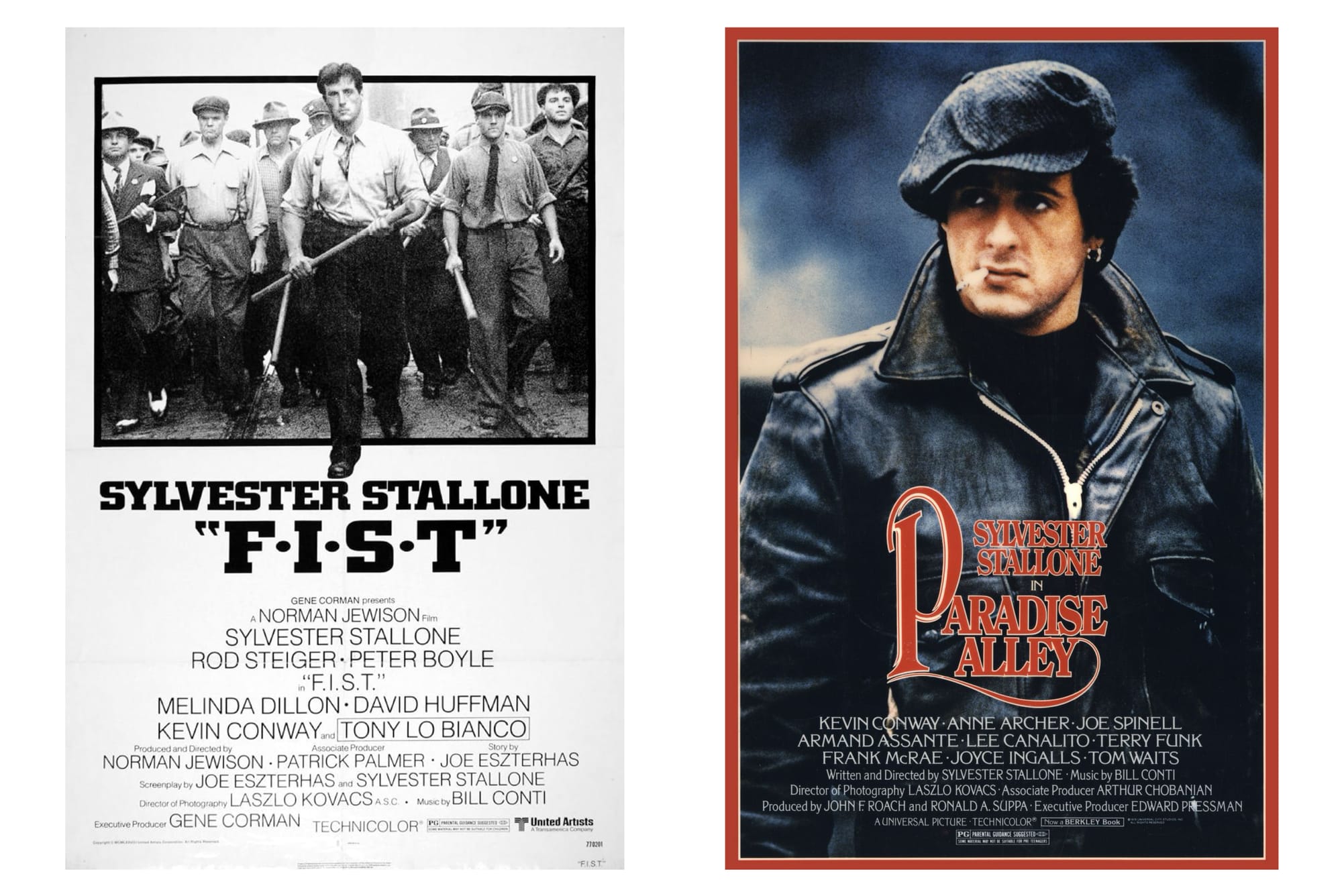
Stallone’s problems went beyond one movie’s dud reception, however. “Many people swear he bears no resemblance to the Sly Stallone of two years ago,” Bob Lardine wrote in the opening to another piece on Stallone written for New York News. “Something happened to him when Rocky rocketed him to international fame and millionaire status. They claim he’s now a surly, antisocial, arrogant egomaniac.” Whether or not it was a choice made out of egomania, Stallone decided to direct his next film himself. He’d sold the screenplay to Paradise Alley before his Rocky success and now had the clout to reclaim it and shape it into exactly what he wanted. Or so he thought.
He certainly had a vision for the film, which he also adapted into a novel released in May, months before the film’s scheduled release in September 1978. Set in 1940s Hell’s Kitchen, it’s the story of three Italian-American brothers. Cosmo (Stallone) is a ne’er-do-well who gets by (sort of) thanks to a series of street hustles that include begging on the street while posing as an amputee. He lives with his brother Victor (Lee Canalito, in real life a boxer who Stallone managed for a while), a good-natured, slow-talking, giant of a man who makes his money delivering ice. Their brother Lenny (Armand Assante), bitter and wounded after serving in World War II, works as an undertaker. After a long, shapeless stretch, the film eventually focuses on Cosmo and Lenny’s efforts to manage Victor’s wrestling career, one heavily focused on events in the seedy club that gives the film its title.
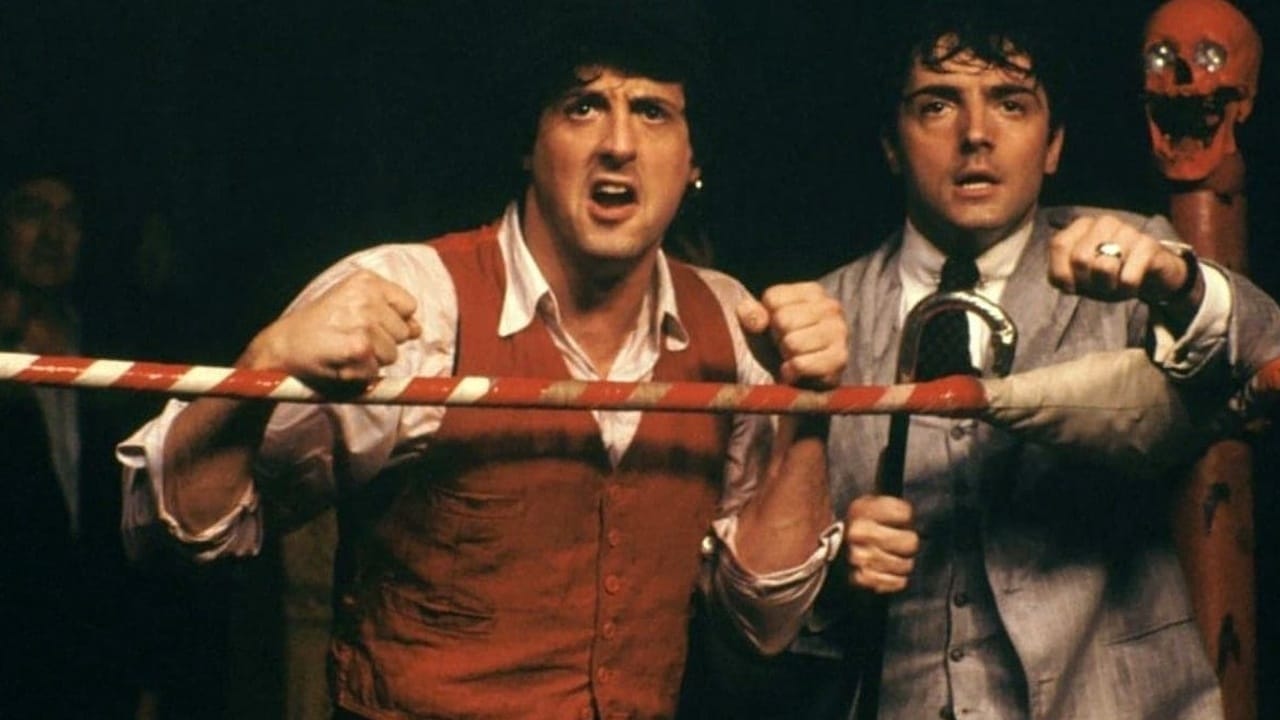
The film has its moments. Stallone clearly loves the milieu and fills Paradise Alley with details of a vanished New York. (And since it’s shot, like F.I.S.T., by László Kovács, it looks amazing.) But Paradise Alley is also disjointed in a way that makes its 107-minute running time feel much longer than F.I.S.T.’s. It has memorable individual scenes and performances—Frank McCrae’s especially good as a washed-up wrestler who lives backstage at Paradise Alley—but one incident never flows smoothly into the next, several characters seem to undergo wholesale personality changes without warning, and it lacks a moment in which Cosmo seems like anything but a charmless lout.
Some of the blame might lie elsewhere. Speaking to Roger Ebert in 1980, Stallone claimed that United Artists cut 40 scenes from the film, saying “I’ll never forgive myself for the way I allowed myself to be manipulated during the editing of that film. [...] There were a lot of scenes in there to give atmosphere and character, and they wanted them out just to speed things along.” Whether Stallone’s preferred version would have made Paradise Alley a good movie we’ll likely never know. But, as is, it plays like one that’s been cut apart and put back together repeatedly.
Stallone’s next film as a director and star would be Rocky II, released to great success in the summer of 1979. The film’s very existence now looks like an indicator as to the direction in which Stallone’s career, and Hollywood as a whole, would head in the next decade. Rocky famously ends with Rocky winning by losing. His victory comes from going the distance, learning to believe in himself, and embracing the love of Adrian (Shire). The story needs no continuation at all, much less one in which Rocky learns to win by, well, winning. Rocky II exists not because its story needed to be told but because it could be told, and told profitably.
That said, it’s not a bad movie, or an uninteresting one. There have been many possibilities suggested for the moment when downbeat, director-driven ’70s filmmaking gave way to the blockbuster mentality of the 1980s: The release of Star Wars in 1977, the failure of Heaven’s Gate in 1980, the premiere of One from the Heart in 1981. Let me throw out another one: Midway through Rocky II, a movie that began as a gritty look at the downside of fame and how it doesn’t always bring financial independence or personal satisfaction gives way to a crowd-pleaser in which our hero finally—finally—takes down the flashy champ Apollo Creed (Carl Weathers) and claims the title for himself. Never mind winning by losing. How about winning by winning? Forget personal triumphs. Let’s have some public ones!
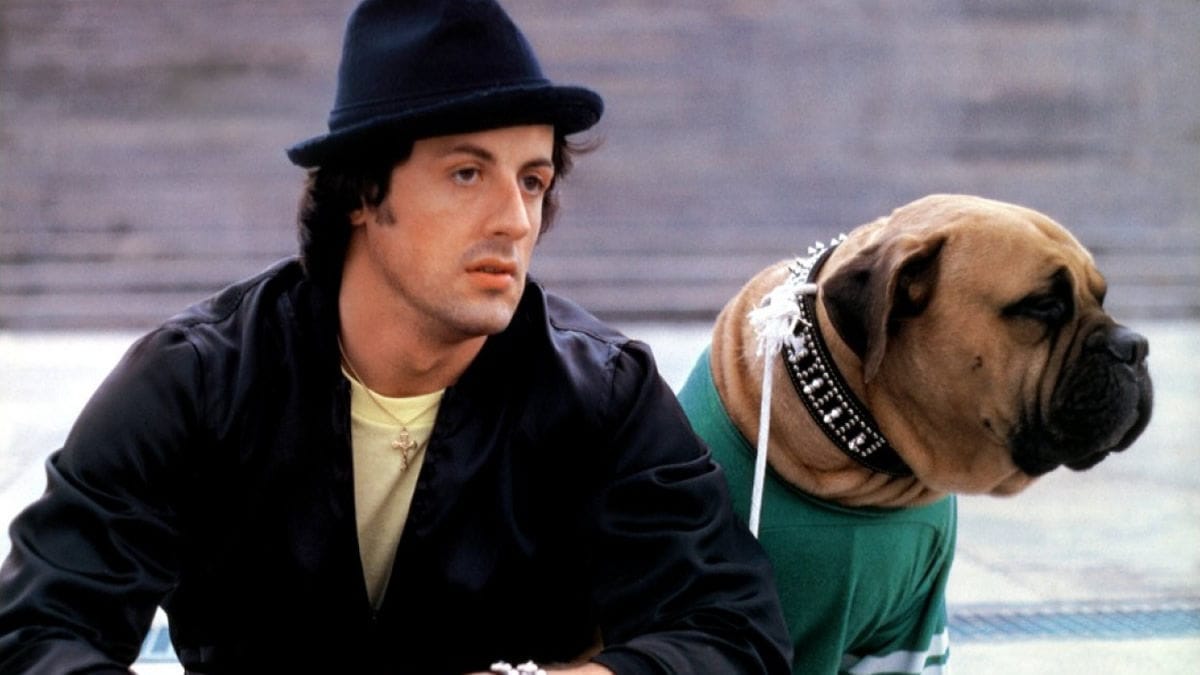
Rocky II’s success revived Stallone’s flagging career in 1979. But now it looks like the place where Stallone became a star who tended to the needs of sustaining that stardom first and an artist second. Which isn’t to say he’s always played it safe, but Rocky II proved he could retreat to safety when needed (and sometimes stay there for years). The process would soon repeat itself. First Blood is a genuinely daring film that raises questions about America’s role in Vietnam and its treatment of that war’s veterans. By Rambo: First Blood Part II, all that had gone out the window. Stallone could still be, and often was, great on screen. (Off screen is, of course, another matter.) Creed alone justifies the existence of Rocky’s sequels, in no small part thanks to Stallone’s performance as the battered, aging, vulnerable former champ. Whatever his triumphs, personal and professional, life had brought him back to a lonely place not far from where he began.
The most intriguing Stallone project of this era is one he never made, one he’s called his “first serious screenplay.” In interview after interview post-Rocky, he talked about a movie he’d written about Edgar Allan Poe, the product of a pre-stardom immersion in classic American literature, in which he planned to star. “Poe is the classic example of the misunderstood American genius,” Stallone told UPI in 1977. “He once said, ‘I am insane with long horrible fits of sanity. And I feel the same way.” It’s a dream he held onto for a long time, bringing it up during the press tours for Cobra and Rambo: First Blood Part II, visiting, with Talia Shire, a Philadelphia home in which Poe once lived while making Rocky V in 1990, and dusting off the script in the early 2000s as a possible vehicle for Robert Downey Jr.
In the 1970s, the project got as far as costume tests, a photo of which Stallone posted to Instagram in 2017 saying, “I realized I wasn’t really right for the part, [sic.] So this is all that remains. Maybe someday I’ll direct , [sic.] who know? [sic.]” Two years later he shared a video in which he paged through the Poe screenplay while working on a new draft. More recently he’s mused about turning it into a graphic novel. That the script seen in the Instagram video begins with a Poe “quote”—“I promise to take life by the throat and I shall not let go until I succeed”—that seems to be of Stallone’s own invention (much like the “sanity” quote) doesn’t bode all that well. Still, there’s something poignant about Stallone, now 80, holding onto the dream of bringing his passions for film and literature together to make something pure and great, to return to the seemingly infinite promise of the moment after Rocky made him a star. Anything must have seemed possible then, before those possibilities grew narrower and narrower and some dreams had to be put aside, maybe forever.

Discussion