The Deepest Cut: ‘The Exorcist’ (1973) vs. ‘The Exorcist: Extended Director’s Cut’ (2010)
'The Exorcist' became a classic via a theatrical version that wasn't entirely what director William Friedkin wanted it to be. Did his preferred cut improve on the original?

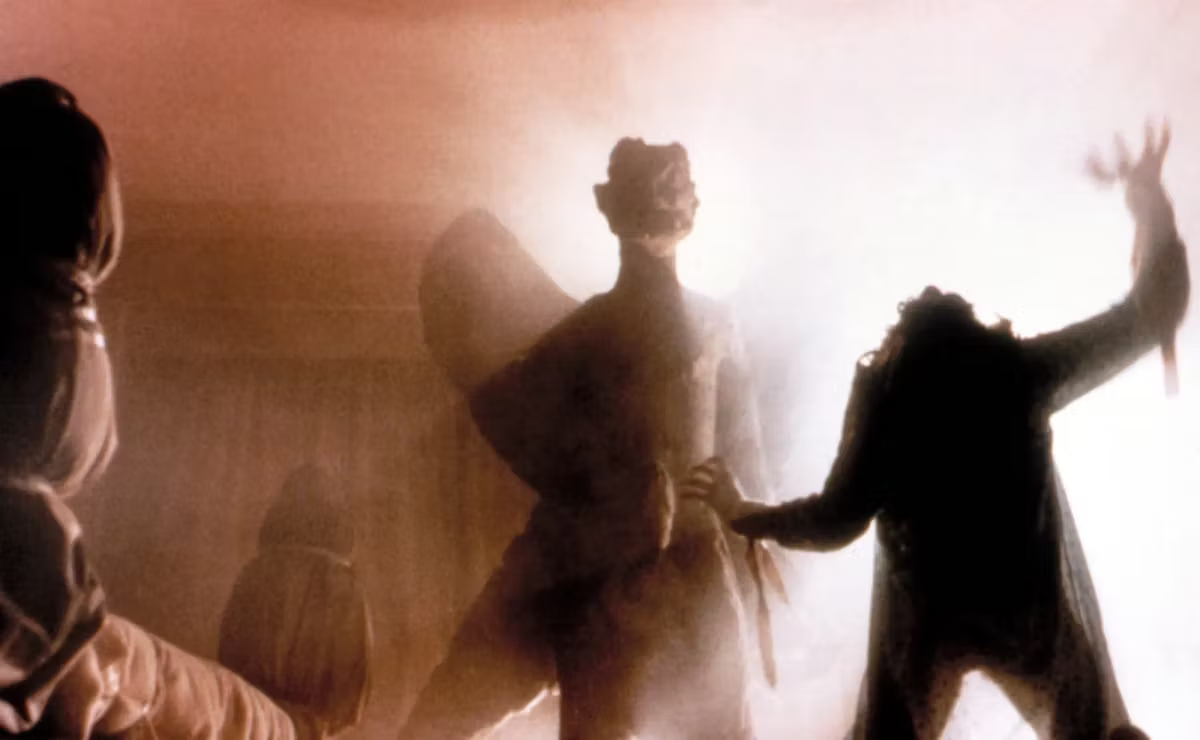
The Deepest Cut compares different versions of films that exist in alternate cuts to determine if later versions improve on those that played theaters in their original release.
As with many classic movies, I first saw The Exorcist after taping it off local TV. In most such cases, I have no regrets. I had a habit of taping any movie that got 3.5 stars or higher in Leonard Maltin’s movie guide, which provided a pretty solid education back in that pre-American Movie Classics, pre-Turner Classic Movies era when local TV would fill their late-night hours with golden age Hollywood fare. I can pretty safely claim I saw films like Top Hat and Duck Soup in more or less their original form. More recent, edgier fare, on the other hand, which tended to air in prime time, was often chopped to ribbons to meet standards and practices and, sometimes, seemingly on a whim to make room for more commercials.
Most of the time, anyway. I first watched The Texas Chain Saw Massacre after recording it off a Cincinnati station that seemingly had a DGAF policy when it came to violence and gore. But that was the exception. My first attempt to watch Nashville made it seem like an incomprehensible mess thanks to censored language and the commercial breaks dropped between seemingly every scene. (The pan-and-scan treatment of Altman’s widescreen compositions surely didn’t help, either.) To this day, I wonder if my reluctance to fully embrace William Friedkin’s 1973 film The Exorcist had something to do with the lousy circumstances under which I first watched it. There was, of course, much to cut given how shocking the film looked in 1973 (and still looks today, honestly). Your mother does what in where now? How did that crucifix get so bloody? What’s going on?
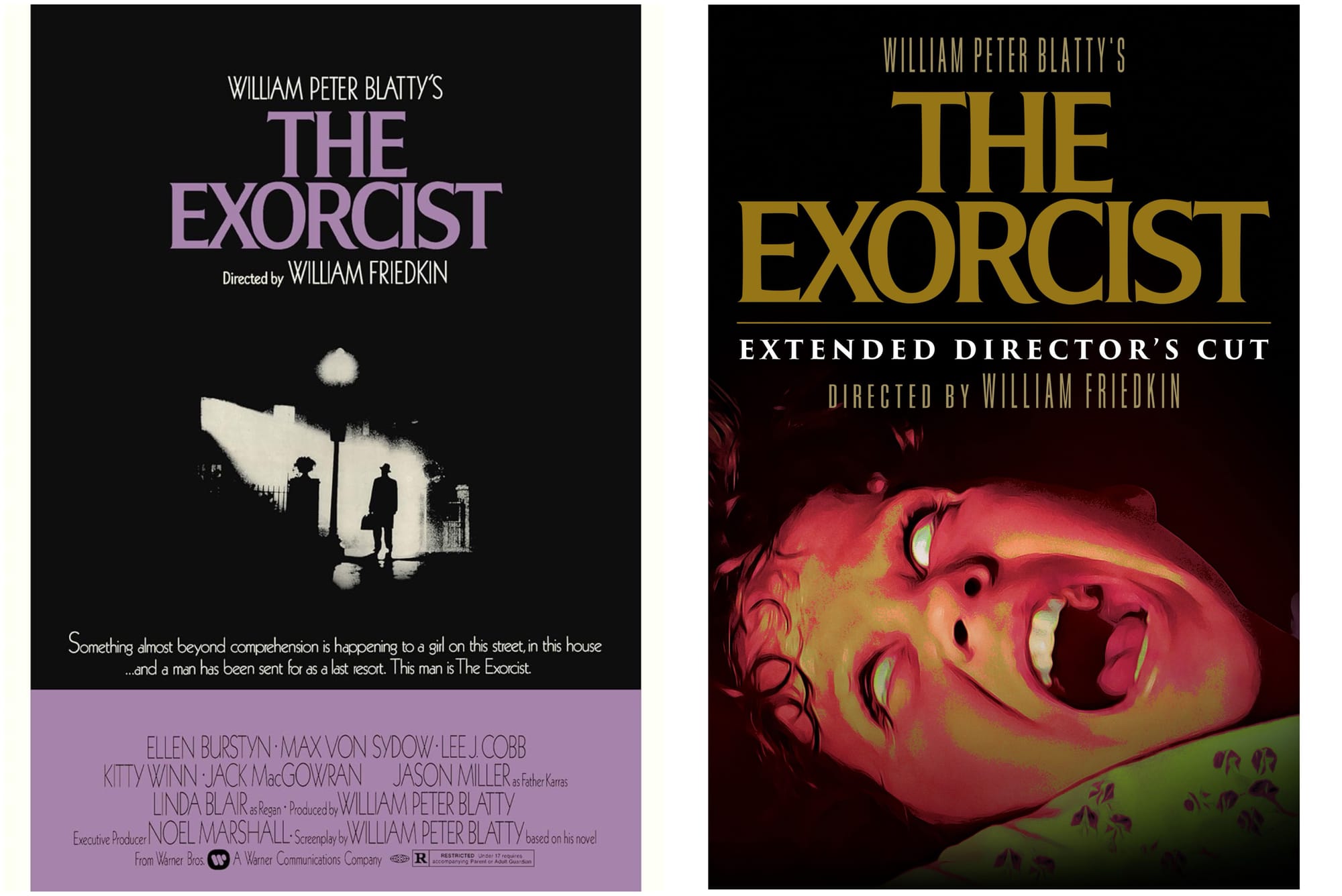
I’ve come around on The Exorcist since then, after multiple viewings over the years. If nothing else, my experience confirms that watching most of a movie is a far cry from watching the whole movie as it was meant to be seen. (Even a cut of six seconds can profoundly change a movie, as another William Friedkin film illustrates.) The often unspoken message behind a director’s cut is that moviegoers have, until now, never seen the real version of the movie. And sometimes it’s not unspoken at all. When Friedkin’s cut of The Exorcist played theaters in 2000, it was billed as The Exorcist: The Version You’ve Never Seen. That cut is essentially the same as The Exorcist: The Extended Director’s Cut that premiered on home video in 2010 as, presumably, the director’s last statement on The Exorcist.
But is it the better version? I decided to put the question to the test. As usual with this column, I’ve used a five-point scale to assess each change that ranges from -2 (a truly awful change) to +2 (a change that appreciably improves on the original version). All the time codes refer to the cut found on the current home video editions of The Exorcist (which is not necessarily the version most readily available on various streaming services). And, as before, I’ve drawn on the work of Movie-Censorship.com to confirm the changes.
Metallic Warner Bros. Logo (0:00:00)
The Exorcist’s logo screen has changed several times over the years. In 1973, it bore the then-new, very ’70s “Big W.” The 2000 re-release featured a monochromatic version of the studio’s current logo. All current versions of the film feature a metallic silver version of the WB shield over the opening notes of Jack Nitzsche’s score. It’s hardly a major change but it does make the film feel appropriately spooky before it’s even really begun.
Rating: +1
This post is for paying members only
Sign up now to read the post and get access to the full library of posts for subscribers only.
✦ Sign up