#50 (tie): ‘The Piano’: The Reveal discusses all 100 of Sight & Sound’s Greatest Films of All Time
Our Sight & Sound 100 journey reaches its halfway point with a discussion of Jane Campion's 1993 film about music, marriage, and dealmaking in 19th century New Zealand.


On December 1st, 2022, Sight & Sound magazine published “The Greatest Films of All Time,” a poll that’s been updated every 10 years since Bicycle Thieves topped the list in 1952. It is the closest thing movies have to a canon, with each edition reflecting the evolving taste of critics and changes in the culture at large. It’s also a nice checklist of essential cinema. Over the course of many weeks, months, and (likely) years, we’re running through the ranked list in reverse order and digging into the films as deep as we can. We hope you will take this journey with us.
The Piano (1993)
Dir. Jane Campion
Ranking: #50 (tie)
Previous ranking: #235 (2012)
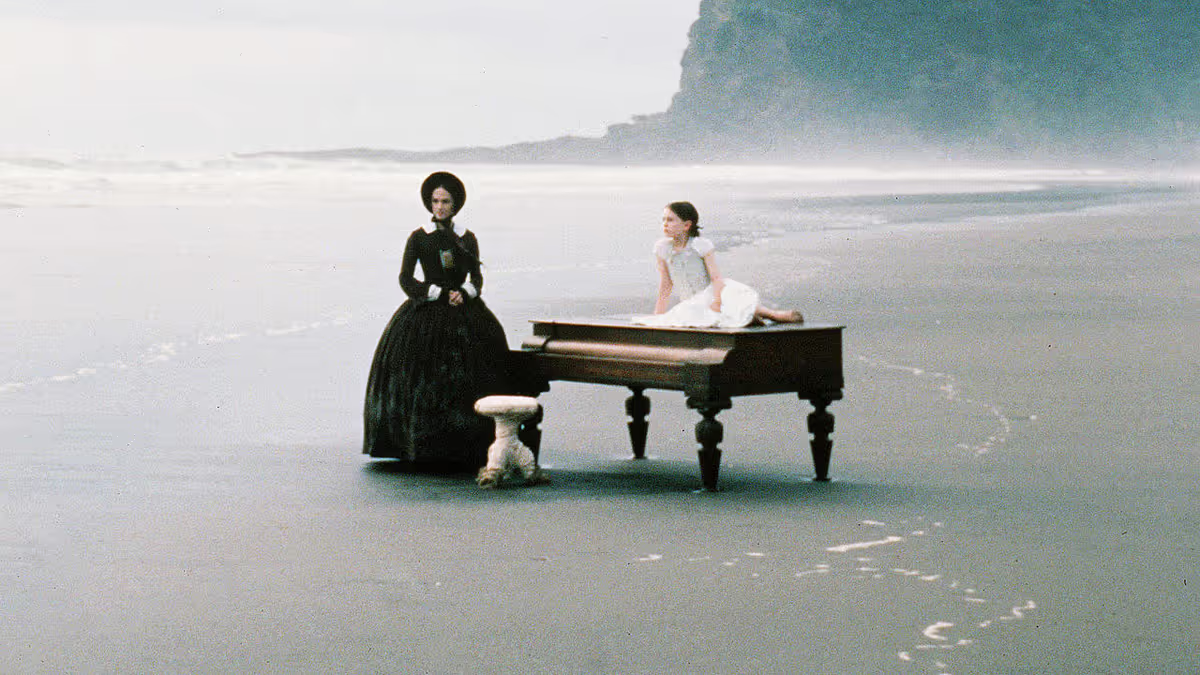
Premise: In the mid-1800s, a mute Scotswoman named Ada McGrath (Holly Hunter), accompanied by her daughter Flora (Anna Paquin), lands on the shores of colonial New Zealand, where she’s been arranged to marry Alisdair Stewart (Sam Neill), a well-to-do white settler. After an evening stranded on the beach, Ada and Flora are finally joined by Alisdair, who has hired a Māori crew, led by retired sailor George Baines (Harvey Keitel) to carry her possessions to her new home. The one item Alisdair refuses to move is Ada’s beloved piano, which languishes on the beach until George opts to buy it, ostensibly to get lessons from her. But those “lessons” turn into sessions where George offers Ada the chance to win back her piano in exchange for more sensual favors.
Scott: Let’s start with my favorite sequence in The Piano. About 70 minutes into the film, Ada has finally “earned” her piano back from George, which at this point we know has massive symbolic and emotional value to her. This would seem to have set things right in her world: Ada takes possession of the thing that means the most to her—of the many things the piano signifies in this movie, it serves chiefly as the voice of a voiceless woman—and her frustrated husband Alisdair seems optimistic that its presence in the house might finally put their marriage on track. And yet, not long after the piano is set up in the front of the house, Ada walks outside and drifts away from Alisdair and Flora, who has grown closer to him, despite her insistence earlier in the film that she would never call him her “Pa.” We can imagine what she might be thinking: Though George had arranged for Ada to win the piano through an escalating series of sexual favors—one “black key” at a time, though certain requests cost more—he had given it back early. The two of them had forged a deeper connection that, for him, had invalidated their pact: “The arrangement is making you a whore,” he tells her. “And me, wretched.”
But now, Campion seizes the moment with tremendous élan. Inside the house, Alisdair asks Flora to play some sort of “jig” and she obliges as best she can. But from that moment, the camera glides out toward the window to Ada again and the music segues into a particularly lovely piece of music from Michael Nyman’s score, one we have not heard to this point. (The main theme, which I’m sure I’m not alone in immediately recalling any time this film is mentioned, we hear early and often.) Campion then juxtaposes two images: A slow tracking shot to the back of Ada’s head, which has been arranged in a tight and ornately braided bun, and a dissolve into the verdant, sensual, mysterious forest in which she has now found (and lost) herself. Within this brief wordless sequence, we get the embodiment of the tensions within the film between civilization and nature, repression and wildness, bondage and freedom, etc.
This is bold filmmaking, Keith. Another word for it is “blunt,” which might fairly describe the metaphor of the title and the reaction of the film’s critics at the time, who were more prevalent in 1993 than they seem to be now. (The jump from #235 in the 2012 poll to #50 here is astounding, even when you consider Campion’s reputation as her body of work has expanded.) But what I love primarily about The Piano is how overtly passionate it is and how much Campion throws caution to the wind. I’d like to think that its presence in the Sight and Sound speaks to the number of people who were simply bowled over by it as an emotional, romantic experience. That’s not to say that Campion has no serious thematic agenda—quite the contrary—but she wants you to feel the intensity of this situation just as Ada, George, and Alisdair do.
And it all starts with the score, doesn’t it? The Piano hinges on the quality of a composer’s work as few films do. (I’m sure there are plenty of other examples, but where is Paul Schrader’s Mishima without Philip Glass’s contribution?) At the time, Michael Nyman was familiar to some of us mostly through his work with the English director Peter Greenaway, particularly 1989’s The Cook, the Thief, His Wife & Her Lover, which benefitted hugely from his mood-setting score. (That said, Campion reportedly told Nyman, “I don’t want any of that Greenaway shit.”) Nyman has talked about Ada as a “radical” woman who would create radical music, and so his score has a somewhat anachronistic feel: He wanted to combine 19th century, Scottish-folk-inflected salon music with 20th century minimalism, and here was the result. Frankly, it does not sound right for the period, but to my ears, it sounds absolutely right for the character and the movie, which are both outsized in their emotions.
There are a lot of things to talk about here, Keith, including Harvey Keitel’s surprise emergence as a widely lusted-after sex object at age 54. (I haven’t forgotten this famous New Yorker cartoon at the time, which bears the caption: “One caveat: If Harvey Keitel is there, you’re on your own.”) But I guess my first question to you is: Do you find The Piano as affecting as I do? The Sight and Sound list gives us plenty of films to intellectualize, which you’re welcome to do here, but I suspect that voters responded to its passion first. To me, its appearance in the poll suggests an all-timer of a screen romance.
Keith: Scott, if you didn’t write about the bun-into-forest dissolve shot I was going to. It’s the first image I think of when I think of the movie. (It’s not surprising that it’s the image artist Greg Ruth chose to illustrate for the film’s Criterion Collection edition.) The shot has made me notice similar moments in other films. My conclusion: it takes a particularly skilled filmmaker to evoke that much emotion from the back of a character’s head. (The front part tends to be more expressive.) Campion can pull it off. The Dardennes are great at it. Others make it work, but it’s not easy.
It also wouldn’t work out of context. By this point, we’ve spent a lot of time with Ada and have come to understand how she thinks, even if the voiceover narration that opens the film has long since disappeared. (It will return, but not until the very end.) She’s a woman who rejects the expectations of others, even in situations where they seemingly have her at a disadvantage. Yes, she’s agreed to marry Alisdair, but she’s constantly worked to define the terms of that marriage even before her arrival. Yes, she’s submitted to George’s seemingly humiliating bargain that will return her piano to her, but only after a process of negotiation that’s arrived at a situation she can tolerate—then negotiated further while fulfilling the contract. But Ada’s also someone who’s never satisfied, so of course the return of the piano isn’t enough. She and George have found they have an attachment beyond contracts, but they could pretend that it was merely a business arrangement so long as that contract remained in place. With it dissolved, she has to think about what that relationship now means and, consequently, who she is.
The dissolve to images of the natural world and the territory the Māori call home that Alisdair and, by extension, other European settlers, are attempting to tame is, as you point out, not subtle. At the time the film came out, I found myself in conversation with a couple of English professors who were quick to point out the simplicity of the film’s symbolism. But looking at it now, I think it’s a case of what might be read as too simple within the pages of a novel works brilliantly as filmmaking. In addition to the music and performances, Campion overwhelms viewers with remarkable images from the film’s opening moments to its haunting ending. (Hat tip to Campion’s cinematographer Stuart Dryburgh.) You can see the connections she’s making as too obvious or just surrender to what she’s doing.
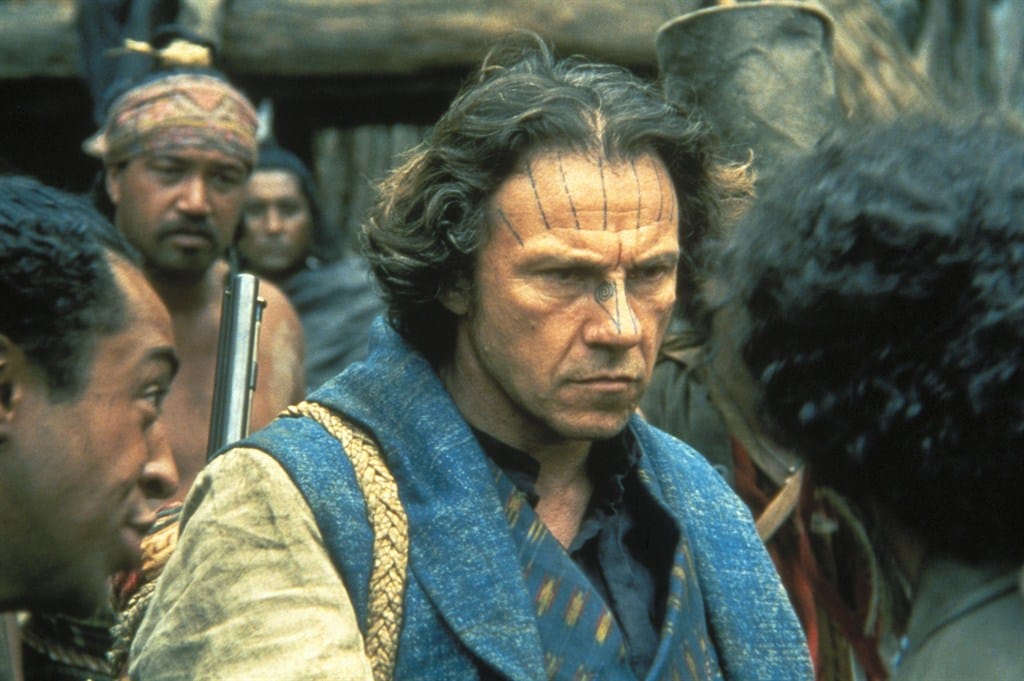
That said, I think there’s a lot of subtlety within the movie itself. We don’t learn that much about George’s backstory other than he’s married yet has no intention of returning to his wife. He’s not Māori but he lives among them. I don't think it's accurate to say they think of him as one of their own, but it feels like they’ve arrived at a level of mutual respect that most other white settlers wouldn’t even consider possible, one based on a recognition of their shared humanity. The tattoos on his face don’t seem so much like an attempt to fit in as an extension of what he’s already doing: living among them and trying to disrupt their world as little as possible.
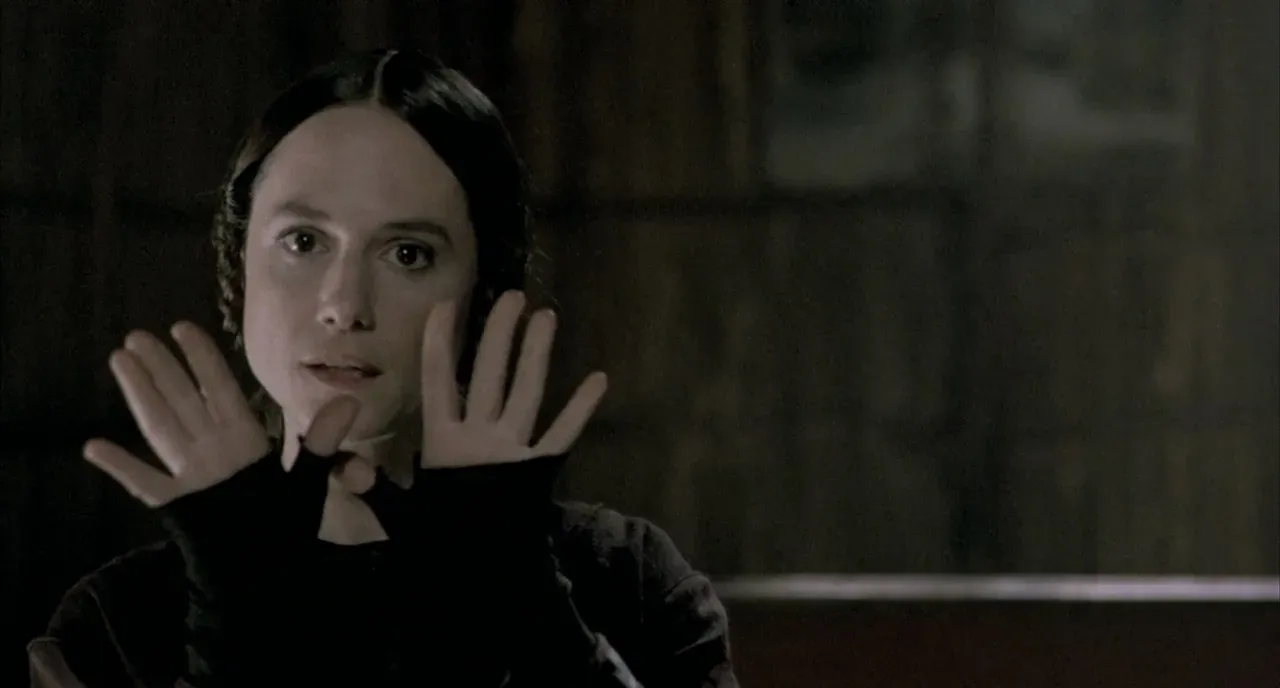
But, like Ada, it seems like he doesn’t really belong anywhere. Ada’s muteness made her a misfit in her father’s world even before she had a child out of wedlock. The artistic talent that ought to define her makes her even more of an outcast. What might be seen as brilliant in a man just makes her even more of a freak in the Victorian world, whether in Britain or in the imitation of Victorian Britain Alisdair and the other white settlers are attempting to create in New Zealand. (One of my favorite lines in the movie comes near the end when Ada describes her new neighbors thinking of her as a freak and sums up her feelings with two words: “which satisfies.”) One thing that’s unclear to me: how much of this contributes to George’s attraction to her? I think they recognize a kindred spirit in one another, but I’m not sure how much Ada’s musical genius contributes to that attraction for George.
Scott, consider that my first question for you. My second: What are your thoughts on the scene where Ada, now confined to the home she shares with Alisdair, makes him uncomfortable by touching him sexually while refusing to allow him to touch her? That she could be the aggressor turns Alisdair’s Victorian notions about women and sex on its head, doesn’t it? But what is she up to? Does she genuinely feel an attraction that she’s trying to act upon? Is she just messing with him?
Scott: My general feeling, with respect to Ada’s sexual relationship with Alisdair, is that it mirrors the terms that George had set for her. She is dictating the limits of this part of their relationship, fulfilling some part of their marital contract in letter but pointedly not in spirit. She refuses to submit to him completely, as he believes a genuinely loving wife would, so she is giving him some piece of what he wants without giving him anything truly satisfactory, which puts her in control of their relationship. The difference is that the breakdown in Ada’s arrangement with George is the beginning of a true relationship, one where the partners are on equal footing. Ada wants to make it clear to Alisdair that he’s not in charge of a marriage that has been arranged for him, which is a humiliating turn of events, given how much power he holds over her in this society and in this specific situation. Just consider the fate of her piano: She loves it so much that she’s had it carried across rough waters and he has the movers leave it on the beach to rot.
There’s a feminist bent to The Piano, of course, just as there has been to many films in Campion’s career before and after this one. (This may have been her breakthrough picture, but she had already established her reputation with the untamed women of Sweetie, her garish black comedy from 1989, and An Angel at My Table, her 1990 biopic about Janet Frame, the New Zealand author who’d suffered from a questionable schizophrenia diagnosis.) Yet this story of a mute, compromised mid-19th century woman fighting through a literal and figurative bog to live on her terms also fits into the model of many great screen romances, which are often about equality, specifically as it pertains to women re-negotiating the terms of a relationship. Happiness can only be achieved when they’re on the same footing with the man they care about, and it takes a film’s length of struggle and conflict to make it happen. (See: Adam’s Rib, It Happened One Night, and other classic “comedies of remarriage” that Stanley Cavell wrote about in his essential book Pursuits of Happiness.)
With George and Ada, there’s a mutual vulnerability from the start that’s obvious with her and not-so-apparent with him. On her end, she wants her piano and the only way to get it back is to accept the bargain that George has offered her. (Though she’s a tough negotiator, at least. The “one key per lesson” thing only applies to the black keys and special favors cost him extra.) Maybe she thought of George as a loner who’s acting out of sexual need, but maybe she recognizes him as we do, as someone who’s aroused first by the passion that she puts into the instrument. He “hears” this mute woman as Alisdair cannot or doesn’t care to. (That drip wants a merry “jig.”) His abrupt ending of their arrangement is a form of surrender, a way of confessing that it would not be satisfying to him not to have her more completely and authentically. That’s love.
It’s also swoonworthy, which brings us right back to the sequence we both adore so much. We might appreciate in the abstract the connection between George and Ada’s affair and the verdant wilds of nature, but the greatness of The Piano is that Campion (with major assists from Nyman, Dryburgh, and her actors) sell it to us so viscerally. As dark and gruesome as this film gets at times—the chopping of Ada’s index finger is such a breathtaking cruelty—I’ve seen it many times and I’m always happy to return to it, because it’s all so deeply felt and energizing.
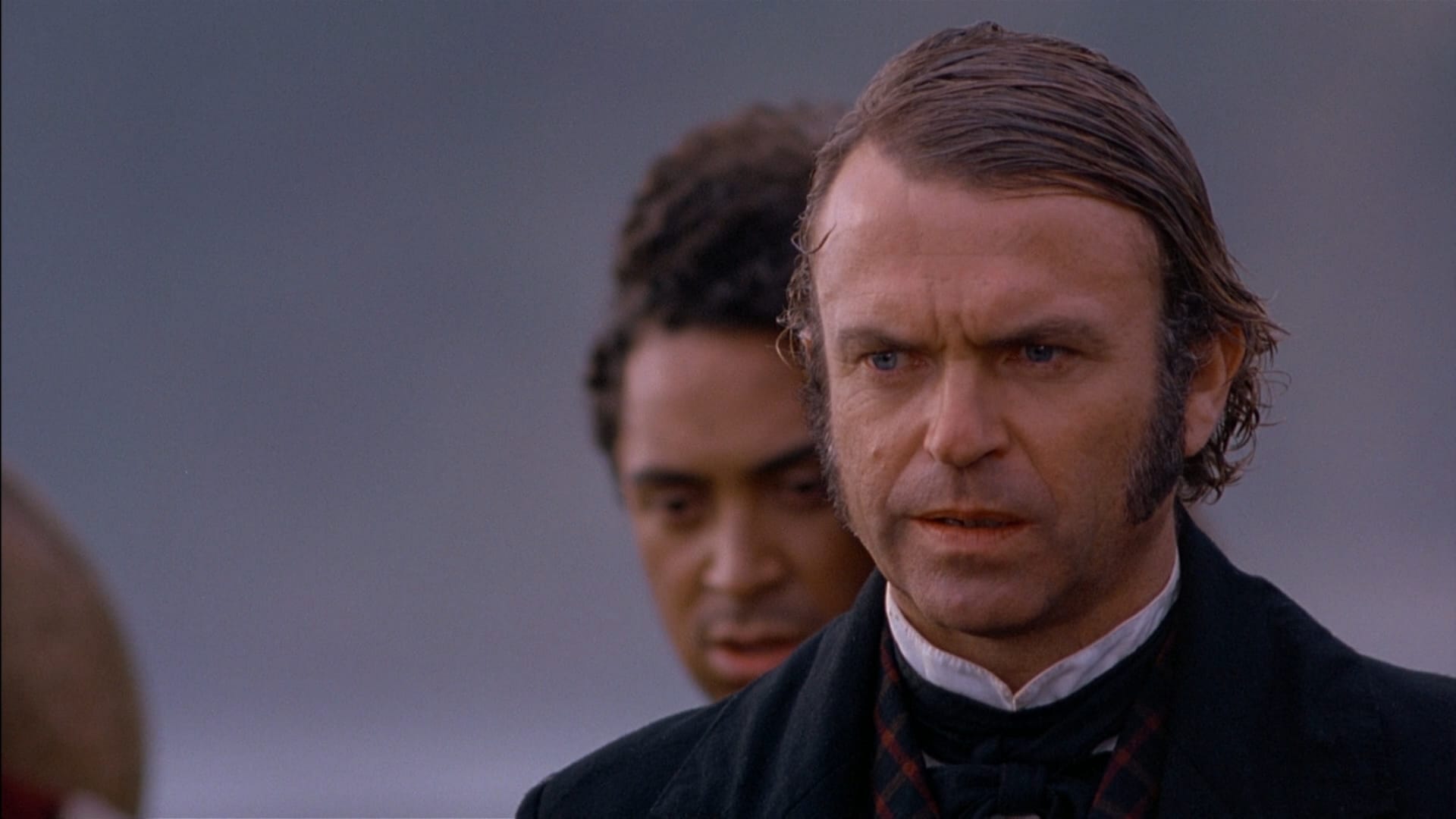
There are a couple of other strands here that I’d like to hear from you on, Keith. First, what do you make of Alisdair and of Sam Neill’s performance? I wouldn’t go all the way in describing him as sympathetic: Beyond the index finger thing, there’s also his clumsy attempt to force himself on Ada in the forest and his efforts to board her into his home. But he does seem genuine in wanting to bring Ada and Flora into a life of relative ease and privilege, and he’s steadfast enough in his efforts that he wins Flora over, which sets up the girl’s tragic mistake of delivering the “key” to Ada’s heart to him rather than George. He may be a monster, but there’s dimension to him, no? Campion seems to understand him as a man of his times at least.
Lastly, what do you make of the ending? I’m thinking specifically of the moment when George, Ada, and Flora ship off on a boat together and the piano becomes a major obstacle for the journey. Ada demands that it be dumped into the sea, but George adamantly refuses, because it means too much to her (and to him). It would seem to be a grand gesture on her part to make such a great sacrifice, but then she deliberately tangles her foot in the rope, dragging her to the bottom with her piano. When she’s rescued, we finally hear Ada’s narration (“What a death! What a chance! What a surprise! My will has chosen life!”) and it’s exultant. I feel like Ada, to that moment, had a question about herself and her future that needed to be answered. Did that surprise you, Keith? What did it all mean? And what do you make of the denouement?
Keith: I think “man of his times” is precisely how Campion depicts Alisdair. And, despite all his monstrous actions, he doesn’t go as far as he could, as far as others in his situation would feel they were entitled, maybe even obligated, to go. Ada’s behavior is so far removed from his idea of how a wife—how a woman—should behave, it essentially short circuits his brain. He might as well be attempting to start a marriage with an extraterrestrial. I do not mean to defend him in any way, but I think Neill smartly plays him as someone who’s baffled and offended by what he has to see as a bad deal. He’s not a sympathetic character but, in the end, he surrenders rather than escalating the battle. Maybe, if you want to be generous, he’s learning.
The end of the film: It gets me every time but it’s not the ending Campion originally envisioned for The Piano, which was to end with Ada’s drowning death. I’m not sure when she reworked the ending. It’s quite possible that the images of Ada’s body that close the film as her vision of the death she avoided were supposed to be images of her actual death. But as much as I love a downer ending, that doesn’t feel like the right conclusion to this story. Ada’s fantasy of her own death gives enough of a dark tinge to the happy ending that it still feels of a piece with what’s come before, but I’m still glad Ada and George get a happy ending. (Unless, of course, that’s the fantasy and her death the reality, a possible reading that the film doesn’t entirely shut down.) They get to be the resident weirdos of their new community, even apart from Ada’s metal finger. Maybe Flora lives a life with more possibilities than those available to her mother. I think, if anything, I’m more puzzled by Ada stepping into the rope in the first place, but I can’t say that this feels entirely out of character, either. It makes symbolic sense, though, that she so associated her being with the piano that losing it would be equivalent to losing her life. I also think it makes sense for her to transcend that way of thinking, thanks largely to the love in her life, but maybe I’m just a softie at heart.
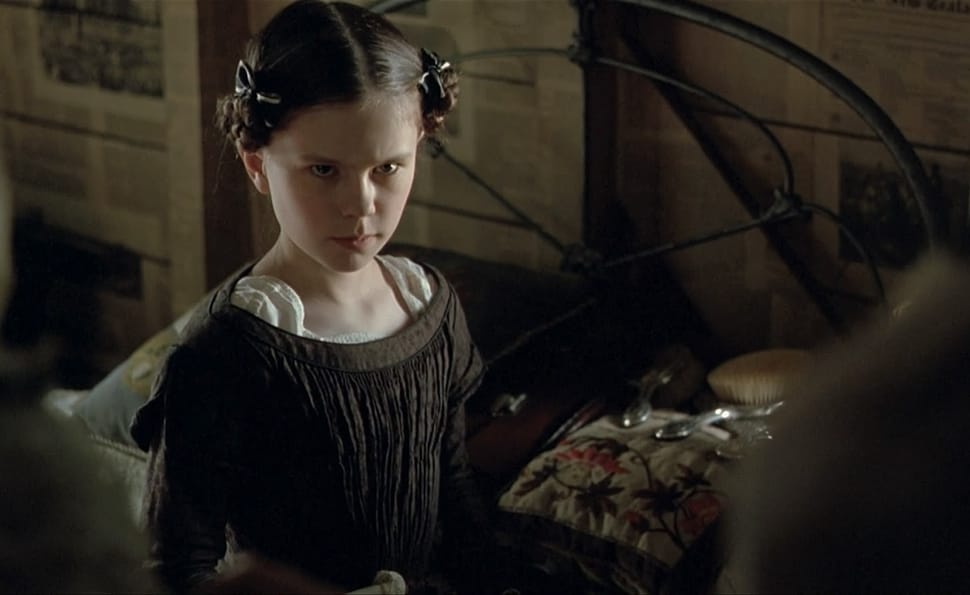
I know we’re winding this down, but we should at least give some love to Anna Paquin’s performance. I think it’s largely true that it’s not really fair to talk about child actors the way we talk about adult actors most of the time. What we see is often a matter of strong directing and coaching rather than the sort of choices we associate with professional actors. But there are exceptions, and I think Paquin’s one of them. She brilliantly captures the amorality of childhood. Flora’s endearing, but the wings she wears for much of the film often seem like an ironic counterpoint to her actions. She wants only what she wants and her loyalties shift the moment those wants are being met. Paquin somehow conveys all that without making Flora seem like a little monster (or at least no more a little monster than other 10-year-olds).
With that, it’s time to leave 19th century New Zealand behind as we look ahead to the next film on Sight and Sound’s list: François Truffaut’s The 400 Blows.
Previously:
#95 (tie): Get Out
#95 (tie): The General
#95 (tie): Black Girl
#95 (tie): Tropical Malady
#95 (tie): Once Upon a Time in the West
#95 (tie): A Man Escaped
#90 (tie): Yi Yi
#90 (tie): Ugetsu
#90 (tie): The Earrings of Madame De…
#90 (tie): Parasite
#90 (tie): The Leopard
#88 (tie): The Shining
#88 (tie): Chungking Express
#85 (tie): Pierrot le Fou
#85 (tie): Blue Velvet
#85 (tie): The Spirit of the Beehive
#78 (tie): Histoire(s) du Cinéma
#78 (tie): A Matter of Life and Death
#78 (tie): Celine and Julie Go Boating
#78 (tie): Modern Times
#78 (tie): A Brighter Summer Day
#78 (tie): Sunset Boulevard
#78 (tie): Sátántangó
#75 (tie): Imitation of Life
#75 (tie): Spirited Away
#75 (tie): Sansho the Bailiff
#72 (tie): L’Avventura
#72 (tie): My Neighbor Totoro
#72 (tie): Journey to Italy
#67 (tie): Andrei Rublev
#67 (tie): The Gleaners and I
#67 (tie): The Red Shoes
#67 (tie): Metropolis
#67 (tie): La Jetée
#66: Touki Bouki
#63 (tie): The Third Man
#63 (tie): Goodfellas
#63 (tie): Casablanca
#60 (tie): Moonlight
#60 (tie): La Dolce Vita
#60 (tie): Daughters of the Dust
#59: Sans Soleil
#54 (tie): The Apartment
#54 (tie): Battleship Potemkin
#54 (tie): Blade Runner
#54 (tie): Sherlock Jr.
#52 (tie): Contempt
#52 (tie): Ali: Fear Eats the Soul
Discussion