In Review: ’Dracula,’ ‘The Moment’
In a thin week for movies, a Prince drains the life out of his victims and fame drains the life out of a musician.


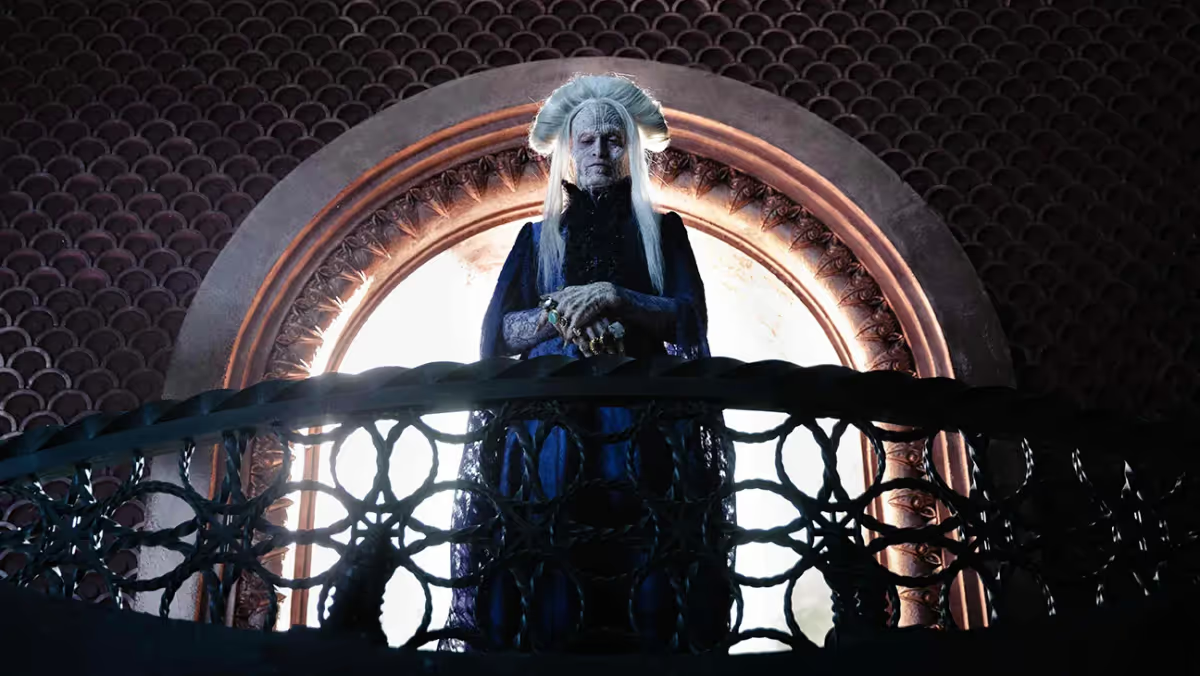
Dracula
Dir. Luc Besson
129 min.
“Living without love is the worst disease of all, my friend,” laments the cursed Prince Vladimir in Dracula (also titled Dracula: A Love Tale), Luc Besson’s florid crack at Bram Stoker. The Prince is lamenting the death of his beloved Elisabeta in a battle with the Ottomans, a loss so profound that he renounces God and becomes the deathless Count Dracula, doomed to haunt the Earth for centuries in search of her reincarnation. He extends the analogy: “It is like a fine incessant rain that gradually eats away at your bones, turning you into a formless sponge unable to stand upright.” With respect to the Prince, who’s too bummed to keep from mixing metaphors, the notion of a “formless sponge unable to stand upright” is an apt description of Besson’s Dracula, which absorbs every drop of inspiration it can squeeze from Francis Ford Coppola’s inspired 1992 version but can’t stay vertical on its own merits.
The Reveal is a reader-supported newsletter dedicated to bringing you great essays, reviews and conversation about movies. If you are not paid subscriber, we would love for you to click this button below and join our community.
As part of the cinema du look movement that gave French cinema a commercial pop from the mid ’80s to the early ’90s—1988’s The Big Blue and especially 1990’s La Femme Nikita were his key contributions—Besson has spent the subsequent decades toggling between projects at home and in Hollywood that could fairly be described as “flash over substance.” (He’s also dodged multiple accusations of sexual assault and misconduct within the last decade, which has further limited his once-formidable reach.) With Dracula, Besson has attempted to do Coppola on a modest budget, just enough to take the luster off all those sumptuous production values (costumes, cinematography, effects) and turn his film into an off-brand knockoff. The sheer tackiness of it doubles as both primary asset and crippling liability.
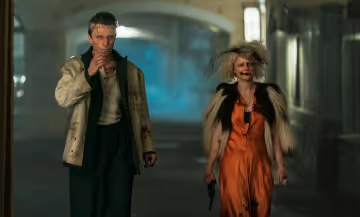
Besson does make his Dracula compellingly weird, however, by casting Caleb Landry Jones in the title role, capitalizing on the eerie, unsavory charisma that Jones has brought to films like Nitram, Get Out, and Heaven Knows What. After Besson spends an exceedingly silly montage trying to establish the bedroom chemistry between Vladimir (Jones) and the lovely Elisabeta (Zoë Bleu), war tears their relationship asunder. Before departing for battle, Vladimir tells a priest to demand God to keep Elisabeta safe, but when God fails to deliver on that promise, Vladimir renounces him so sharply that he’s transformed into the eternal bloodsucker Dracula. 400 years later, Dracula and his minions search for his long-lost love, who materializes in the form of Mina, whose fiancée Harker (Ewens Abid) is visiting the count’s castle for an ostensible real estate deal. Meanwhile, a rogue priest (Christoph Waltz) has been on the hunt for Dracula and works on gathering the forces necessary to stop him.
There are sequences in Dracula that suggest Besson might have been better off abandoning tradition and embracing his most garish impulses, like a ball at Versailles where the Count uses his perfume to hypnotize the guests into what looks like a choreographed TikTok dance. Back at the castle, his minions are impish digital gargoyles that scurry around like cartoon companions, which undercuts the menace and romantic melancholy of the character, but increases the camp delirium. Besson seems more at home making pop art than gothic tragedy, but the neither-here-nor-there quality of Dracula makes it chintzy and unsatisfying on both fronts. In a word, it sucks. — Scott Tobias
Dracula opens tonight in coffin-shaped cinemas everywhere.

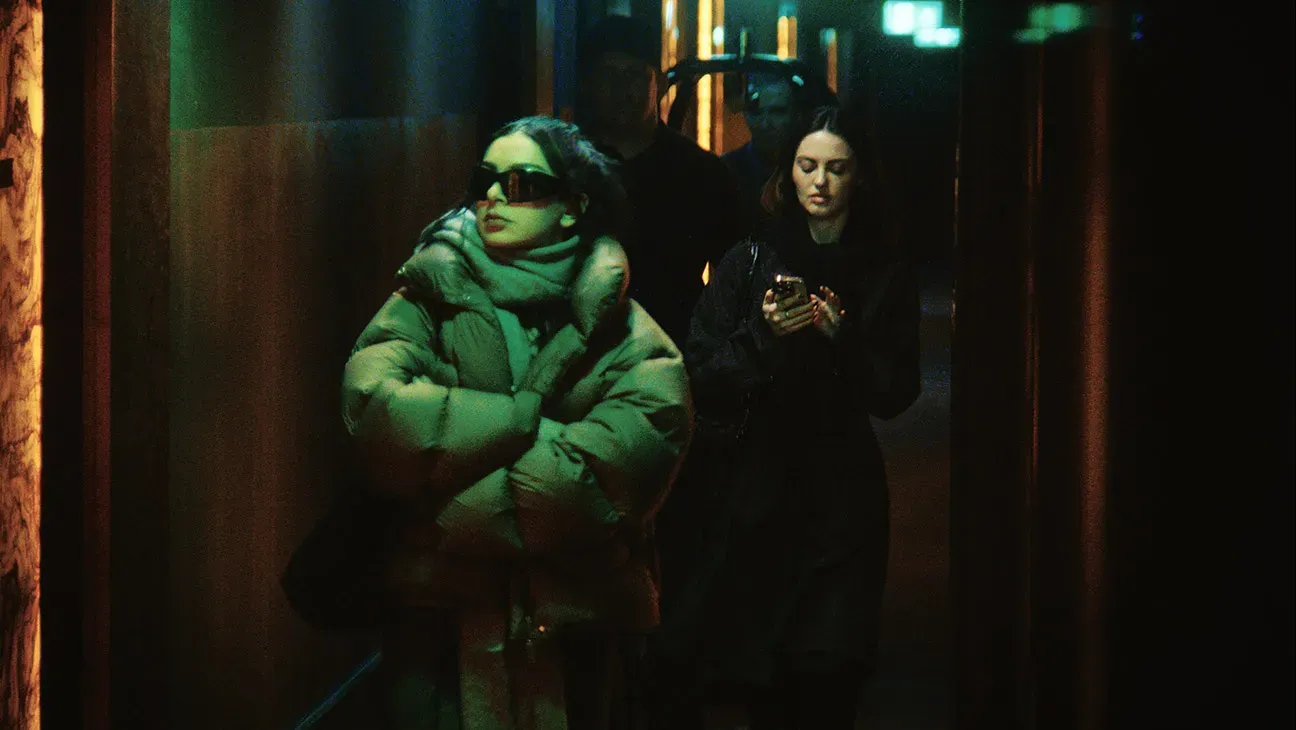
The Moment
Dir. Aidan Zamiri
103 min.
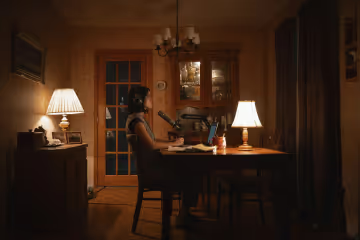
As The Moment opens, Charli xcx has never been more successful and it’s making her miserable. Exhausted and seemingly perpetually annoyed, she’s unsure what to do now that the summer of 2024, the one she declared “Brat Summer” after the title of her most-recent album, has drawn to a close. After a decade of being the bubbling-under pop star who might be too cool for superstardom, Charli xcx has reached the peak. And now she realizes there’s nowhere to go but down.
That’s the problem facing the fictional Charli xcx of The Moment and it’s probably safe to assume it’s at least partly reflective of the real Charli xcx’s mindset when she conceived The Moment, a mockumentary about the perils of success and what’s gained and lost in the process of, as one character puts it, “leveling up.” Directed by music video vet Aidan Zamiri, who co-wrote the film with journalist Bertie Brandes from an idea by Charli xcx, The Moment follows the star as she attempts to navigate the industry machinery that’s led her to begin endorsing a Brat credit card (via a stodgy bank eager to tap into her young, queer fanbase) and signing on for a concert film to be directed by Johannes Godwin (Alexander Skarsgård), a visionary whose ideas about what a Charli xcx concert film should be seem to have little in common with who Charli xcx is.
Any resemblance to Taylor Swift’s megastardom is surely not coincidental, but if there’s a target here, it’s the institution of fame itself. The Moment is, in conception, an ideal project for Charli xcx, whose resistance to taking pop stardom seriously has helped shape her image. If only the reality of The Moment was as strong as the idea. The film only occasionally sparks to life, as in an awkward backstage encounter with Rachel Sennott or scenes in which Johannes passive-aggressively attempts to force his ideas for the project on the subject and her longtime creative director Celeste (Hailey Benton Gates). But while The Moment provides plenty of examples of what Charli xcx is fighting against, it’s never clear what she’s fighting for. Her songs might have served as a counterpoint, but The Moment is curiously short on Charli xcx music (or much music of any kind, really). What’s left is a lot of slack, fitfully amusing, seemingly improvised encounters and scenes of the star sulking in luxurious surroundings. What begins as an attempt to send up pop star self-indulgence finds its way to self-indulgence by another route. Maybe some leveling up traps just can’t be avoided. —Keith Phipps
The Moment opens tonight this weekend after its limited release last week.

Discussion