In Review: ‘Marty Supreme,’ ‘Father Mother Sister Brother’ ‘Anaconda’
A week of big holiday season new releases kicks off with scamps, snakes, fathers, mothers, sisters, and brothers.


End-of-Year Programming Note: We're focusing on reviews during this shortened holiday week. Look for our takes on No Other Choice, The Testament of Ann Lee, The Plague, and Song Song Blue tomorrow. Next week we'll be back with a discussion of The 400 Blows as part of our survey Sight & Sound's 100 best films. Then look for our best of 2025 lists when we return to our regular newsletter schedule in January.
Marty Supreme
Dir. Josh Safdie
149 min.
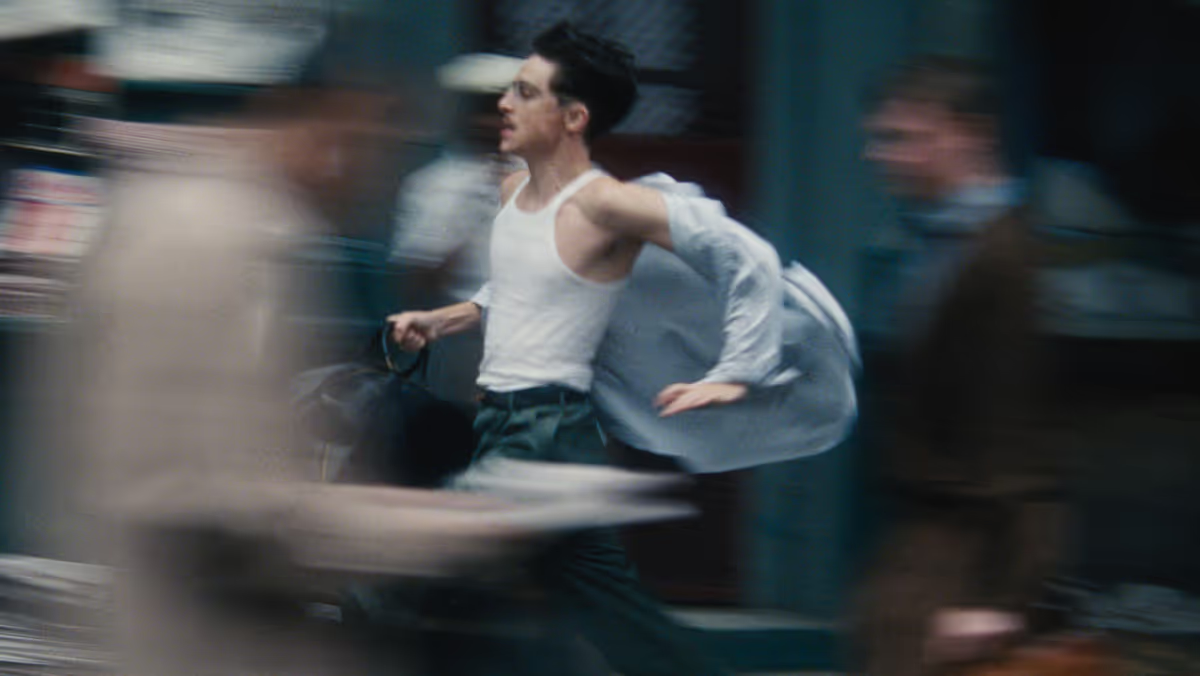
Marty Supreme is a scamp. A rascal. A rapscallion. As played by Timothée Chalamet in Josh Safdie’s vastly entertaining film of the same name, Marty understands himself to be the greatest table tennis player in America and perhaps the world. That sounds like a typically vainglorious thought from him, but in this case, it also happens to be true. The disconnect for Marty is that ping-pong is not a lucrative spectator sport in early 1950s New York—even now, Americans mostly watch it in down-the-dial Olympics coverage every four years—but he believes he can will his celebrity into existence. If he plays the part of a sports icon, entitled to luxury hotels and glamorous dames, then maybe he can manifest a future appearance on a Wheaties box. But until that inevitably comes to pass, Marty negotiates every second of his life like a salesman or a swindler, either sweet-talking his way into favors or keeping his growing list of angry patrons at bay.
The Reveal is a reader-supported newsletter dedicated to bringing you great essays, reviews and conversation about movies. If you are not paid subscriber, we would love for you to click this button below and join our community.
Safdie clearly has a type. He and his brother Bennie make movies that feel like extended versions of the hectic day-in-the-life section of Goodfellas, when a coked-out, paranoid Henry Hill is tending to his spaghetti sauce while running guns and drugs through his Pittsburgh connection and ducking a helicopter he’s certain is following him. Marty isn’t a gangster like Henry, but he’s a lot like the charismatic men in previous Safdie brothers films like Good Time and Uncut Gems, a pitiable outlaw who’s always flying by the seat of his pants. Most of what he says is a self-serving con and he gets himself into so much trouble on so many fronts at once that the film keeps you constantly on edge. But the adjective that usually modifies “scamp” is “lovable,” and there’s ceaseless tension and pleasure in watching Marty try to wriggle out of some mistakes while making some new ones.
While Marty Supreme is his nom de pong, Marty’s real name is Marty Mauser, which aptly suggests a speedy cartoon rodent who purloins cheese while staying ahead of the fat cats. There’s no better shoe salesman on the Lower East Side—being able to talk people into anything is a broadly applicable skill—but the 23-year-old wants only to raise enough money to win the world championship in London and parlay his title into orange ping-pong balls and other commercial opportunities. Once in London, Marty runs up an obscene hotel bill and cozies up to Kay (Gwyneth Paltrow), a once-notable movie star whose husband Milton (Kevin O’Leary) is a pen magnate looking to make inroads overseas. But trouble awaits Marty back home, where he’s impregnated his girlfriend Rachel (Odessa A’zion) and gets mixed up in some business involving a nasty hoodlum (Abel Ferrara) and his missing dog. He finds trouble and trouble finds him.
Safdie stirs the pot expertly. With a soundtrack that bursts with anachronistic ‘80s New Wave songs—Tears For Fears’ “Change” is a jarring yet energizing curtain-raiser for ’50s New York—Marty Supreme has the burning-ulcer intensity of Uncut Gems, along with a sense of spontaneity that comes from Marty having to feverishly negotiate every moment of his life. Chalamet is a wonderful talker, just like Sandler, and the film gives him the opportunity to pitch Marty’s utter shamelessness as a kind of underdog nobility. He deserves some form of comeuppance most of the time, but the patter and hustle that works on the people he manipulates works like gangbusters on us, too. He’s a world champion pistol. — Scott Tobias
Already in a few theaters Marty Supreme opens wide on Christmas Eve.

Father Mother Sister Brother
Dir. Jim Jarmusch
110 min.
One way to describe Jim Jarmusch’s latest film involves using a lot of parentheses. It’s not one film but three (though it’s more a collection of variations on a theme than three discrete stories). It’s filmed in three locations around the globe (but mostly takes place inside living rooms at each location). It’s about family drama (most of which has taken place years in the past and serves as the subject of vague references). But Jarmusch has long been comfortable exploring the in-between action not usually depicted on film. In retrospect, a long shot of two characters watching TV and smoking cigarettes early in the director’s 1984 breakthrough Stranger Than Paradise looks like a statement of purpose. There’s dry humor to be found in the moments you usually don’t see in movies, but also more than a little bit of truth.
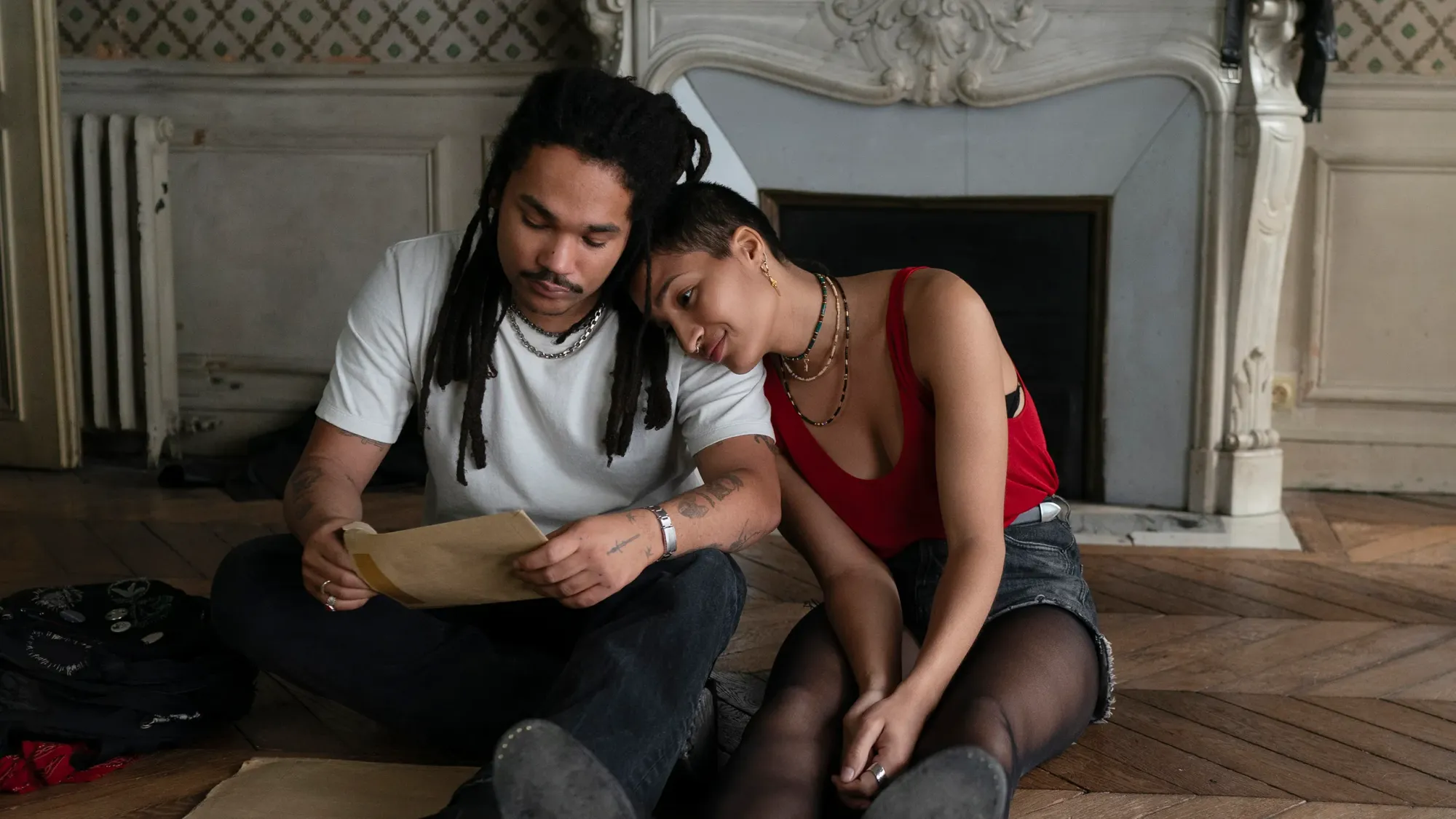
Father Mother Sister Brother, Jarmusch’s first film since the despairing 2019 zombie comedy The Dead Don’t Die, unfolds in three complementary episodes concerning the relationships between parents and children. Set in rural New Jersey, the first, “Father,” stars Tom Waits as an unnamed widowed father who’s receiving a rare visit from his two children Jeff (Adam Driver) and Emily (Mayim Bialik). Having each been tapped for money over the years, they fear the worst and aren’t sure what to make of what they find. In “Mother,” Charlotte Rampling plays a bestselling author living in the Dublin suburbs who’s hosting an annual tea for her daughters, the quiet Timothea (Cate Blanchett) and her bohemian younger sister Lillith (Vicky Krieps). Finally, “Sister Brother” depicts a meeting between Skye (Indya Moore) and Billy (Luka Sabbat), twin siblings who meet to pay a final visit to the Paris apartment in which they grew up after the death of their parents.
“Father” immediately establishes that nothing much—or at least nothing overtly dramatic—will happen in Father Mother Sister Brother. After discussing their father’s potentially precarious situation on the way to their meeting—he’s seemingly never had a job so what he’s living on now remains a mystery—Emily and Jeff share an awkward greeting with their dad that turns into an awkward afternoon. They admire a particularly well-made chair and his home’s view of the lake, but nothing of any real substance gets said. He remains something of a mystery even to his closest kin, one they might never untangle before his death. The episode has a punchline that raises more questions than answers, but answers aren’t really the point. It’s the details that make “Father,” and the other parts of the triptych, so rich, the way Waits’ character periodically looks at a framed photo of his late wife or the never-named source of Emily’s just-under-the-surface rage. We witness a moment of no great importance that also contains everything these characters have been to one another for years.
Jarmusch has made several episodic films over the years. Of them, Father Mother Sister Brother is closest in structure and tone to 1991’s Night on Earth, which used the stories of cab drivers in several cities to create a vision of shared humanity. Here, details recur from section to section—skateboarders, a (possibly counterfeit) Rolex, toasting etiquette—but it’s a bittersweetness that really unites each story. In “Father” and “Mother,” both children and parents feel the need to keep secrets from one another, protective shields that also hinder the exchange of affection. For the twins of “Sister Brother,” all they have left are memories, a storage locker filled with items left behind, and the questions their parents aren’t around to answer anymore. Death makes what’s left unsaid unknowable. But life can make the gap between parents and children feel unbridgeable, too. Father Mother Sister Brother plays like a long, plaintive sigh of acceptance that this is the way of the world, and perhaps a quiet wish that it might be otherwise. —Keith Phipps
Father Mother Sister Brother opens in limited release on December 24th before expanding.

Anaconda
Dir. Tom Gormican
99 min.
It’s almost shocking how much Anaconda has going for it. Co-written by director Tom Gormican and Kevin Etten (the team behind the mostly clever Nicolas Cage metacomedy The Unbearable Weight of Massive Talent), the film has a clever premise and sports an A-list comedy cast headlined by Paul Rudd and Jack Black (backed by Steve Zahn and Thandiwe Newton). And yet, apart from a few mild chuckles here and there, the film just kind of trods along as if trying to reach an agreed-upon running time before rolling the credits. There’s nothing awful about it, but there’s little to recommend it, either. In a year in which comedy has struggled to regain its place in movie theaters, Anaconda doesn’t make a strong case for making the trip to the multiplex in search of laughs.
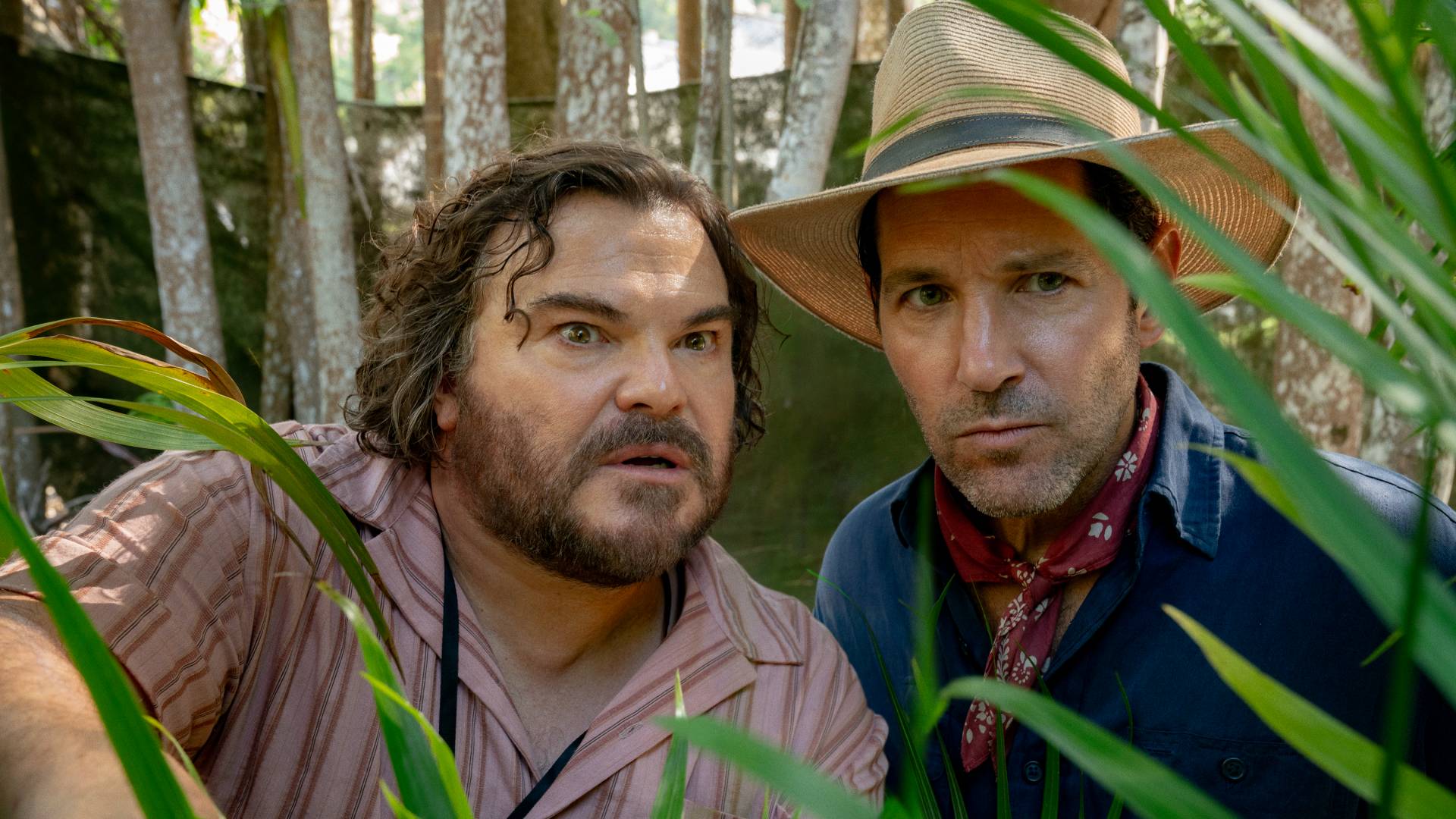
You wouldn’t guess that from the set-up, however. Rudd plays Griff, an actor who’s struggled since a career-peak multiple-episode run on S.W.A.T. Back home in Buffalo, Griff’s old friend Doug (Black) is experiencing his own frustrations, thanks to a job as a wedding videographer that doesn’t match his long-ago filmmaking dreams. When Griff and pals Kenny (Zahn) and Clair (Newton) gather in Buffalo to celebrate Doug’s birthday—which doubles as an occasion to break out one of the movies they made together as teens—Griff lays a surprise on them: he has the rights to the 1997 film Anaconda and would like the four of them to travel to the Amazon to remake it themselves. All they need is a boat, a snake, and a couple of locals to handle each.
There’s a lot of potential in that scenario that Anaconda unfortunately leaves unrealized. The film’s best moments feature Black attempting to create a blockbuster on a miniscule budget, but we’ve already seen that done better in Be Kind Rewind’s “sweding” scenes. Black is reliable as always, but the film asks little more of him than to play the sort of character he’s played before. Ditto Rudd and Zahn, who’s quite good as a space-case sidekick, but when is he n0t? (Newton does her best to bring a severely underwritten role to life.) It’s as if everyone seemed to think that all the film needed was to assemble the right pieces and the rest would take care of itself. And with pros like these, they almost do. But who needs to see an almost-good version of what’s been actually good in the past? (One final mystery: are the dodgy effects a purposeful homage to 1997 CGI? On second thought, who cares?) —Keith Phipps
Anaconda slithers into theaters everywhere on December 24th.

More Recent Releases:
Avatar: Fire and Ash
Ella McCay
Hamnet
Is Thing Thing On?
Jay Kelly
Merrily We Roll Along
Reflection in a Dead Diamond
The Secret Agent
Sentimental Value
Silent Night, Deadly Night
Wake Up Dead Man: A Knives Out Mystery
Wicked: For Good
Zodiac Killer Project
Zootopia 2

Discussion