In Review: ‘Mercy,’ ‘H is for Hawk’
This week's new releases feature a not-dystopian-enough story of the near future and a gentle drama about birds and grief.


Mercy
Dir. Timur Bekmambetov
100 min.
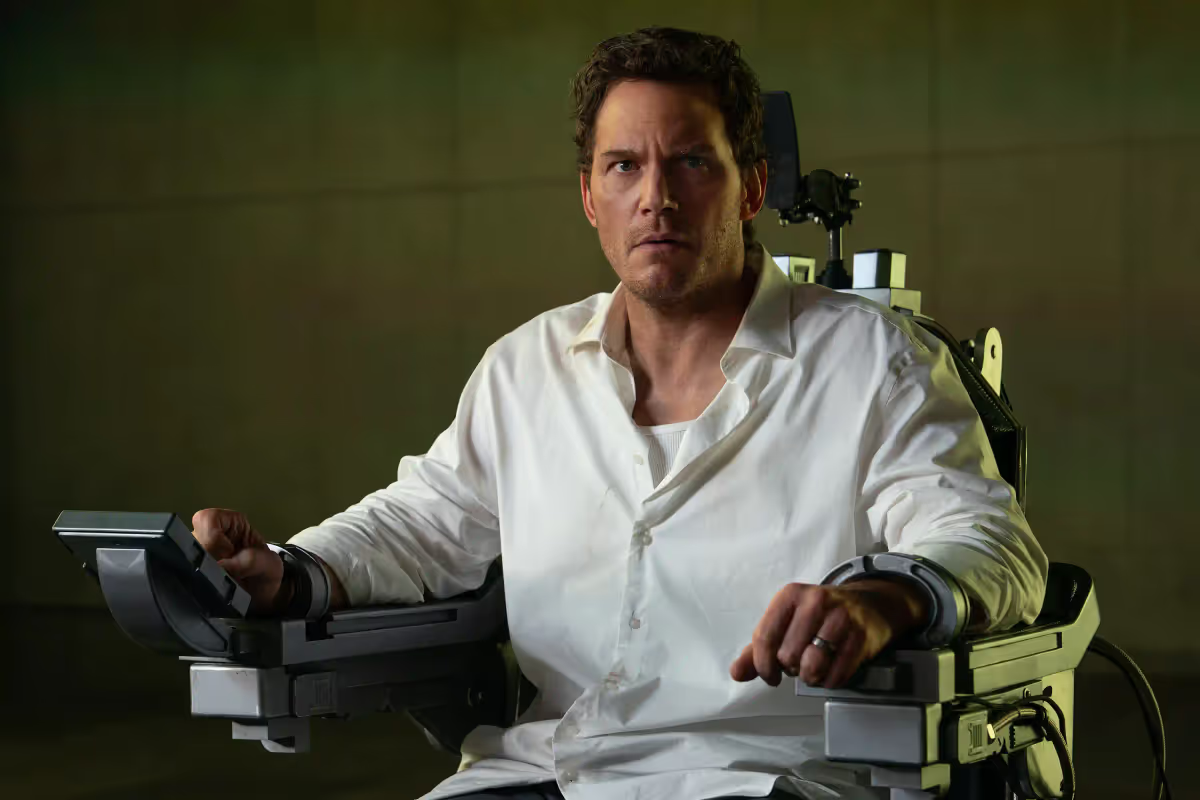
In the not-so-distant future Los Angeles of Mercy, justice has gotten a lot more streamlined. Cases in which suspects look pretty guilty can be shuttled over to the Mercy system, where they meet an AI judge who does triple duty as jury and executioner. (Efficient!) The guilty-until-proven-innocent accused are strapped in a chair that will kill them if they fail to prove their innocence—or at least roll the probability of guilt back to 92%—before a clock finishes counting down. Not many do.
Cops love Mercy, but when Detective Chris Raven (Chris Pratt) wakes up before the AI Judge Maddox (Rebecca Ferguson) after being accused of murdering his wife Nicole (Annabelle Wallis) in a drunken rage, he finds himself in the same hot seat where he’s placed others. That set-up might make Mercy sound like it’s attempting a classic act of sci-fi irony, a sort of feature-length Black Mirror episode with a worrying vision of where today’s technology will take us tomorrow, but hold up! Mercy’s attitudes toward artificial intelligence, due process, and the surveillance state are a lot more nuanced. Way too nuanced, really.
The Reveal is a reader-supported newsletter dedicated to bringing you great essays, reviews and conversation about movies. If you are not paid subscriber, we would love for you to click this button below and join our community.
To be fair, Chris does look like the prime suspect. His own doorbell camera has footage of him returning home shortly before Nicole’s death, arguing with her, then angrily heading inside. Footage from surrounding cameras doesn’t exactly exonerate him either. That gives Chris 90 minutes to sway Judge Maddox but, thankfully, he also has full access to the contents of Nicole’s phone, her email account, his daughter Britt’s (Kylie Rogers) private Instagram, the records and personal information of anyone Chris suspects might be involved, and so on. Big Brother has been watching, thank heavens!
Most of Mercy consists of Chris flitting from screen to screen and phone call to phone call in a desperate search for the real killer, a choice that often makes it resemble the Unfriended films for which director Timur Bekmambetov (Wanteds, Abraham Lincoln: Vampire Hunter) served as producer, just as the many shaky POV shots suggest the Bekmambetov-produced Hardcore Harry. Both modes make the choice to release the film in IMAX 3D, the format in which I saw it, kind of perverse. Never has flipping through emails, watching security camera footage, or trying to figure out what the hell you’re supposed to be looking at on someone’s phone camera been so maximalist. Otherwise, the film mostly consists of close-up shots of Chris. There are probably actors capable of suggesting the many conflicting emotions the character must be experiencing as he mourns his wife’s death, fears for his own life, uncovers disturbing secrets, and frets over his daughter’s future, all while drawing on sharply honed powers of deduction to solve a brilliantly orchestrated crime. Pratt is not one of them.
But surely Chris sees the error of his past ways now that he’s been subjected to AI justice, right? Well, not really. As he argues with Judge Maddox, they start to understand each other a little better, maybe even like each other, especially as Maddox starts to understand concepts like using one’s “gut” while unravelling a mystery. Ultimately, the Marco van Belle-scripted Mercy concludes that AI might make mistakes from time to time, and so do humans. Is there really that much difference? It would be as if Minority Report, an obvious inspiration, were to end by suggesting that maybe some Precrime arrests wouldn’t be so bad. What could it hurt, really? If nothing else, give Mercy credit for this: It’s rare that a work of science fiction offers a grim vision of the future, then asks us to learn to love it. —Keith Phipps
You can strap into Mercy in theaters starting tonight.

H is for Hawk
Dir. Philippa Lowthorpe
119 min.
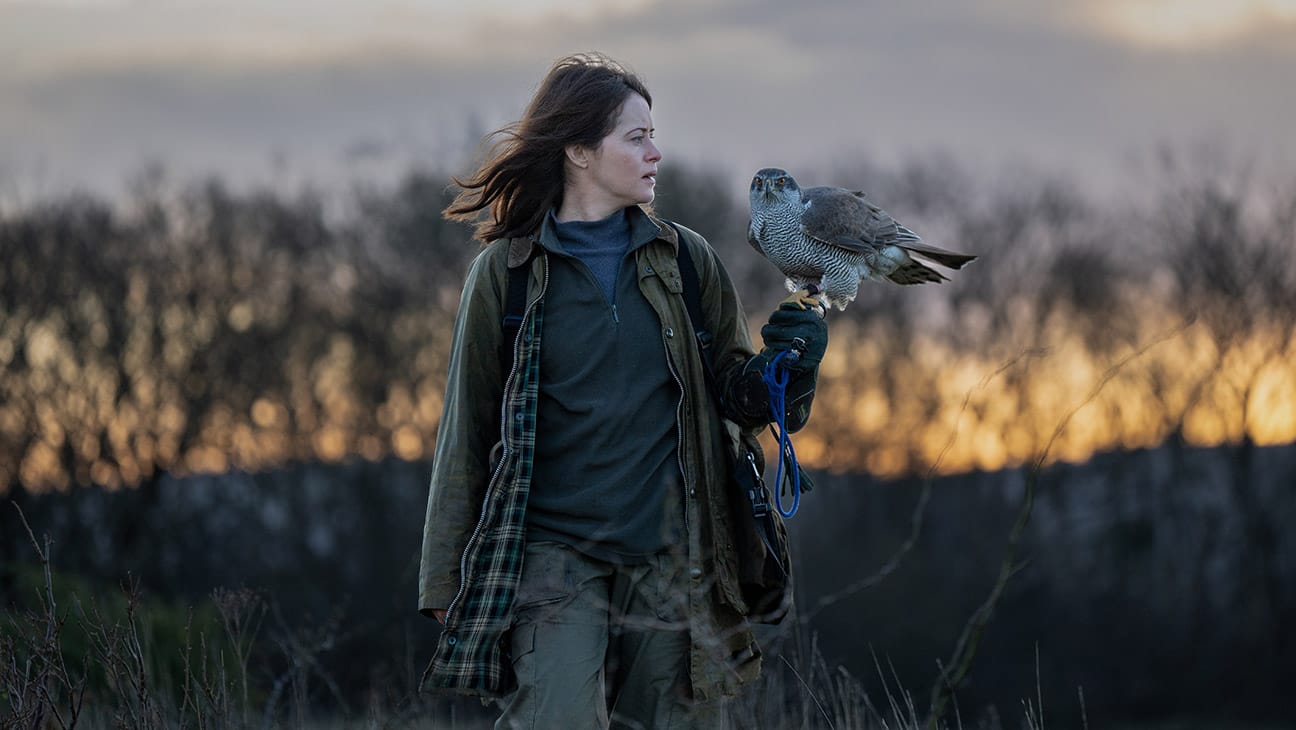
Based on a memoir by Helen MacDonald, a non-binary English writer and naturalist, H is for Hawk is about an academic who copes with the sudden loss of their father by adopting a goshawk and developing an empathetic bond with this beautiful, predatory creature. Nothing about it is unexpected. If you read that first sentence and tried to imagine how just such a scenario would likely unfold, there’s little in co-writer/director Philippa Lowthorpe’s adaptation that could be described as a surprising turn. It’s quite possible that the depth and interiority of MacDonald’s writing brought the memoir to fresh life, but that doesn’t play much of a factor in a movie that chooses not to feature the author’s voice. The film is about the roundabout ways the bird so strongly associated with death can help a person process it, but, of course, you probably guessed that already.
Still, there’s a certain meat-and-potatoes satisfaction to a straightforward story well told, and H is for Hawk glides along smoothly on Claire Foy’s lead performance as a woman* whose grief draws her closer to the bird than the humans confounded by her new obsession. Opening in Cambridge in 2007, where Helen is a professor in line for a prestigious fellowship in Germany, the film is efficient in establishing the closeness between Helen and her father Alisdair (Brendan Gleeson), a renowned photojournalist who’s too passionate about his work to fully retire. In fact, Alisdair is driving into London to cover a terrible storm when he dies unexpectedly, leaving Helen reeling from the news and searching for answers on how to move forward. To that end, their shared affinity for birds of prey leads her to adopt a goshawk from Scotland, despite her woeful inexperience in taking care of such a bird.
The strongest sequences in H is for Hawk involve the trial-and-error process of Helen and the goshawk, which she named “Mabel,” getting to know each other and building to a point where Mabel can be trusted to hunt while still coming back to her. The film has some fun, too, with the spectacle of Helen toting Mabel along to classes and social events where most people are inclined to keep their distance from a bird notably classified as a “psychopath.” But despite Gleeson’s typically warm and appealing performance, Lowthorpe never figures out how to gracefully incorporate flashbacks with Alisdair and all the other characters in Helen’s life are reduced to minor variations of concern or alarm. Only a scene where Helen defends her hunting trips with Mabel as “an honest encounter with death” suggests the tougher, more provocative movie that might have been. This one is mostly a genteel therapy arc. — Scott Tobias
* Though MacDonald uses they/she pronouns, I’ve chosen to use the pronoun “she” in reference to Helen in this movie, in part because her gender identification is not noted here at all.
H is for Hawk sinks its talons into select theater seats this weekend.

Discussion