In Review: ‘Nirvanna the Band the Show the Movie,’ ‘How to Make a Killing’
Our latest reviews cover movies about delusional musicians and smirking mass murderers, but only one is worth your time.


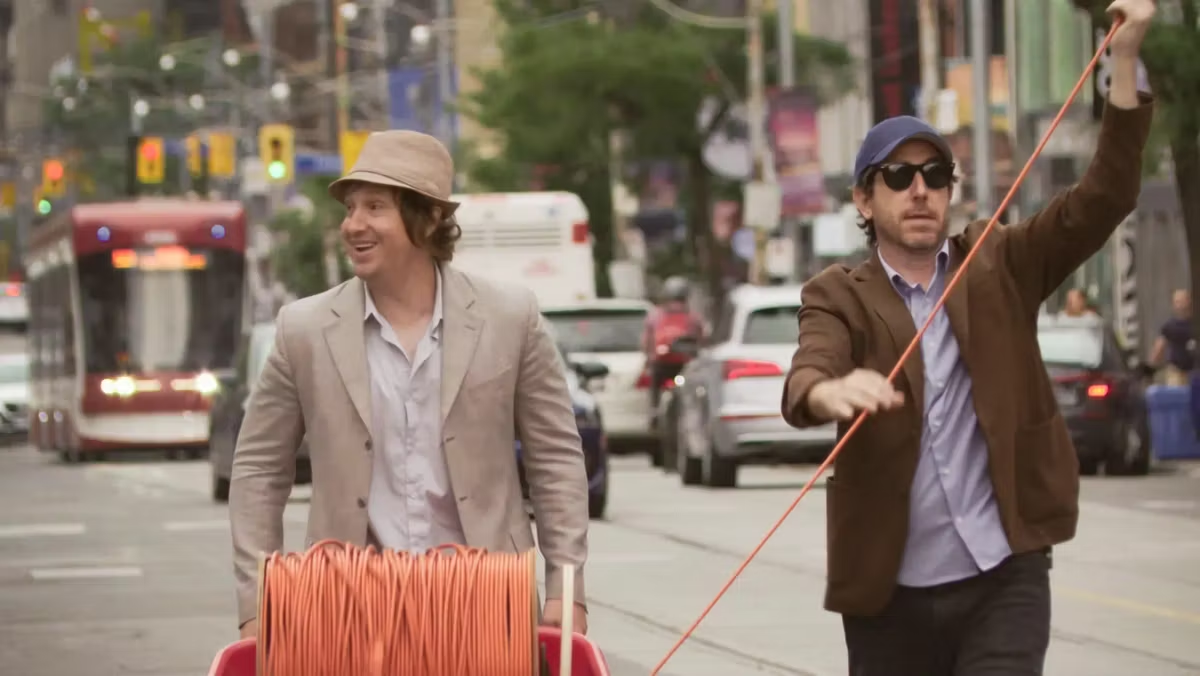
Nirvanna the Band the Show the Movie
Dir. Matt Johnson
100 min.
The Rivoli is a modest bar, restaurant, and performance space in Toronto, known as a launching pad for comedians like The Kids in the Hall and an incubator for musical acts that would soon outgrow 200-capacity venues. It is the ideal place, then, for a couple of local musicians, Matt Johnson and Jay McCarrol, to kickstart their own quest for stardom, if they can ever figure out how to get booked there. (They are Flight of the Conchords or Tenacious D without gigs, basically.) Matt is convinced that they just need one fanciful gimmick to get their foot in the door, and so he writes up possibilities on a whiteboard that inevitably never work out. “Jay, I’ve got a feeling things are going to work out okay for us,” he says, as they’re posting flyers for a Rivoli show that hasn’t actually been booked. Cut to: 17 years later, and things still haven’t worked out.
The Reveal is a reader-supported newsletter dedicated to bringing you great essays, reviews and conversation about movies. If you are not paid subscriber, we would love for you to click this button below and join our community.
Expanded from Nirvanna the Band the Show, a cult favorite in Canada that started as a web series before airing for two seasons on Viceland, Nirvanna the Band the Show the Movie is a lightly absurdist and utterly disarming comedy that makes a virtue of its own shambling, hand-crafted modesty. While it builds off a mythology that, in Canadian terms, might be called provincial, there’s enormous appeal to Johnson and McCarrol—the filmmakers and stars, using their own names—pulling off a sweded version of Back to the Future that seems as goofy as one of Matt’s whiteboard schemes, but comes alive with hidden creativity and craft. They’ve made a time-travel comedy with big stunts and location work, but at a scale small enough to maintain indie cred.
The plotting starts crazy and gets progressively crazier. In the present day, Matt dreams up a promotional vision called Seventh Inning Skydive, in which he and Jay parachute off the top of the CN Tower and through the roof of the SkyDome during a Blue Jays game. Remarkably, the plan nearly works, except the boys can’t anticipate that the SkyDome roof will close before they can make their descent, so they land on top and have to be rescued by the Fire Department—none of which results in a booking at the Rivoli. While Jay quietly loses faith in his buddy, Matt soldiers on with the Time Machine Plan, which involves converting their RV into something like the DeLorean in Back to the Future and pretending to be time travelers. Only the RV actually works as a time machine through the combination of a flux capacitor and a discontinued fruit drink from the late ’90s, and they’re jettisoned back to the year 2008.
Nirvanna the Band the Show the Movie gets incredible mileage out of jokes about the Toronto of the not-so-distant past, like when Matt and Jay are first coming to terms with this impossible turn of events. How do they know it’s 2008? Well, certain men are not yet cancelled, as evidenced by a newspaper cover story (Bill Cosby: “America’s Dad Gives Us ‘The Talk’”) and a billboard promoting Jian Ghomeshi’s popular radio show. They also run into their younger selves, which leads to a series of screwball interactions that include the 2025 Matt accidentally waking up the 2008 Jay and pretending to be visiting him as a “Dickensian spirit.” Matt and Jay have seen The Butterfly Effect and realize that one minor change to the past can dramatically impact the future, but they wind up crashing into the scenery like Buster Keaton.
While there are surely gags and references that are for-fans-only in the film, which exists in part to pay off longstanding support, Nirvanna the Band the Show the Movie is shambling and sweet, loaded with hilarious standalone bits that are held together by the duo’s warm camaraderie and intimate connection to the city of Toronto. Johnson and McCarrol are masters at folding stolen footage into mockumentary video, so their interactions with real, nonplussed residents and tourists are part of the narrative fabric. Toronto has always struggled to be a specific location on screen—save for the occasional gem like The Silent Partner or Scott Pilgrim vs. the World, it’s often used a cost-efficient everycity—but Johnson and McCarrol plant their flag on the corner of Queen and Spadina, and earn a little civic pride. — Scott Tobias
Nirvanna the Band the Show the Movie is now played in select theaters.

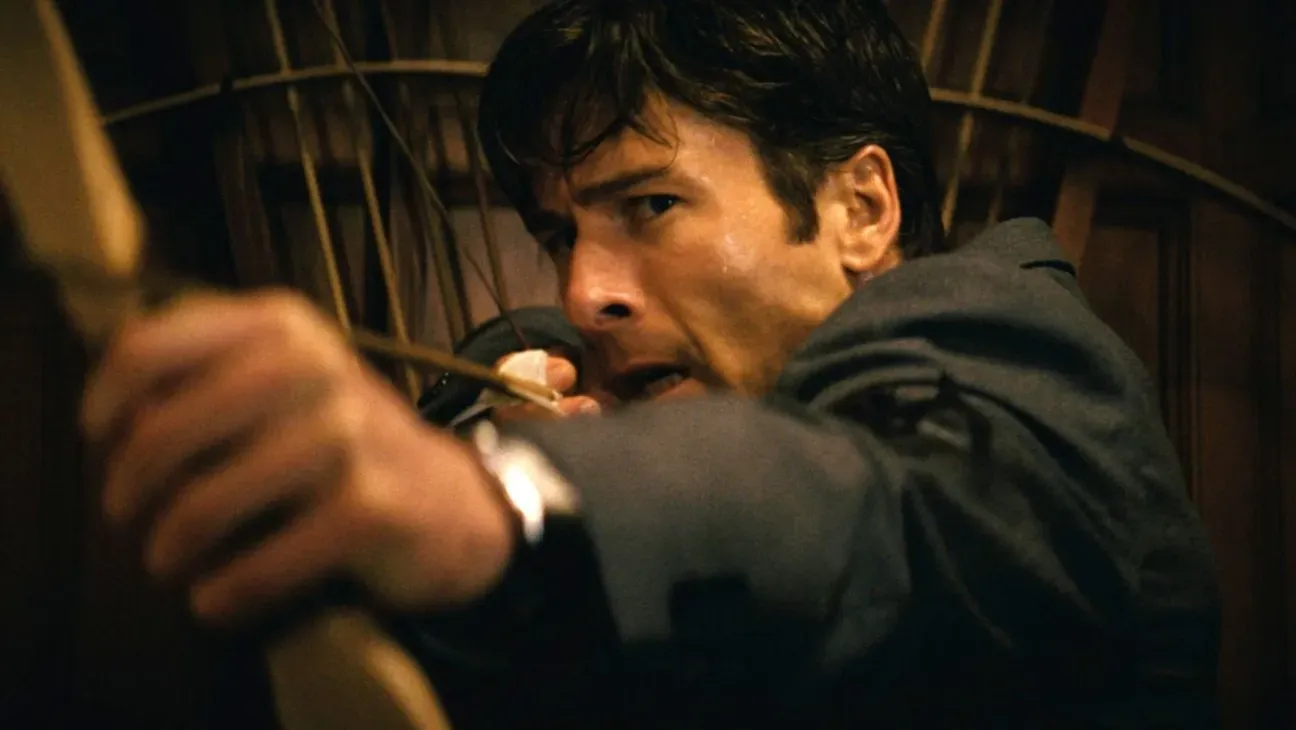
How to Make a Killing
Dir. John Patton Ford
105 min.
Some films leave viewers pondering many provocative questions. Other films inspire only one: “Why didn’t that work?” How to Make a Killing has seemingly everything going for it. It’s writer and director John Patton Ford’s follow-up to his terrific debut, Emily the Criminal. It has a time-tested premise borrowed from the 1949 classic Kind Hearts and Coronets and the novel that inspired it, Israel Rank (though you’ll have to read the fine print deep into the closing credits for that acknowledgment). And it features a cast headed by Glen Powell that features one notable name after another, from Margaret Qualley to Ed Harris. And yet a baffling dullness pervades the film from beginning to end, which is no mean feat for a story built around a string of colorful murders.
As How to Make a Killing opens, Becket Redfellow (Powell) awaits his execution for murder and, with time to kill, decides to tell all to the priest (Adrian Lukis) who’s shown up to comfort him in his final moments. With surprising blitheness (and a lot of smirking), Becket spins a tale that begins with his mother being sent into exile in New Jersey and cut off from the Redfellow family’s vast fortune when she’s impregnated by a cellist of modest means. After being orphaned at a young age, Becket vows to have his revenge on the family, a quest that will leave him wealthy beyond imagination if he can murder the seven Redfellows above him on the family tree.
Where Kind Hearts and Coronets charged Alec Guinness with playing all the dislikable unfortunates standing in Dennis Price’s way, How to Make a Killing brings in, among others, Topher Grace as a corrupt celebrity pastor and Zach Woods as a hipster artist. As with the film that inspired it, Killing is not afraid to traffic in caricature, but Killing's paper-thin characterization leaves even talented cast members struggling to bring their characters to life. (The sole exception is Bill Camp as Warren, a kindly uncle who attempts to give Becket a leg up, unaware of his schemes.)
As satire, it’s toothless. (The rich are awful. We know.) That might be forgivable if the film was at all funny or could decide if Becket was a victim or a psychopath, a problem not aided by Powell’s noncommittal performance. He’s doing too little. In the femme fatale role, Qualley ends up doing too much, but at least she’s putting in the effort. It’s nice to sense that someone involved in How to Make a Killing had a vision of what the movie was supposed to be and tried to realize it. —Keith Phipps
How to Make a Killing opens nationwide tonight.



Discussion