Interview: Alexander Payne on ‘Citizen Ruth’ at 30
With a new 30th anniversary 4K restoration of his debut feature coming out, Alexander Payne reflects on the legacy of his abortion satire.


In the early 1990s, Omaha-born filmmaker Alexander Payne emerged from UCLA Film School with a thesis film, “The Passion of Martin,” strong enough to secure a deal at Universal Pictures as a writer and director, but the studio rejected the script he developed for them, which would later become his third film, 2002’s About Schmidt. Despite this Payne and his frequent writing partner, Jim Taylor, did not then take the easiest path to get his career off the ground. Instead they set to work on Citizen Ruth, a comedy about abortion that uses the issue as a satirical flashpoint about American politics and how ordinary people can get swept up by forces much larger than themselves. Add to that a lead character who huffs paint, torches relationships, and acts out of relentless self-interest, and the film does not exactly suggest a commercial juggernaut.
And well, it wasn’t. Yet Citizen Ruth established Payne as an exciting new voice in American comedy, a distinctly Midwestern artist with a gift for turning the banal details of everyday life into character studies that feel both modern and indebted to Hollywood classics. Laura Dern stars as Ruth Stoops, a comically reckless drug addict who gets pregnant after a flophouse tryst and seems resigned to hand another baby over to the foster care system. (She’s done this four times already.) But when a judge orders her to get an abortion or face a felony charge, it presents a political opportunity for a local anti-abortion group and two married activists (Kurtwood Smith and Mary Kay Place) bring Ruth into their home, with a plan to encourage her to defy the order. When a lesbian pro-choice couple (Swoosie Kurtz and Kelly Preston) step in to support her right to an abortion, Ruth is ping-ponged between the two groups, and she tries to leverage the situation to her advantage. Burt Reynolds co-stars as a TV evangelist who swoops in with an offer.
Despite a lack of support from Miramax, the studio that financed and distributed it, Payne was able to parlay Citizen Ruth into a steady career as an independent and studio director, with a body of work that includes Election, Sideways, The Descendants, The Holdovers, and more. (I’ve written here about Payne’s collaborations with Paul Giamatti and ranked his work, too.) With a new 30th anniversary 4K restoration of Citizen Ruth opening Friday at Film Forum in New York, The Reveal talked to Payne about his experience as a first-time filmmaker, his approach to satire, and how Dern affected the film’s trajectory.
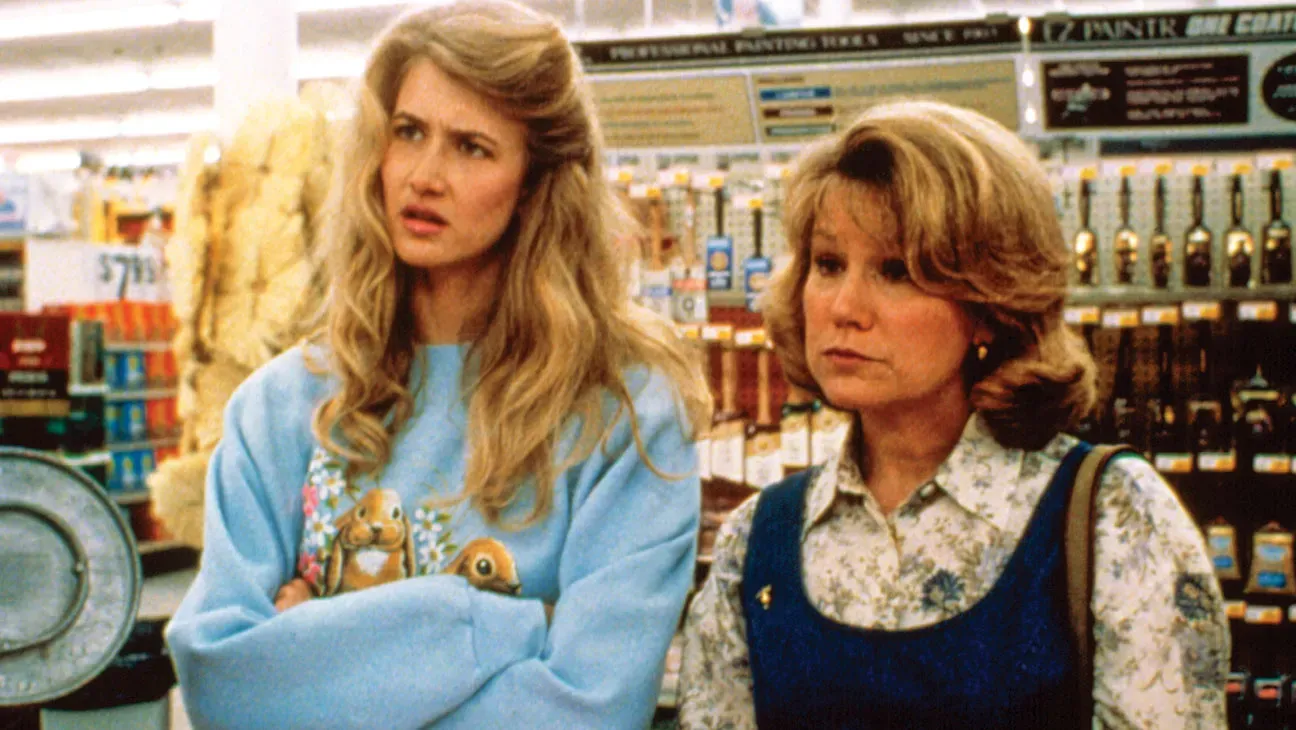
For you to start your career with Citizen Ruth feels a little to me like Preston Sturges starting his career with The Great McGinty.
Oh, thank you. Thanks for the comparison. I’ll brag that when Citizen Ruth came out, it did garner a couple of comparisons to Preston Sturges. I forget one, but I do know that David Denby invoked Preston Sturges when reviewing Citizen Ruth.
The other one it made me think of was Ace in the Hole.
Right. Well, that movie was a direct influence.
The point I’m making, in both cases, is that as a first-time director, you were giving yourself a pretty steep commercial hill to climb. How cognizant of that were you?
We were making something which was destined to flop at the box office, which it did. Miramax gave it a very lousy release at the time. But look, Jim Taylor and I thought it would make a really good movie and we just allowed ourselves... All you can do is try to make the movies you yourself would want to see, and we’ve always tried to do that.
Jim and I were living together at the time in Silver Lake in Los Angeles and we split a subscription to the New York Times. I had already read it that day, and then he read it after me and circled an article and said, “Did you read this?” And I read it, and it was the real-life story of a Native American woman in Fargo, North Dakota, who was in that same pickle and even became the center point of a tug of war between pro-life and pro-choice. And I said, “This is a movie.” So we just dropped everything else we were doing and started writing it.
I don’t know what else to tell you. [Laughs.] We just thought it'd be a good movie and a good comedy.
Enjoying The Reveal? Now's a great time to become a paid subscriber. You'll get access to everything we publish—from articles to audio commentaries—and help support independent film criticism.
Why was this particular issue a good fulcrum to build a movie around?
Because it makes it a little dangerous. We weren’t interested per se in a movie about abortion. We were more interested in a movie about the politics around it and the people involved who, like in Ace in the Hole, have much more self-interest than they do interest in the people or person they’re proclaiming to want to protect or save or something. We just thought it was a good idea for a satire, and the hot-button, dangerous issue of abortion made it a little bit more appealing to us.
Now we thought that times were going to change and that the movie would lose its fangs a little bit because abortion would become settled law and we’d all forget about it. But boy, that certainly has not happened. And when the Supreme Court reversed Roe a few years ago, both Laura Dern and I fielded a bunch of calls about this movie, like, “Oh, did you know it was so prescient?” and all. I was like, “Well, no.” We were happy people are still seeing the movie and are still interested in it, but we’re sad about the reason why.
Did you write the film with an actress in mind?
I did, but not the actress who played it. To help me in the writing process, I wrote it for Giulietta Masina, Fellini’s wife. I thought she would’ve been really good in the part. [Laughs.]
Laura Dern, though, was not my first choice for the part. My casting director and producers didn’t even think of her or call her, either. She called me. She had gotten a hold of the script through her then-boyfriend, Jeff Goldblum. She had read the part and I think she saw my thesis film, “The Passion of Martin” from UCLA, and said, “I want to be in this movie.” And she lobbied hard to do it. I was very, very, very flattered and cast her, and thank God I did.
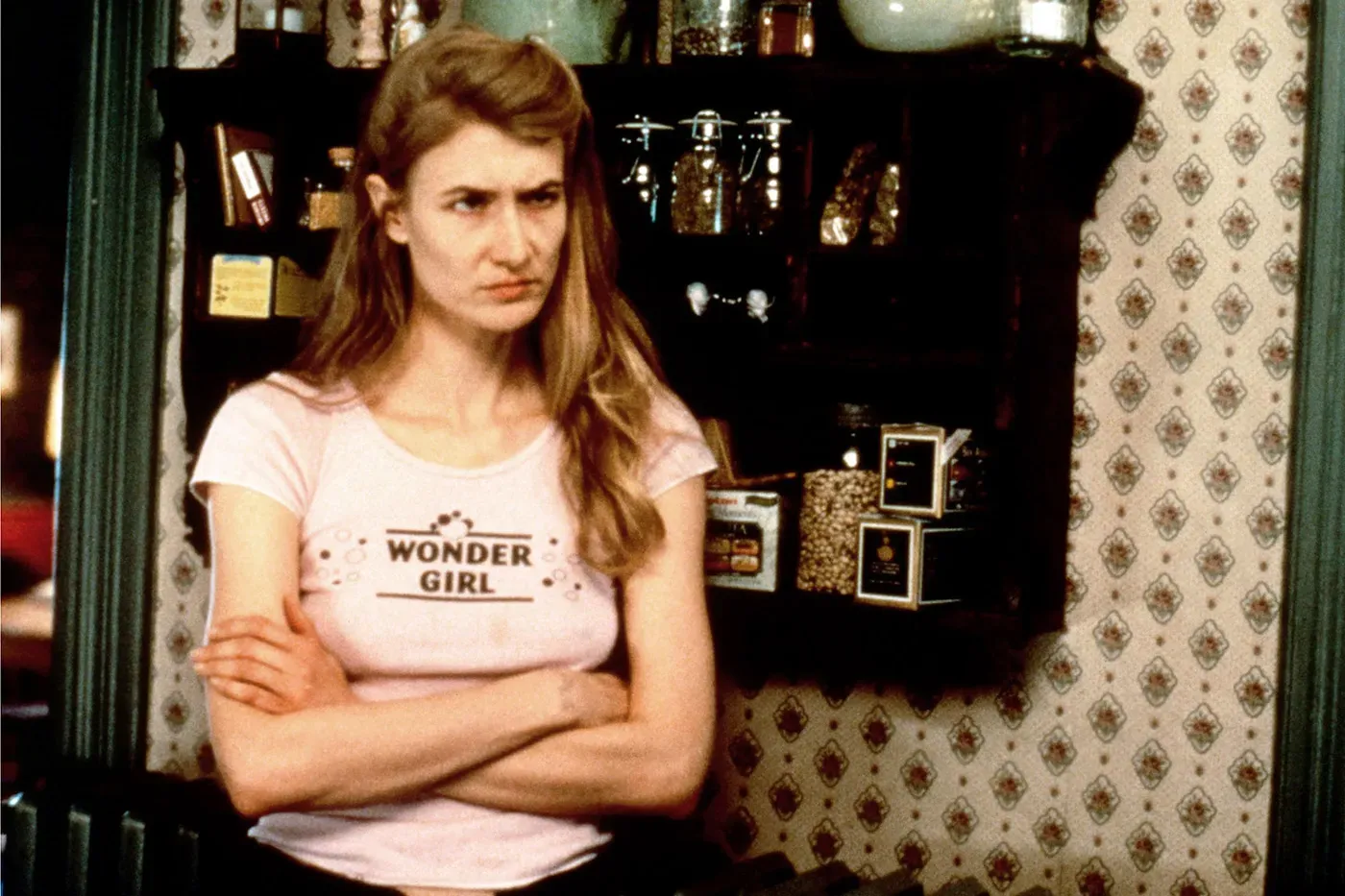
How did the film change shape when she came in? What did she bring to the table that maybe altered your thinking about what this movie could be?
The first thing she brought to the table was that now I had an actress I believed in who could also help serve as an anchor for attracting other actors—and then, by extension, some financing. I mean, we didn’t get a lot of financing for it. It was about $2.1 million, as I recall, a very low budget at the time. Still is. I mean, obviously microscopic by today’s standards, but she helped me get that even meager financing. And then she just brought a lot of humor and élan—nice crossword puzzle word there—and joy to a—on paper—depressing character.
My movies were more purely comic at the beginning and now a little bit more dramatic, maybe. Still, in dramatic parts, I like to cast comic actors or actors who are adept at comedy because they just keep things watchable and buoyant and don’t let the movie descend into too much dreariness.
You mentioned that Dern’s presence was helpful for casting and it occurs to me that she does have a special position in film history, given who her parents are [Bruce Dern and Diane Ladd] and who she knows. How much did that directly impact what I think is a pretty extraordinary cast for a film of this size?
First, you said something that makes me want to add to my previous answer about what she brought to the part. Those Derns, meaning her dad, who I worked with years later [on Nebraska], and the mom, they’ll just do anything. People always say about certain performers, “Oh, it’s raw. Oh, the actor was so brave. Oh, the actor was so egoless,” all that kind of stuff. But it’s really true with Bruce Dern and Laura Dern and with Diane Ladd. They would just, whatever is truthful and especially… not even if it's ugly, but sometimes especially if it’s ugly, they enjoy doing it.
And then Laura Dern was, if not a huge star at the time, a well-known one, both for her work with David Lynch and then for Jurassic Park not long before I shot Citizen Ruth. So it was a really good anchor to attract other talent. And then everybody liked the script. I would get in the actors, like Kurtwood Smith and Mary Kay Place and Swoosie Kurtz and Kenneth Mars, the great comic actor Kenneth Mars, who’d all come in to audition. And they just kept telling me, “We just haven’t read a script like this in a long time.” And from Laura Dern and Burt Reynolds on down, they all took scale to be in the movie, which was $2,000 a week or something.
Meanwhile, this is your first film. You’re dealing with a small budget. You had to fight so much to get this film produced. Was there a lot of fighting to get your vision through production and post-production, too?
Not really. The fight was to get the fucker made, just to get to that first day of shooting. That was the big fight. Once we started shooting, I pretty much knew what I was doing and I think it was pretty evident in the editing process that [the distributor] had an interesting film on their hands that accurately reflected the screenplay. And even the head of Miramax then, Harvey Weinstein, who was notorious for dicking around with filmmakers’ movies and being a jerk about it, he only [interfered] a little bit here. I had a relatively good experience because the film just was what it was.
You look at some of the names involved in this production. You mentioned Harvey Weinstein coming into this and also someone like Burt Reynolds, who had a famously difficult relationship with Paul Thomas Anderson the next year making Boogie Nights. Was that something you were able to manage pretty well as a first-time director?
Yeah. It felt so good. I was honored by all these people saying yes to being in my first... Not my first movie, because I had gone to film school, but my first feature. Super flattered and honored that all these people agreed to be in it. But rather than be intimidated or scared, I was buoyed by their support and by their interest. They were all there because they wanted to be there, and it made it just a really great, fun, family-like atmosphere.
I wanted to circle back to the models for how you pulled this off because we talked a little bit about The Great McGinty and you said Ace in the Hole was a film that directly influenced Citizen Ruth. And it reminded me of how your work is modern, but also feels connected to classic Hollywood in a way that not a ton of filmmakers’ work is. So I was curious what you were thinking of these movies as a roadmap, I guess, to get a movie like this done.
I had a really good partner in the screenplay. I mean, I’m an okay writer myself and Jim is an okay writer, too. But when we get together, very often we share a sense of humor and then a sense of a kind of classical but still surprising structure and drama. Election was our next movie after that. That's the one that really put us on the map, and that has a very intricate and interesting structure as well as a pretty good satiric take on people. So, I don't know.
After every one of my movies comes out, I’m often asked, “Well, how do you mix comedy and pathos?” And I go, “I don't know, man. It’s just how it comes out.” I appreciate the question, but I guess, if we fall in line with other filmmakers we admire, not to compare ourselves to them, but De Sica and Leo McCarey and George Stevens and Frank Capra and even Ozu, you could say. Comedy can mean such infinite things, but it's comedy at the service of a basically dramatic story. Comedy is our form.
I think there’s something specifically audacious about having a central character—and again, this goes back to Ace in the Hole—who acts out of self-interest constantly, who is not quote-unquote “sympathetic” in the broad sense, but is someone that we, as an audience, can still feel connected to, given the situation.
The big difference between Citizen Ruth and Ace in the Hole is both are about people who don’t really care about the one person suffering, but Ace in the Hole is from the point of view of one of the exploiters. Citizen Ruth is from the point of view of the exploited person. So, I guess that’s one difference. But I can’t tell you, man, how many times in my early career I’d have meetings about finance and they go, “Yeah, but your central character is so unsympathetic.” And the answer to that is always, “It hasn't been cast yet.” Like think of A Clockwork Orange. That’s an unsympathetic protagonist, Alex, but it’s made delicious. He’s a rapist and a killer and a miscreant, and you root for him subversively. You know?
One standout element in your films is the attention that you give to decor, to wardrobe, to hairstyling, that sort of lived-in quality. This is something that’s present right from Citizen Ruth. Why is that such an important part of your work?
I don’t know why, but I’ve always wanted to take a documentary approach to commercial fiction filmmaking. I just like movies set in not a fake or make-believe reality, but a real reality. I always prefer locations over building something and actors wearing no makeup as much as possible unless makeup is called for by the role. I also like to shoot usually with wider lenses and a higher F-stop, so everything is in focus, so you always see the person in his or her environment.
One person in film history whose work I studied a lot [in this regard], because his films are a masterclass in doing that, is Anthony Mann. If you know his work, especially his great Westerns with James Stewart in the ’50s, the landscape behind the characters is constantly informed by and commenting on where the character is in his emotional journey.
I tend to think about locations first when I think about your movies. Like the basement set-up in Kurtwood Smith’s house with the foldout couch or the location where Ruth goes for the appointment with the anti-abortion doctor, which is plain and almost subterranean. It just feels like those things are extremely important, but not necessarily things that other filmmakers pay enough attention to.
They’re also funny. The locations give a sense of truth through recognition. And the other thing, too, that I’m pretty careful about with my production designer is making sure that low-rent locations look genuinely low rent and not that we’re making fun of them. You see so many movies and TV shows where they’ve so clearly put a fake sign on a storefront or something, which is a little bit, too... It’s got too much sour cream on it, and I just don’t believe it. It’s got to be believable.
Laura Dern said in an interview that the film did not get the expected support from Miramax after Citizen Ruth was well received at Sundance, and that it may have been tied up in the studio’s experience with Priest. Was that your impression, too?
Yeah. I never heard it directly, but one of the producers also thought that. It was 1996 and the Weinsteins were tied in with the Clintons and they didn’t want to create [controversy]. Priest had been an unpleasant experience for them, and they didn’t want to monkey around with that anymore. In other hands or maybe at a different time, they could have really trumpeted a subversive movie about abortion protestors, but they didn’t do that and it pretty much tanked. But I’m so thankful to the film gods that the film is, even to a small degree, still remembered and is now being re-released. It's really an honor, you know, really is.
How do you feel like Citizen Ruth connects now with the culture 30 years later?
We have political satire up the wazoo right now, so it’s not like we need more political satire. But I think the fact that the focus is more on the people and on the humor and the pathetic-ness of the whole scene makes it still kind of a refreshing comedy, I hope. A refreshing take on the political divide, a divide which has only gotten wider since we made this film 30 years ago.



Discussion