Interview: The directors of 'Documentary Now!' discuss one of the series' most challenging episodes
With a new coffee table book about 'Documentary Now!' on shelves now, showrunners Rhys Thomas and Alex Buono discuss the making of "Mr. Runner Up," the series' parody of The Kid Stays in the Picture.

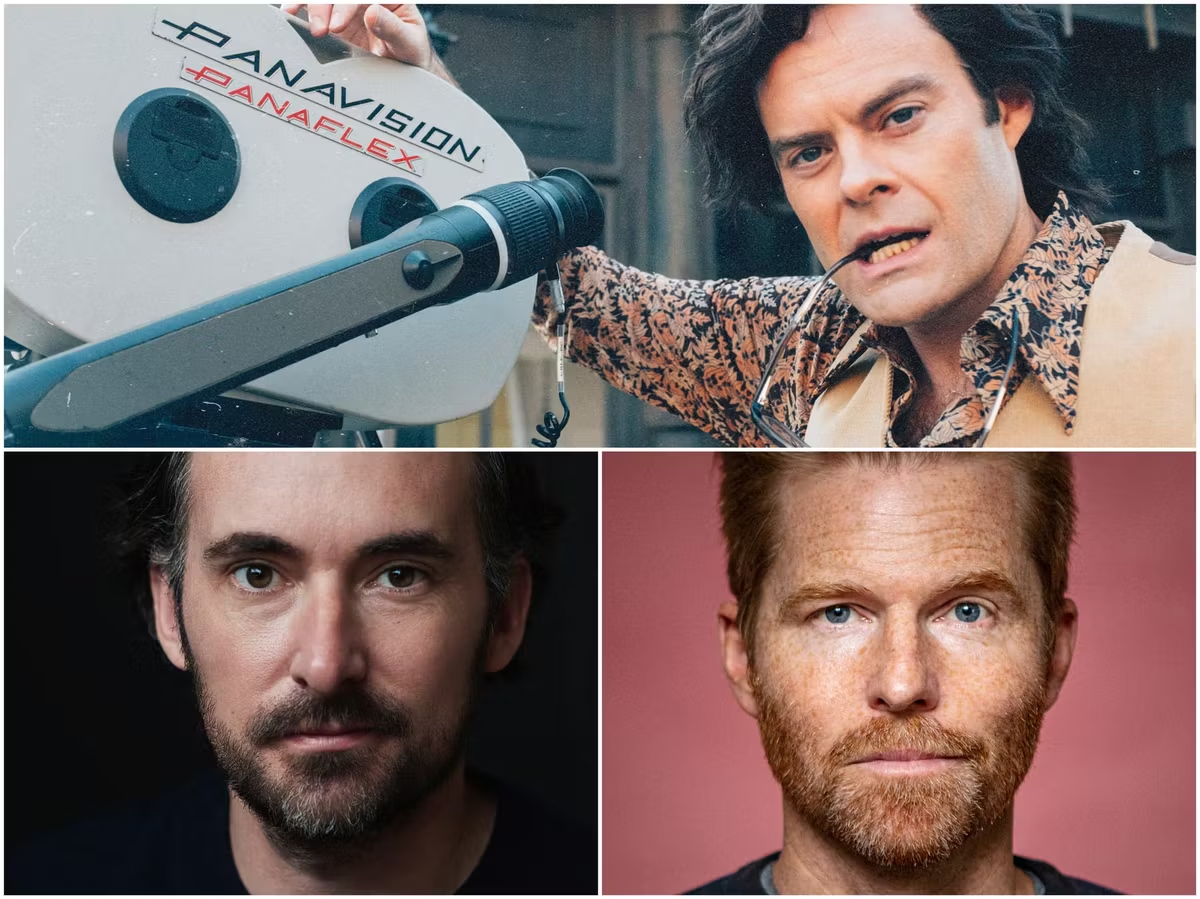
Documentary Now! is one of the greatest and most unlikely triumphs of niche television, an IFC channel production (which is now streaming at AMC+) that has parodied classic documentaries over four seasons, from 2015 to 2022. (Note the hopeful use of present-tense here.) Presented as a PBS-style series, with Helen Mirren offering austere introductions to each episode, the show has riffed hilariously on such revered standards as Grey Gardens (“Sandy Passage”), The War Room (“The Bunker”), Jiro Dreams of Sushi (“Juan Likes Rice & Chicken”), Swimming to Cambodia (“Parker Gail’s Location is Everything”), Original Cast Album: Company (“Original Cast Album: Co-op”), and the various ethnographic docs of Werner Herzog (“Soldier of Illusion, Parts 1 & 2”). With Lorne Michaels serving as a producer, Documentary Now! is also an extension of Saturday Night Live, spearheaded by alums like Bill Hader, John Mulaney, Seth Meyers, and Fred Armisen. (Armisen is part of the main cast for all four seasons and Hader for the first two. Mulaney cameos as a chain-smoking Stephen Sondheim-type in “Co-op.” Meyers has stayed off screen, but has 11 writing credits, the most of the four.)
Yet the true, perverse genius of Documentary Now!—the part that has endeared itself to devotees of nonfiction filmmaking—is how meticulously it recreates the look and feel of the source documentaries themselves. And credit for that belongs to showrunners Alex Buono and Rhys Thomas, who co-direct every episode and mimic a range of different styles, from the fly-on-the-wall vérité of D.A. Pennebaker to the multi-camera flourishes of Jonathan Demme shooting a Spalding Gray one-man show. Buono and Thomas were both part of the SNL Film Unit and they have a diverse list of credits between them, with Buono directing the second season of Russian Doll and episodes of Future Man and The Detroiters and Thomas helming John Mulaney & the Sack Lunch Brunch, multiple episodes of Hawkeye, and the pilot of NBC’s The Fall and Rise of Reggie Dinkins.
Enjoying The Reveal? Now's a great time to become a paid subscriber. You'll get access to everything we publish—from articles to audio commentaries—and help support independent film criticism.
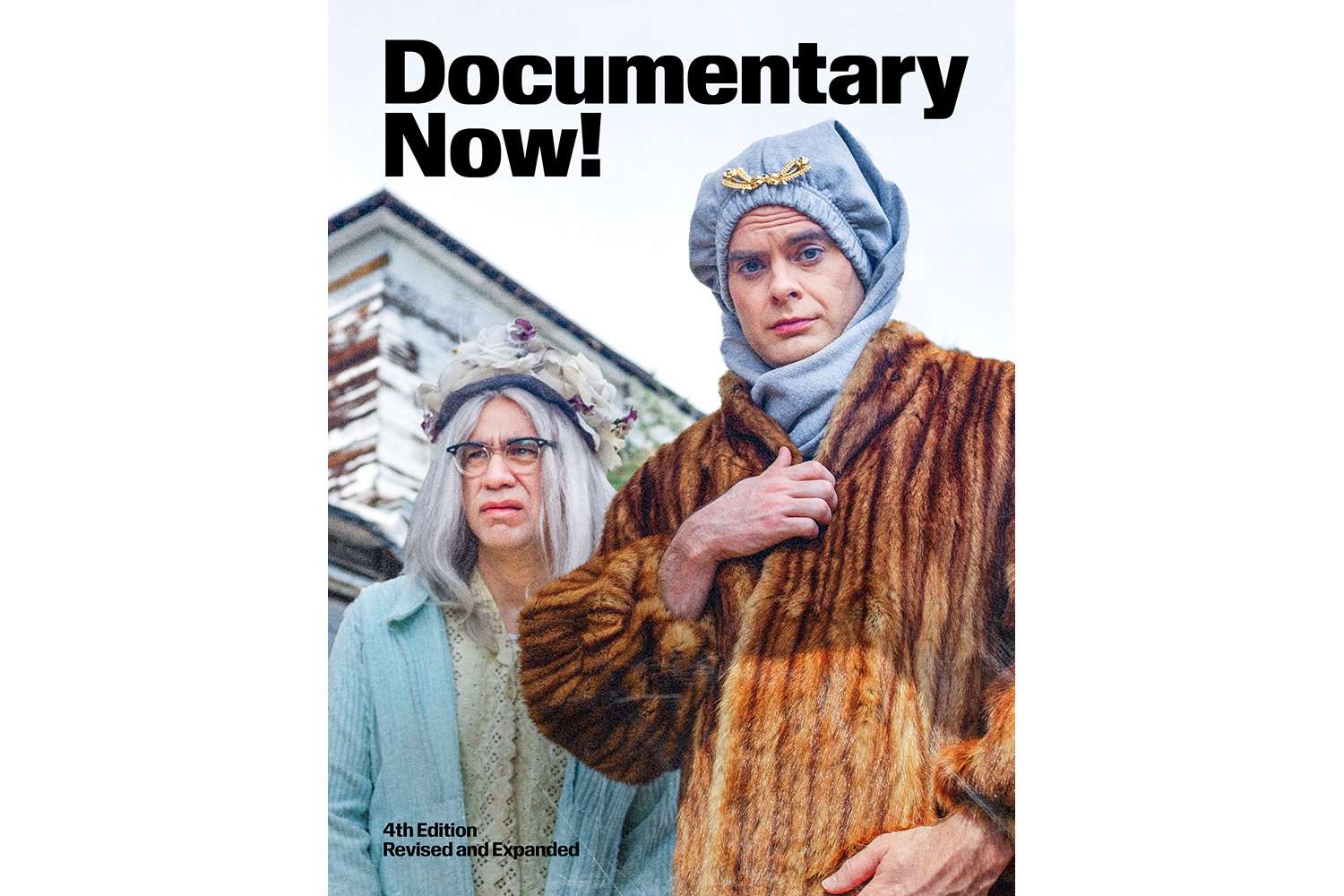
Last month, McSweeney’s published Documentary Now! (4th Edition, Revised and Expanded), a gorgeous coffee table book that parrots the show’s deadpan conceit of pretending it’s a real, long-running, widely revered television institution. Even the foreword, by critic Matt Zoller Seitz, is a parody of what Matt Zoller Seitz might have to say about its place in the cultural firmament. For our interview with Buono and Thomas around the book, we wanted to focus on a single episode to demonstrate the amount of detail that figures into the direction of the show.
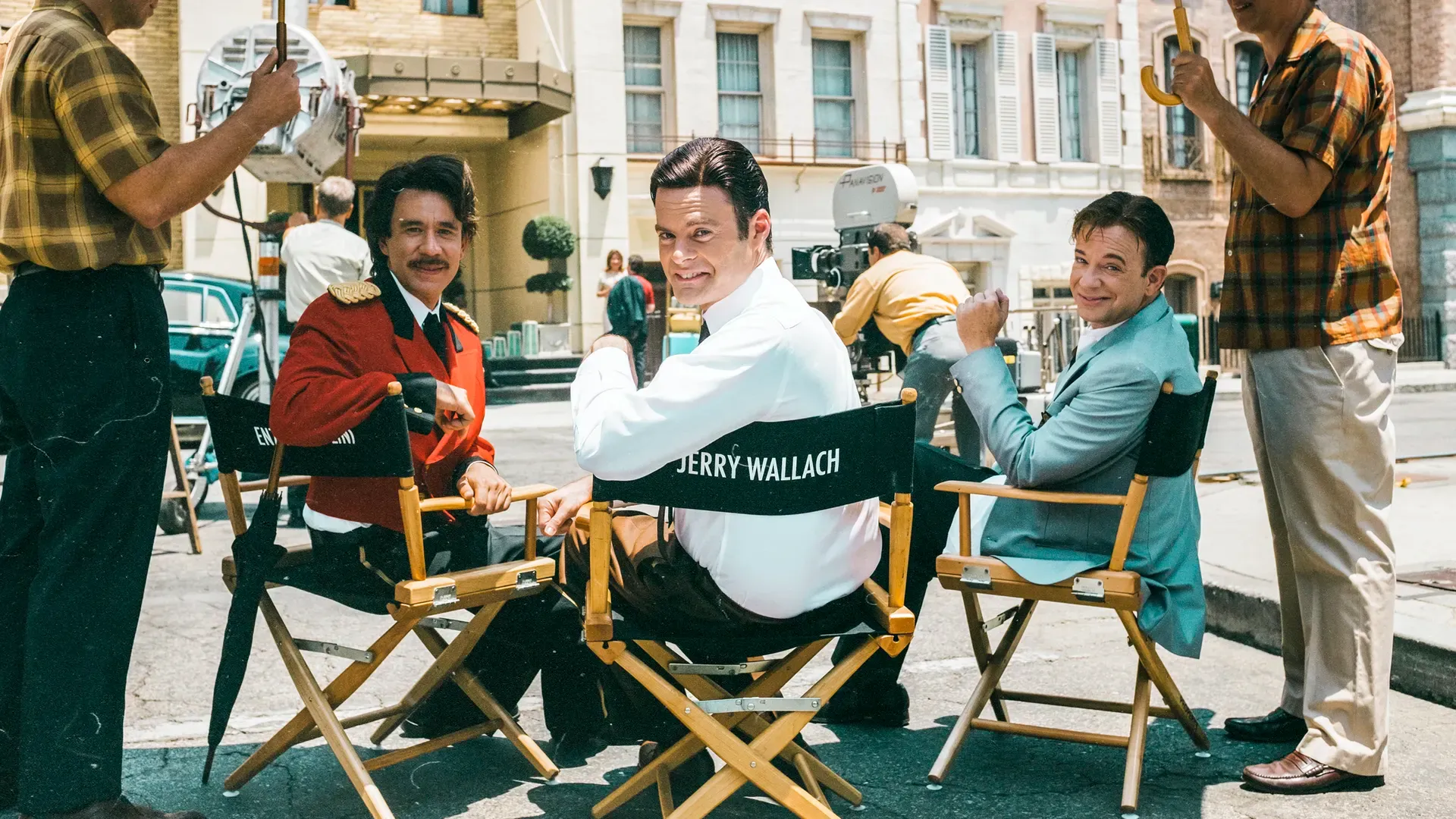
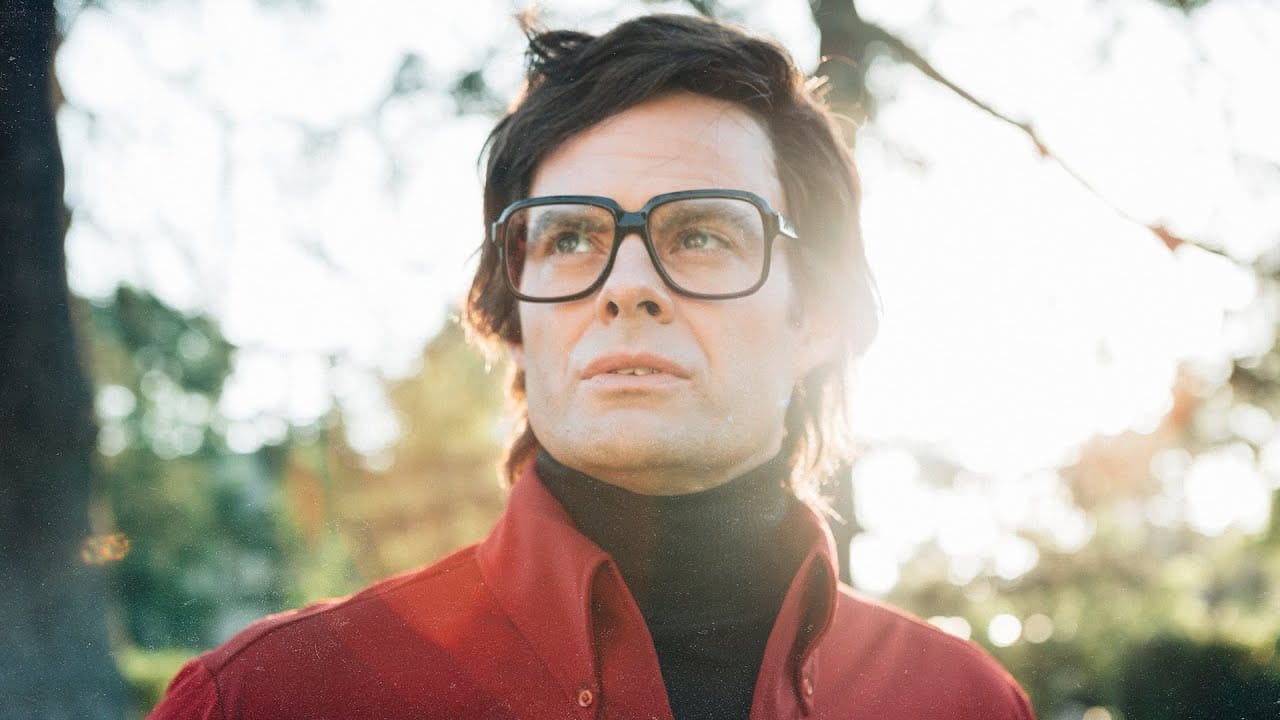
To that end, we chose “Mr. Runner Up: My Life as an Oscar Bridesmaid,” the two-part finale of Season Two, which parodies Brett Morgen and Nanette Burstein’s Robert Evans documentary The Kid Stays in the Picture. Written by Hader and Mulaney, “Mr. Runner Up” is about Jerry Wallach (Hader), a Hollywood mogul who tried desperately to win an Oscar for the CIA-backed Pinnacle Pictures with various off-brand prestige pictures, like a Holocaust memoir twisted into a movie called Blondes, Blondes, Blondes and a Millionaire and Fisting, an edgy production that Wallach describes as “a bondage-themed improvised movie with borderline unattractive no-name actors.” (It opened against Star Wars.) Wallach’s favorite star and only friend throughout his time as a studio boss was Enzo Entolini (Armisen), “the Italian Chaplin,” a comic performer who mastered the art of drawing mild chuckles. Buono and Thomas talked to The Reveal about the surprising challenges of “Mr. Runner Up” and their broader approach to the show.
When I pitched some episode candidates for this interview, Rhys, you brought up “Mr. Runner Up” as a good example of the show’s “adventure and ambition.” What stands out to you about it and the experience of putting it together?
Rhys Thomas: The fun of that episode was that when the idea was pitched, when it went onto the board of episode ideas, we genuinely all kind of thought, “Oh, it’s just voiceover and photographs.” We thought it would be easy and budgetarily friendly to the season at large. But then what happened over the second season, when we started breaking it down, it just became overwhelming. Like ”Oh my God, we need so much material to tell this story.” So there was the practical element.
So we took The Kid Stays in the Picture and essentially built a temp setting for the whole episode from footage from the film so we could figure out the photographs. I think that was probably your idea, Alex. There was a real step-by-step process through that whole episode to execute it to the level that we did and I tested everybody. It required a really methodical approach and an understanding of all these different formats. So we created this giant bible out of that temp episode that broke down every photograph and all the elements within it. There was something about the scope and ambition of it that I felt really proud of. And then you’ve got the layer as well of Mulaney’s writing. In a way, it’s like an audiobook, that episode, just like this wall to wall of really funny writing.
Alex Buono: If you think about that episode compared to, say, “Juan Likes Rice and Chicken” where, yes, we went to Colombia and we shot it in a jungle, but once we were there, you could kind of point the camera in any direction and just shoot the scenes. With “Mr. Runner Up,” we were creating a narrative that’s basically all archival. Every single shot is its own little art project, telling the history of a man’s life and a life that was spent in Hollywood. So it’s just a bunch of movie parodies. It’s funny because Rhys and I worked together with all of our team at Saturday Night Live for so long, and on any given week, Rhys was directing the film unit and producing it, and I was shooting it, and we would maybe attempt one of those pieces, one of those films. And here was an episode that was just going to be like wall to wall. It turned into the synthesis of all of the things that we did [on Documentary Now!] as opposed to like, “Here’s an easy idea.”
The Kids Stays in the Picture started as a memoir, and then became a phenomenon as an audiobook that Robert Evans narrated in his incredible voice. But I think what gets underrated—and maybe this was something you discovered when you were making the movie—is how much artistry Brett Morgen and Nanette Burstein bring to the table in terms of that multi-dimensional collage style. It’s a little more accomplished as a documentary than I think people give it credit for.
Thomas: Oh, for sure. That two-and-a-half-D animation was a pretty big deal when that documentary came out, really bringing this man to life through these stills. I think the fun of this episode is that I felt like it pulled on everybody on the production team. We took those photographs. We were working on the episode essentially through the entire production of season two. So, we’d be shooting the live concert for “Test Pattern,” for example, but on that same day and same location, we were also bringing Fred and Bill out to shoot photographs for “Mr. Runner Up,” because the architecture of the building that we were shooting at had something we could use.
The episode is scripted by Mulaney and Bill Hader. What angle did you want to take on that material? You start with this character who sees Snow White and the Seven Dwarfs as a little kid, but he thinks about it like a tycoon. He loves the thought that Walt Disney probably made Adriana Caselotti, the voice of Snow White, work for scale.
Buono: I feel like the process was similar to something like “Parker Gail” where I think Bill and John just started with a character. They start with a character and a character’s voice, as opposed to it being conceptual. It was a character that Bill was going to really enjoy playing, and that Bill and John were going to really enjoy writing jokes for. It was a character that they were writing around as opposed to a concept intended to make a statement about Hollywood, or something.
Thomas: But then also so much commentary about Hollywood ends up in it. I was even just flicking through the section [on “Mr. Runner Up”] in the book today and looking through all the different pull quotes that we have. And again, there’s such a specific person in Jerry Wallach yet there are shades of high-powered leaders that we're all familiar with now, too.
Buono: We need to credit those guys. Bill and John are both such students of Hollywood history. They love the history of Hollywood, the history of television, the history of filmmakers, the history of the studios. They know so much about it and they can with such ease make a joke about some little corner of film history that we haven’t even heard of. It becomes this very funny but super-esoteric niche joke that’s like the absolute lifeblood of the show.
Just the way they pivot off of Robert Evans, too. Jerry Wallach is suggestive of Robert Evans, but of course Evans was not a runner up. He was somebody who produced films that are all-time greats that won major awards. But at the same time, and this is something Peter Bogdanovich suggests towards the beginning of the episode, there’s so much self-mythologizing on Evans’ part. He took so much credit for movies like Rosemary’s Baby and The Godfather, but can we really attribute any of the genius of those movies to him? Did that figure into the alternate history of a guy like Jerry Wallach?
Thomas: Yeah. There’s definitely a really fun satirical take here on Evans and self-mythologizing. There's that line where he’s like, “The only man that could tell the story of Jerry Wallach is Jerry Wallach, and he’s the man who writes that sentence.” But then I think spiritually for the show, we’re always working in this parallel universe where, say, the Maysles Brothers exist, but we happen to be featuring these other guys who existed, too. What I love about this episode is we spanned this alternate pop culture history through Jerry and it felt wonderful to imagine that these things could have existed. The fact that at some point an obscure Italian actor made a movie called Fisting, set “at the corner of sex and finance”… [Laughs.]
What shape was this script in when you got it? And how did you start to add to it once you went into production?
Thomas: In terms of the voice, that was largely in place from the beginning. Once we had an assembly together towards the end, we did a watch-down with Bill and John and did a little bit of massaging and tweaking where we felt like we could improve things. Otherwise the template was there. But it was pretty much all voiceover. So for us it was about figuring out what goes with that voiceover. And like I said, we built off The Kid Stays in the Picture. That was how we established a roadmap to find those parallel images and see how we could make it flow within ours.
The joy of doing the show is that we have these wonderful writers behind us, but it’s very much a team effort. We start with that script, then Alex and I often have to unravel the puzzle of how you actually do it. Where that handoff happens is always different. Here there were obviously all the film clips to figure out, all of the various posters and film titles. That was pretty much our post team. It was a long editorial process. Looking through the book, I love seeing all those posters and the taglines [for made-up movies] again.
Buono: “Mr. Runner Up” was unique. Each episode is pretty tightly scripted. And I think that there’s maybe an intuition that, “Oh, everybody is so good at improvisation. You never even know what’s going to happen.” But the fact is, these are pretty tightly scripted episodes. And yes, of course, they’re very fun to shoot. Bill and Fred crack each other up so much and there’s nothing more fun than just watching them try to make each other laugh. But we’re never going into a scene like, “I don’t know what should happen here. Let’s just figure it out.”
And part of that comes from the fact that we just don't have any time to shoot these episodes. They happen so fast. And as Rhys was saying, even locationally, you have to be so strategic. The fact that Rhys and I directed all the episodes allowed us the latitude on “Mr. Runner Up” to say, “While we’re shooting that episode, we’re going to shoot a bit of this episode.” We could actually throw the actors into costume and pick up a photograph here or there. We were constantly building the whole thing throughout shooting season two.
What was unique about this one is that we actually recorded Bill reading the entire script. And then we cut together a temp version of the episode with Bill’s voiceover and then dropped in footage that we were pulling from other things—images of real movies and posters, images from The Kid Stays in the Picture and other movies so that we could get a sense of the tempo of it. We could then figure out how many images we would need, how many posters we would need, and so on. That was when it dawned on us that, “Oh my God, we’re going to need a lot more than we thought.” [Laughs.]
Thomas: Yeah. There’s an image every three seconds or so. We made a bible for the episode that was thick with every scene and every individual photograph. There’s all the notes that we could possibly provide because otherwise everyone would’ve just gotten completely lost. And because we were oftentimes picking up just one photograph at a location for a different episode, it became this sort of invaluable document.
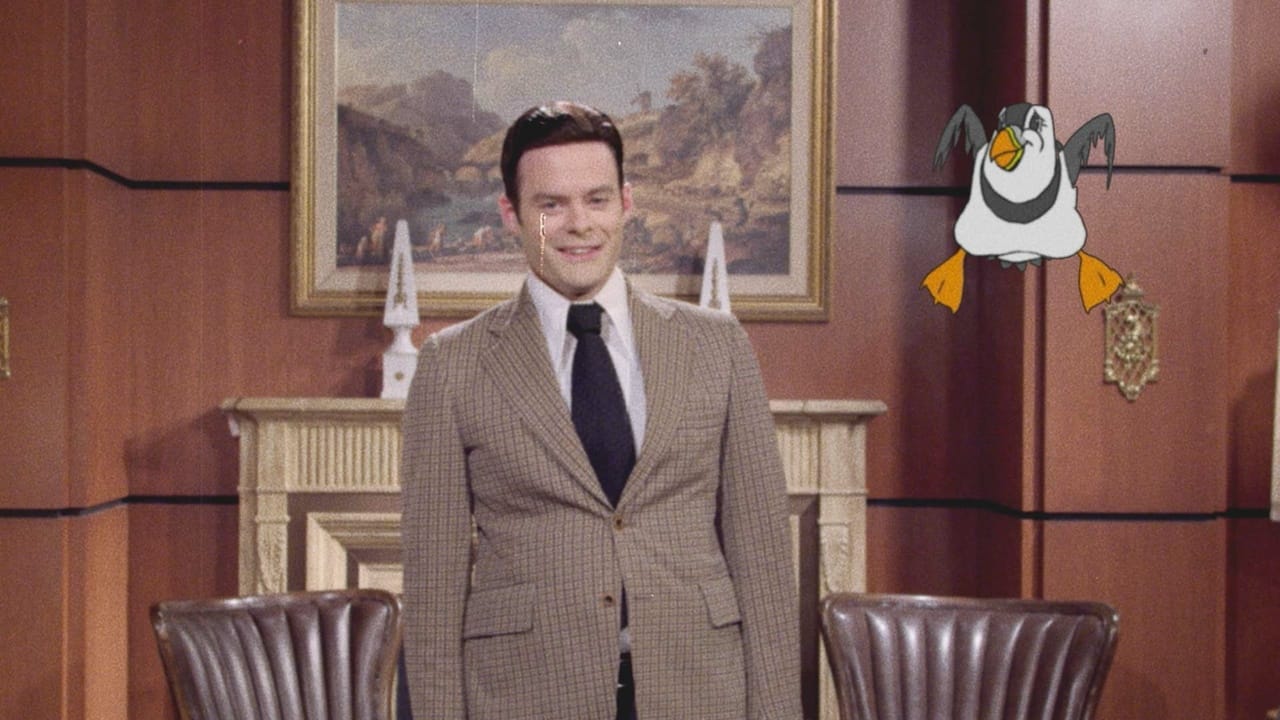
There are so many fun flourishes here where you did actually shoot some scenes. I’m thinking about “The Scrapyard Gang,” that parody of The Little Rascals. Or newsreel footage for the “Magenta Fever” Jerry contracts as a kid. Or those scenes in his office where he gives pitches to his bosses along with an animated character that looks like something out of Pete’s Dragon. Do any of those experiences stand out to you?
Thomas: Big time. “Mr. Runner Up” was like the most L.A.-specific episode that we did. We were on the backlot at Paramount. We were on some standing sets and we were recreating the look of all these different periods, too. So, Alex’s lighting came into play. If we were going to be at the backlot for a day, we were determined to shoot every last inch of it we could. So we did some of the Enzo stuff and “Magenta Fever,” and a bunch of backlot photos. For our biblical movie, The Friend of the Son of Man, we shot that in Griffith Park at “the Batcave” [a.k.a. Bronson Caves] and that one stands out because it was such a bizarre thing to do in the middle of the season. We had all these disciples and we brought in an old lighting fixture for it to really get the look of those old biblical epics. Alex was the one who actually figured out how to create these looks.
Buono: A lot of what we tried to do on the show is ask ourselves, “Well, how did they do it?” What did the Maysles brothers do on Salesmen that will make “Globesman” feel like that. How did they shoot Grey Gardens, or how did D.A. Pennebaker shoot [Original Cast Album: Company]? Like, "Oh, it was really just two kinds of lights in the back of the room and everything else was just available light” or “This one was handheld.” With [the Maysles], It was one guy with a camera and his brother with a microphone and that’s all it was. And they’d be in the back of the room and this wasn’t a three-camera shoot. So you're constantly just telling yourself, “Well, let's just not overcomplicate this by making it some Hollywood contemporary thing.” It should really feel like this is just two guys making a documentary in some cases.
In the case of “Mr. Runner Up,” because it’s about the history of Hollywood, it was like, “Well, here we are in Hollywood. All right, we got the back lot. Let’s go do the “Scrapyard Gang” thing, which feels like The Little Rascals because that’s where they shot it. And then we got that biblical epic, so let’s go up to Bronson Caves because that’s where they shot those things. And how did they like these things? “Well, they lit them with carbon arcs back in the ’50s. So let’s get one of those to do it that way.”
The simplest approach for us was to [film the episodes] exactly how the original films were shot. So rather than use a bunch of modern techniques to make it look old, we would just do the thing that they did.
To me, that explanation really accounts for why the show is so treasured among fans of nonfiction filmmaking, because it reflects the artistry behind making documentaries. I think there’s a popular assumption of documentaries as this sort of artless medium, but when you look at the truly great films that you’re parroting on the show, they’re so much more textured than people assume. Which leads me to this question: What has the act of recreating documentaries done for your appreciation for how they were put together?
Buono: In preparing to do each episode—and this is true even at the writing stage— when you’re really digging into what could be funny, there’s often something so specific about the documentary that maybe you even missed it as you were watching it just as a viewer. When you go through the process of watching these films carefully, you gain such a better understanding of what these filmmakers were doing. It’s not always possible, but we do try to reach out to the filmmakers themselves, talk about what they were doing, and ask if they’re willing to give us some hints. “What was the idea? What were you trying to do visually? What were you trying to do narratively? What was your goal here?”
And the filmmakers that we’ve spoken to have been so generous, and just kind of enjoying the joke. D.A. Pennebaker himself, and Chris Hegedus, they became friends of the show and they’d come to our premieres and help us. I remember when we were doing “Co-op," I was like, “Oh, we’re not shooting this on film stock, but we wanted it to look like [Original Cast Album: Company]. Do you guys remember what film stock you guys used, for example?" And they immediately emailed me the receipts from the film shoot. It was this Kodak stock, “and make sure you do this and make sure you put the lights back there and make sure you only use this lens because that’s all we did.” There’s a lot of detective work that goes into trying to just make it look like the real thing that absolutely makes you appreciate what they did in the first place.
Thomas: The detective work simplifies things, too. A lot of documentaries are made in fairly simple ways so there’s not a huge film crew and not multiple cameras. Oftentimes I feel like you can get lost in the muck and this approach just helps ground everything else.
Buono: A really good example of that is the Agnés Varda one we did called “Trouver Frisson.” If you look at something like Varda’s The Gleaners and I, there’s all these weird, funky digital effects that speak of the era in which the film was made. You could easily walk into that, and go, “Oh, man, boy, there were so many weird things they were doing in the early mini-DV era. Where do you begin? Where do you end?” But in this case, we were like, “Well, what camera was she using?” And she was using this dinky little handi-cam, this little mini-DV camera, and we only know that because we saw pictures of her holding it. So we went on eBay and just bought two of them. The camera itself has these built-in digital effects, and you kind of realize, “Oh my God, you guys, that’s all she did. She just pushed this button on the camera. That was the effect.”
Documentary Now! was a project that arose from a collaboration that all of you had at Saturday Night Live, and obviously you guys are both out doing a lot of separate projects now, and people like Bill Hader and John Mulaney and everybody else is doing their thing, too. Are there any thoughts towards some kind of future in which all of you can collaborate again?
Thomas: I hope so. [Documentary Now!] came about almost like a passion project. We all wanted to work together and we had fun doing this kind of work at SNL. But it was this funny thing where everybody’s schedules just had to somehow line up. It was sort of a hobby for everyone except Alex and I, who would be on it for six months or so. My wife would definitely kind of wilt slightly if I mentioned that there might be a Documentary Now! season happening because something else has to pay the bills that year. [Laughs.]
But no, we have a text thread that picks up some momentum when somebody’s seen something recently and some riffing might happen, and it gathers speed. I mean, I don’t know where we’d do [another season], or who would pay for it…
Buono: Like Rhys was saying, there might not be any place that would ever pay for this again, but I think it still lives on as a fantasy that all of us would do it again. Even if we don’t actually do it again, there’s a text thread that’s dead silent and then then every couple of months, it just explodes for two days. Someone's like, “What about one like this?” And then it’ll just be riff, riff, riff, riff, riff, and then cold again. And you can just feel everybody like, “It’s still alive! It’s still there!” [Laughs.] No one’s ever officially said that we’re not doing it. I think that’s what keeps us all hopeful.
Discussion