Learning Curves: ‘Back to School’ and ‘Soul Man’ at 40
Who gets to go to college? And what's college for? Two campus comedies from 40 years ago suggested some wild answers.

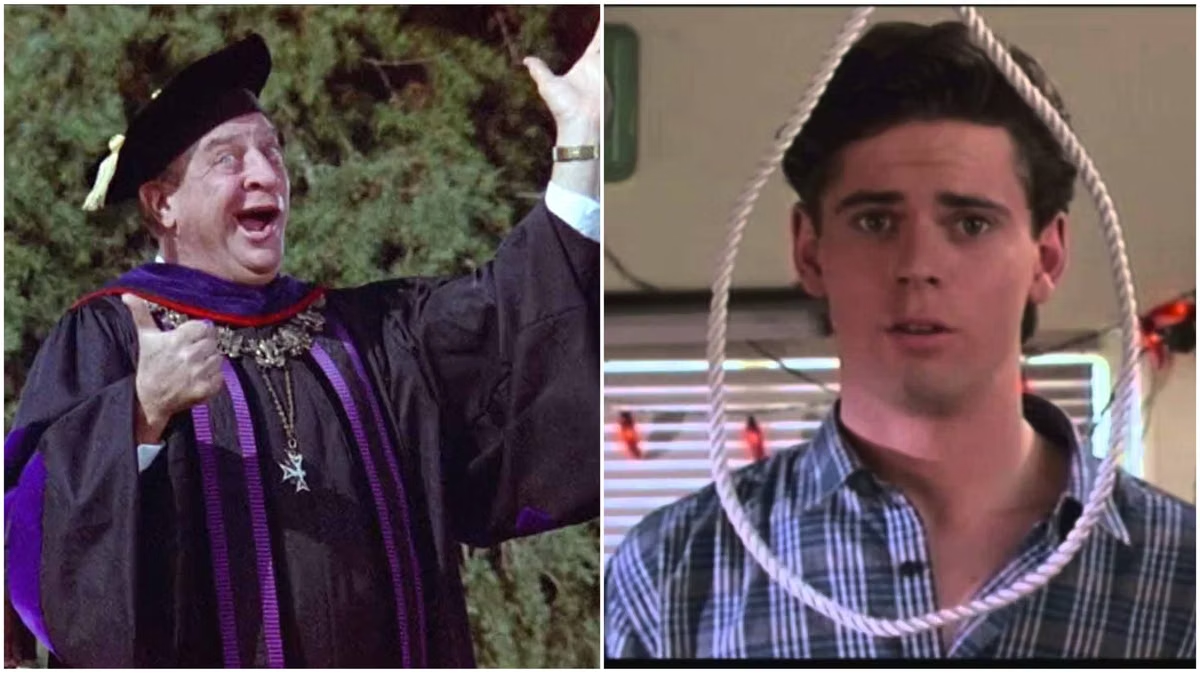
“You think this is real? This isn’t real. College is a dream world. This is something you do to pass the time until you go out in the real world and start buying people.” — Keith Gordon, Back to School
“They have financial aid for people whose parents are poor, not people whose parents are assholes.” — C. Thomas Howell, Soul Man
This weekend, we are moving our first-born child into her college dorm, which most parents would describe as a bittersweet affair if their pride and optimism about their daughter’s future weren’t checked by the overwhelmingly sad thought of not having her around every day. Anyway, we’ve spent the last year and change fretting about all the factors that go into the process—admissions standards, financial aid, test scores, recommendation letters and personal essays, the virtue of large state schools versus small liberal-arts colleges, and so on. It’s a stressful and byzantine journey that has the odd effect of overwhelming some of the more fundamental questions: What is college for? Who gets to go to college? What’s it actually like once you’re there?
For the answers to those and all of life’s most important questions, we must of course turn to the movies. And 40 years ago, when I was a freshman in high school, two comedies came out that would shape my perception of the college experience: Back to School, a Rodney Dangerfield vehicle about an oafish clothing-chain founder who enrolls as a freshman to support his son, and Soul Man, a notorious Tootsie knockoff about a white guy who disguises himself as Black to secure a scholarship to Harvard Law School. The disparity between what those movies and others like them told American audiences about college and what college is actually like was parodied brilliantly in “Homer Goes to College,” the Conan O’Brien-penned Simpsons episode in which Homer is sent to a university to study nuclear physics and is surprised to learn that the geek/jock dynamic of frat comedies like Animal House and Revenge of the Nerds didn’t align with reality. As the hard-partying, middle-aged imbecile who bypasses the normal admissions process—Mr. Burns serves on the board at Springfield College—Homer is a clear nod to Rodney Dangerfield, though O’Brien’s list of lowbrow comedy sources runs deep.
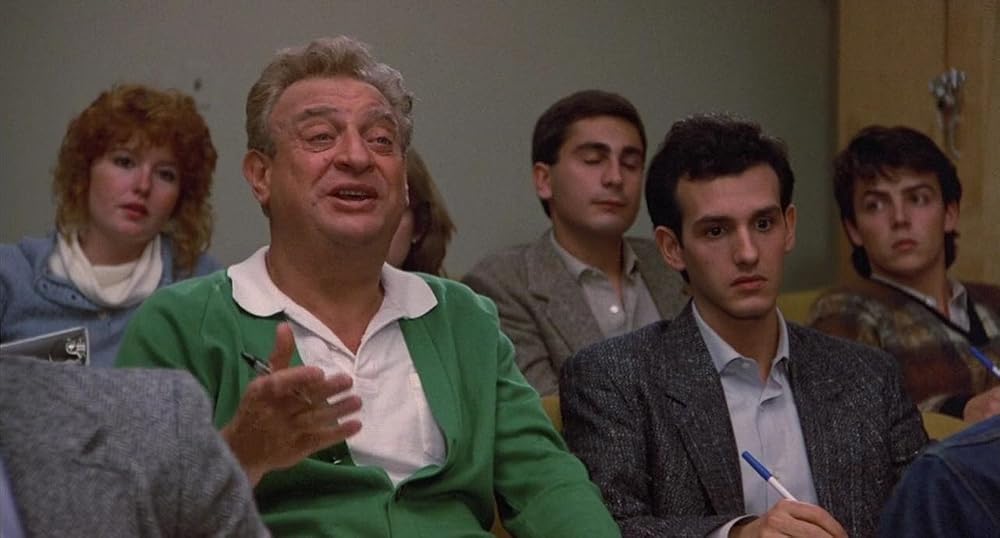
“Who gets to go to college?” is a good place to start with these movies, since that’s the hook that, in both cases, brought a ton of people to the theater in 1986, despite post-Animal House campus comedies having lost much of their cachet. (All three Porky’s movies had already come out, as had Fraternity Vacation, Real Genius and Private School, though we were still a year away from Revenge of the Nerds II: Nerds in Paradise.) The child of Italian immigrants, Back to School’s Thornton Melon is first shown in flashback in 1986, handing his disappointed father another bad report card and announcing his intention to skip college and go into the family business. His father’s response colors the rest of the film: “I don’t care how rich and successful a man is, if he don’t got an education, he don’t got nothing.” Cut to Dangerfield, now the face of a plus-size clothing chain, an empire he built from lessons learned from the school of life. Though the name “Thornton” does not imply a hardscrabble upbringing, he’s the definition of a blue-collar nouveau-riche slob, ruining his cheating wife’s fancy soiree by piling the canapés into hand-carved sub.

This post is for paying members only
Sign up now to read the post and get access to the full library of posts for subscribers only.
✦ Sign up