Lies and Heresy: The Return of ‘The Devils’
Ken Russell's controversial 1971 film returns to the screen uncut and more disturbing than ever.


“They say Ken Russell has gone too far this time,” a somber narrator warns in the opening moments of “Director of Devils,” a short making-of film created to promote the 1971 release of Russell’s The Devils. This wasn’t mere hype. “They” could refer to any number of parties at the time: British censors, prominent members of the Catholic church, and vocal critics like Judith Crist, who called it “a grand fiesta for sadists and perverts.”
In the 55 years that followed, The Devils’ notoriety has often overshadowed the film itself, which played in British theaters in a compromised version that omitted some of its more graphic moments and arrived in America with even more cuts (while still receiving an “X” rating). Since then, Russell’s film has only been fitfully available on home video and has appeared and disappeared on various streaming services like Shudder and Criterion in its censored form. That’s set to change this week with the release of Russell’s full director’s cut of The Devils, which restores scenes thought lost until uncovered by critic Mark Kermode in the early ’00s. That answers one question, “Will we ever be able to see the uncensored cut of The Devils?” while raising another, “Are we ready for it?”
There are two ways of approaching what’s been restored to The Devils, which didn’t exactly lack shocking moments in its original form: by describing them in isolation or putting them in context. Suffice it to say that the primary addition, a sequence in which nude nuns whipped into an orgiastic frenzy begin using a large crucifix for sexual gratification lives up to the name under which it’s come to be known: “The Rape of Christ.” The other involves a Mother Superior and a charred human femur. They’re shocking moments, but they’re not only shocking. In fact, after seeing the director’s cut of The Devils, it’s hard to imagine the film without them.
Now the context: Beneath Russell’s trademark maximalism, The Devils is a fact-based historical drama about an accusation of witchcraft in the French city of Loudon in 1634 that culminated in the burning-at-the-stake execution of the popular priest Urbain Grandier. For his screenplay, Russell drew from two sources: John Whitting’s 1961 play The Devils and its primary inspiration, Aldous Huxley’s non-fiction book The Devils of Loudun. And, like his source materials, Russell positions the incident within the political context of early 17th century France, a moment when King Louis XIII attempted to further the power of the crown under the influence of Cardinal Richelieu. Richelieu considered the removal of city defenses, like the walls around Loudun, to be crucial to this program and took steps to remove those who opposed such plans, like Grandier.
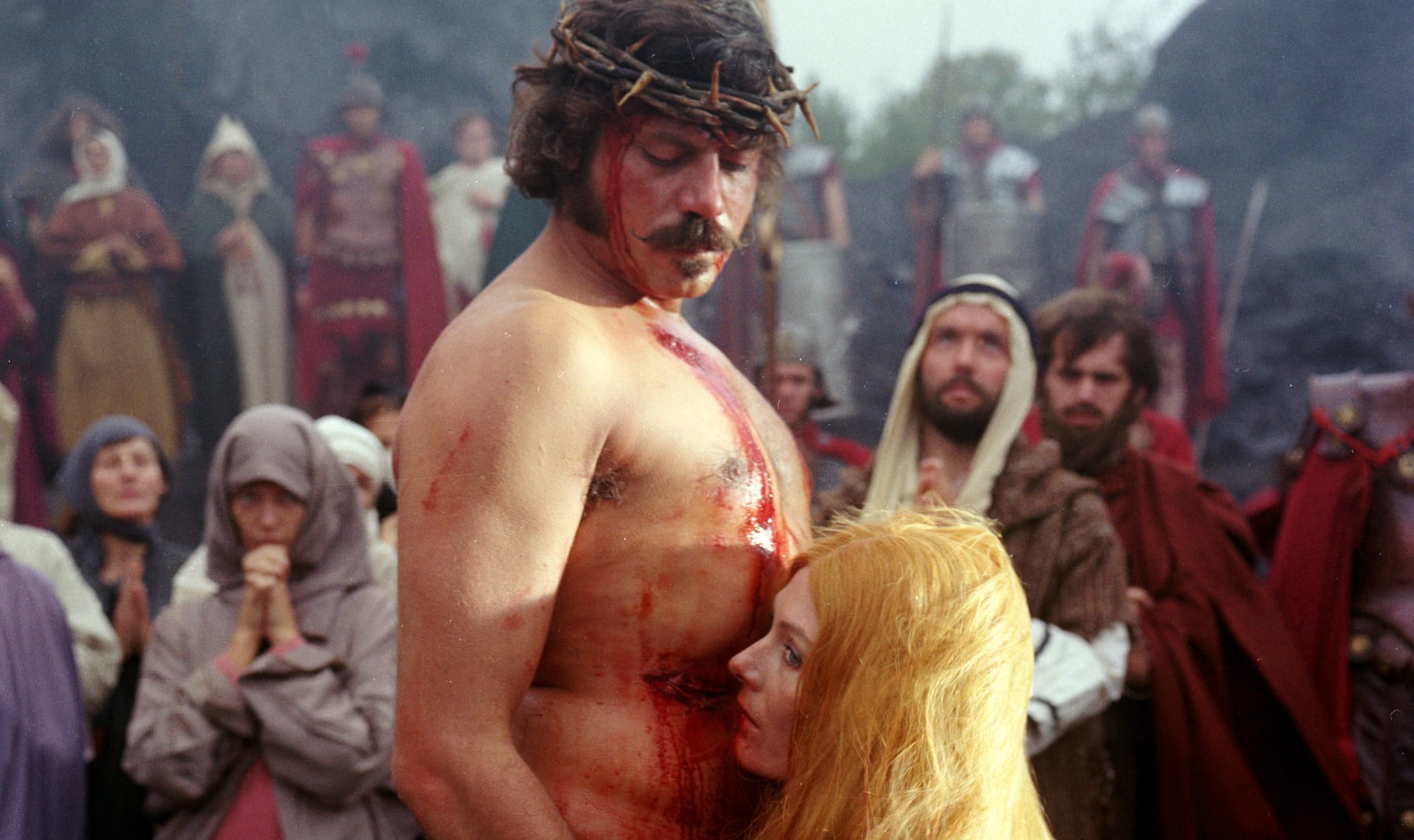
As depicted in The Devils, Grandier (Oliver Reed) is a flawed man of good intentions. Grandier enters the film as a new arrival in the plague-filled city of Loudun, where he immediately makes enemies by shutting down the cruel, pointless treatments of the local physicians. That’s one of several seeds that will later blossom to cause Grandier’s destruction. The others concern his lust for others and others’ lust for him. No fan of the vows of chastity, Grandier has an affair with Phillippe (Georgina Hale) that he cuts off upon learning she’s become pregnant. Grandier’s presence also stirs the interest of nuns of Loudun’s Ursuline convent, particularly Sister Jeanne des Anges (Vanessa Redgrave), the convent’s hunchbacked Mother Superior. Grandier becomes an object of Jenne’s obsession and the subject of her fantasies, including an erotic crucifixion scene in which Grandier, taking the place of Christ, steps down to embrace her. (Did I mention this film was controversial at the time?)
Each of these plays a role in Grandier’s undoing when they become tools of his political enemies, who escalate their campaign against Grandier by bringing in Father Pierre Barre (Michael Gothard), a fanatical witch hunter whose violent interrogation of Jeanne leads to a new theory of the case: that Grandier has bewitched not just Jeanne but the entire convent whose members must be exorcised through an orgiastic public purging of the forces possessing them.
It’s this sequence that was most heavily censored in 1971. It’s also one that needs the full power of Russell’s overstatement to work. Seen in full, any titillation created by images of nude, writhing bodies quickly gives way to a mounting sense of horror as it becomes clear we’re witnessing a scene of mass hysteria orchestrated to serve those in power. Faith has become politics by another name, and a place where cynical maneuvering and religious extremism blur together until they become inseparable from one another. To contrast this, Russell cuts between the orgy and scenes of Grandier and Madeleine de Brou (Gemma Jones), a woman he sincerely loves and has secretly married, engaging in sincere acts of Christian devotion. (The film’s biggest flaw: it’s either missing a scene that makes clear Grandier has sworn off his libertine ways or Reed’s performance, a powerful but blunt instrument, never quite conveys the switch.)
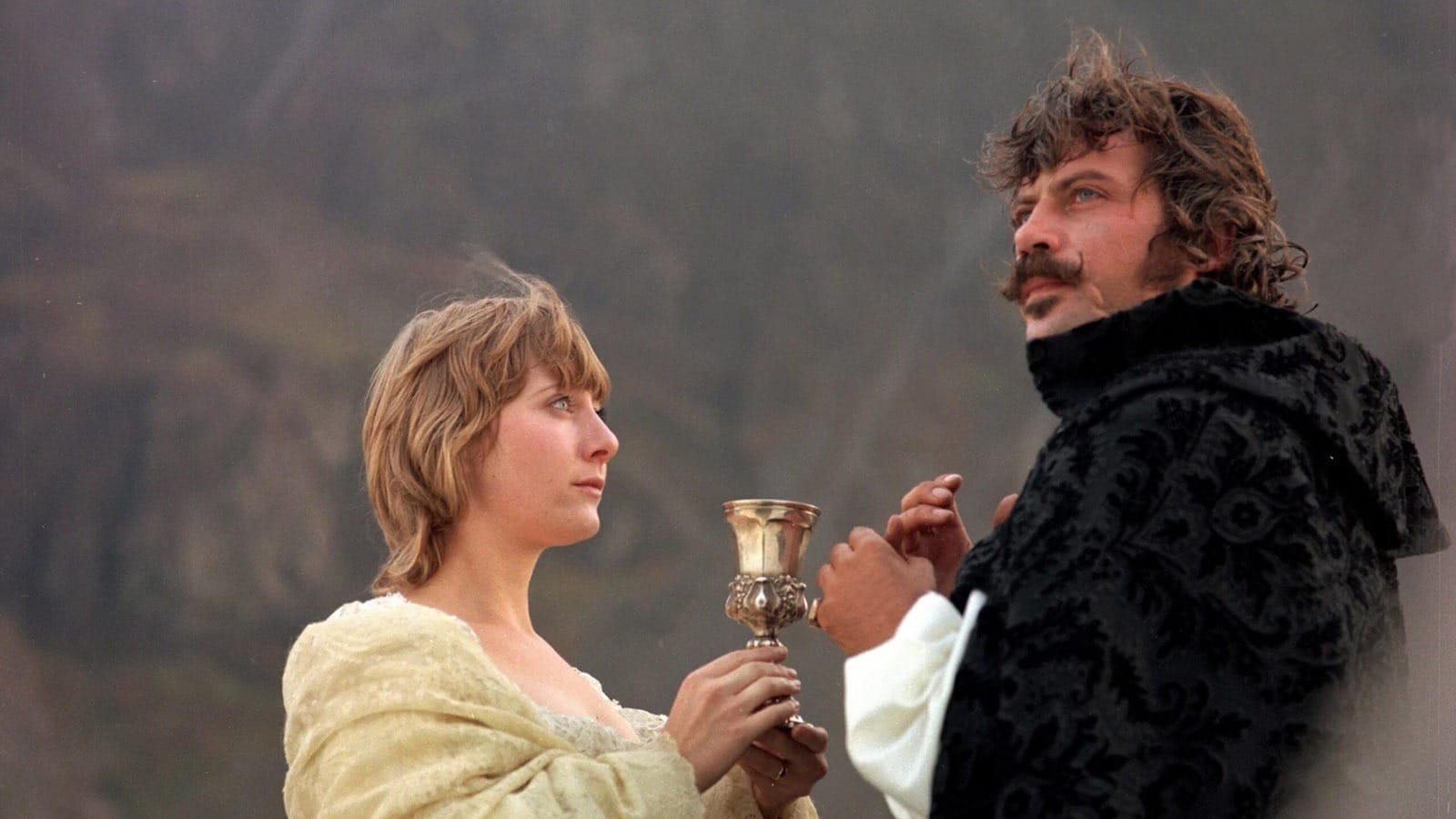
Russell was a Catholic appalled by what he saw as corruptions of his faith, be it hypocrisy or cooption. Trimmed of its full grotesquerie, the scene can feel like a mere provocation rather than a heartfelt, angry cry. Later, after being arrested, tortured, and pressured to confess to acts he’s never committed, Grandier screams about the “lies and heresy” that have brought him to this place and the way the truth can be twisted to serve the wishes of those in power. “The Devil has spoken,” he continues. “And to doubt his word is sacrilege.”
While recently introducing The Devils at the New York Film Festival, Kermode, who has continued to shepherd the restoration and re-release, attempted to explain why Russell spoke of The Devils as his “only political film” despite his general aversion to making films about the political issues of any given moment. Where those films might become dated as times changed, a historical narrative like The Devils—which, however extreme the presentation, stays fairly true to established historical facts—allowed each generation of viewers to “make their own parallels with the things that are happening now.” The increasingly tight entwining of politics and religion in the years since The Devils’ first release and the parading of lies as truth by those in power have borne out the wisdom of this approach while doing nothing to soften its ability to startle and upset. Whether or not The Devils went too far in 1971 no longer matters. It’s ours to reckon with now.


Discussion