In Review: ‘The Social Reckoning,’ ‘Misty Green’
A sequel to 'The Social Network' attempts to tally up the damage done by Facebook and Chris Rock takes a jaundiced look at Hollywood while giving a deserving actress a breakout role in this week's new releases.

The Social Reckoning
Dir. Aaron Sorkin
112 min.
Though he’s been nominated for four screenplays—one original and three adapted— Aaron Sorkin won his only Oscar for 2010’s The Social Network, a Facebook origin story that shrewdly suggested that founder Mark Zuckerberg’s desires, frustrations, and raw ambition as a Harvard student are the DNA of platform where “connection” has become a loaded term. Yet it’s only partially insulting to say that Sorkin owes part of that Oscar to David Fincher, whose direction of The Social Network complements Sorkin’s dialogue with visual dynamism and an insinuating darkness that creeps along the edges of the story. Sorkin has been directing more of his work lately, starting with Molly’s Game in 2017 and following up with 2020’s The Trial of the Chicago 7 and Being the Ricardos, but his facility with cinematic language has yet to catch up with his talent for the written word. Those deficiencies are laid bare in The Social Reckoning, a sequel that attempts to lock into the journalistic process like Alan J. Pakula’s All the President’s Men, but can’t achieve the paranoiac tone that Pakula summoned so vividly.
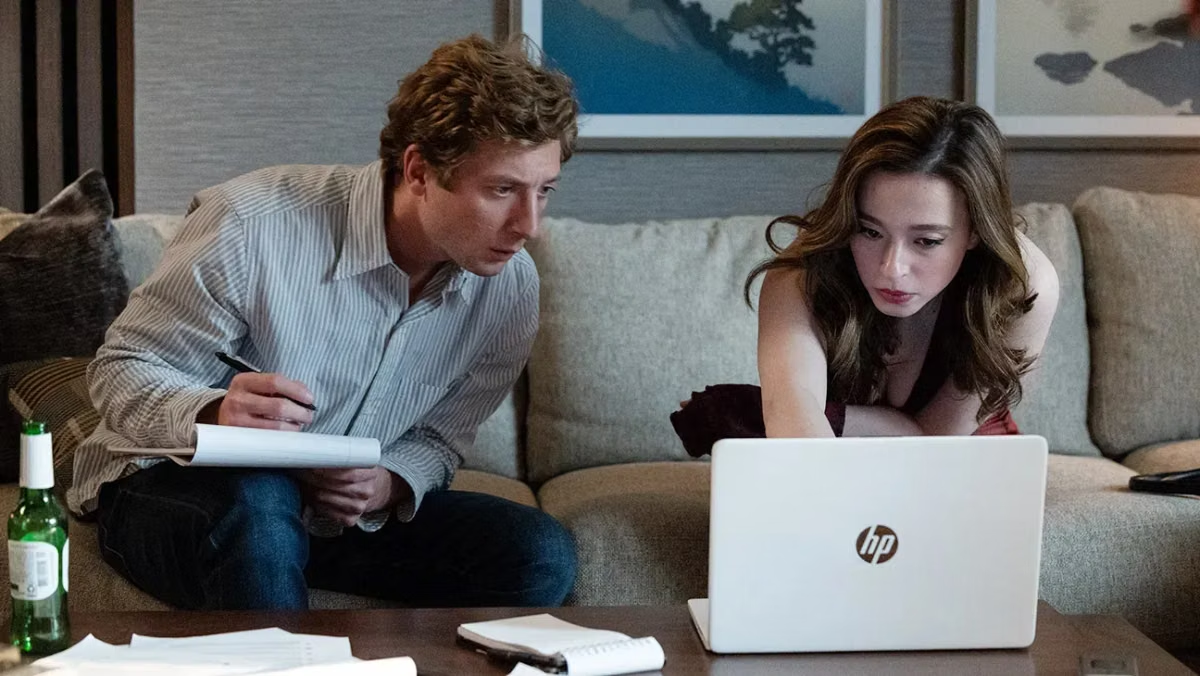
One immediate problem that Sorkin cannot solve is that a series of news stories about tweaks in the Facebook algorithm doesn’t have the same inherent punch as Woodward and Bernstein’s Watergate reporting, and he struggles badly to raise the stakes. Based on “The Facebook Files,” a six-part story (and eight-part podcast) that the Wall Street Journal unveiled in 2021, The Social Reckoning focuses heavily on the relationship between Jeff Horwitz (Jeremy Allen White), a journalist out of the Journal’s San Francisco office, and Frances Haugen (Mikey Madison), an engineer and whistleblower who would eventually supply him without damning internal documents about Facebook’s operations. Sorkin writes them both as clichés, offering Frances as the disillusioned insider acting on an increasingly shaken belief in Facebook’s mission and Jeff as a technophobe who’s approaching this story as an old school, pen-and-paper journalist. Neither character passes the sniff test, but White and Madison handle the Sorkin banter as deftly as they can as their characters try to establish trust.
We hope you're enjoying these reviews but The Reveal has much more than reviews to offer. Become a paid subscriber and you'll get access to everything we publish—from articles to lists to audio commentaries—and help support independent film criticism.
Conspicuously absent from the picture—or at least a distant supplement to it—is Zuckerberg, who is not the supremely arrogant young man he was in The Social Network and who is not played by the same actor, either. Perhaps a certain world-weariness has dampened Zuckerberg in the years between the events of the two films, but Jesse Eisenberg’s caffeinated disdain in the first film is replaced here by Jeremy Strong’s simmering petulance, which either locks his face in a juvenile pout or explodes in small bursts of white-hot rage. Inching the timeline forward for Zuckerberg’s scenes, Sorkin has him preparing to defend the company’s editorial decisions on Capital Hill, because he needs quite a bit of coaching.
The Zuckerberg who readies for Congress in The Social Reckoning is comparable to the one who fights the Winklevoss twins over allegedly stealing the idea for Facebook in The Social Network, but the way Sorkin stages it, Zuckerberg’s scenes seem piped in from another dimension, rather than woven into the fabric of the whole story. Strong’s flat, distanced take on Zuckerberg not only doesn’t help bring these stagy scenes to life but suggests no connection to Eisenberg’s younger version, other than a brazen disregard for privacy and norms on his platform. He’s huffy and imperious in his mission to boost flagging engagement numbers by any means necessary, but he’s dead-eyed and inscrutable as he watches Facebook help set the world on fire.
The Social Reckoning exists as a half-stirring reminder of how much Facebook and Zuckerberg's other major platform, Instagram, have allowed misinformation, bullying, and conflict to flourish on social media, often through deliberate changes to the algorithm. Sorkin’s concerns seem almost quaint next to the firehose of sewage coming out of Elon Musk’s Twitter, but his message-first approach has the hectoring quality of poor Sorkin projects like The Newsroom, which lose in dramatic pop what they gain in sanctimoniousness. The Social Network plumbed into the hidden soul of Facebook as if it were a film noir; The Social Reckoning lays it out with the plain language of a laminated book report. — Scott Tobias
The Social Reckoning opens tonight in theaters everywhere. You can visit its Facebook page for more details!

Misty Green
Dir. Chris Rock
103 min.
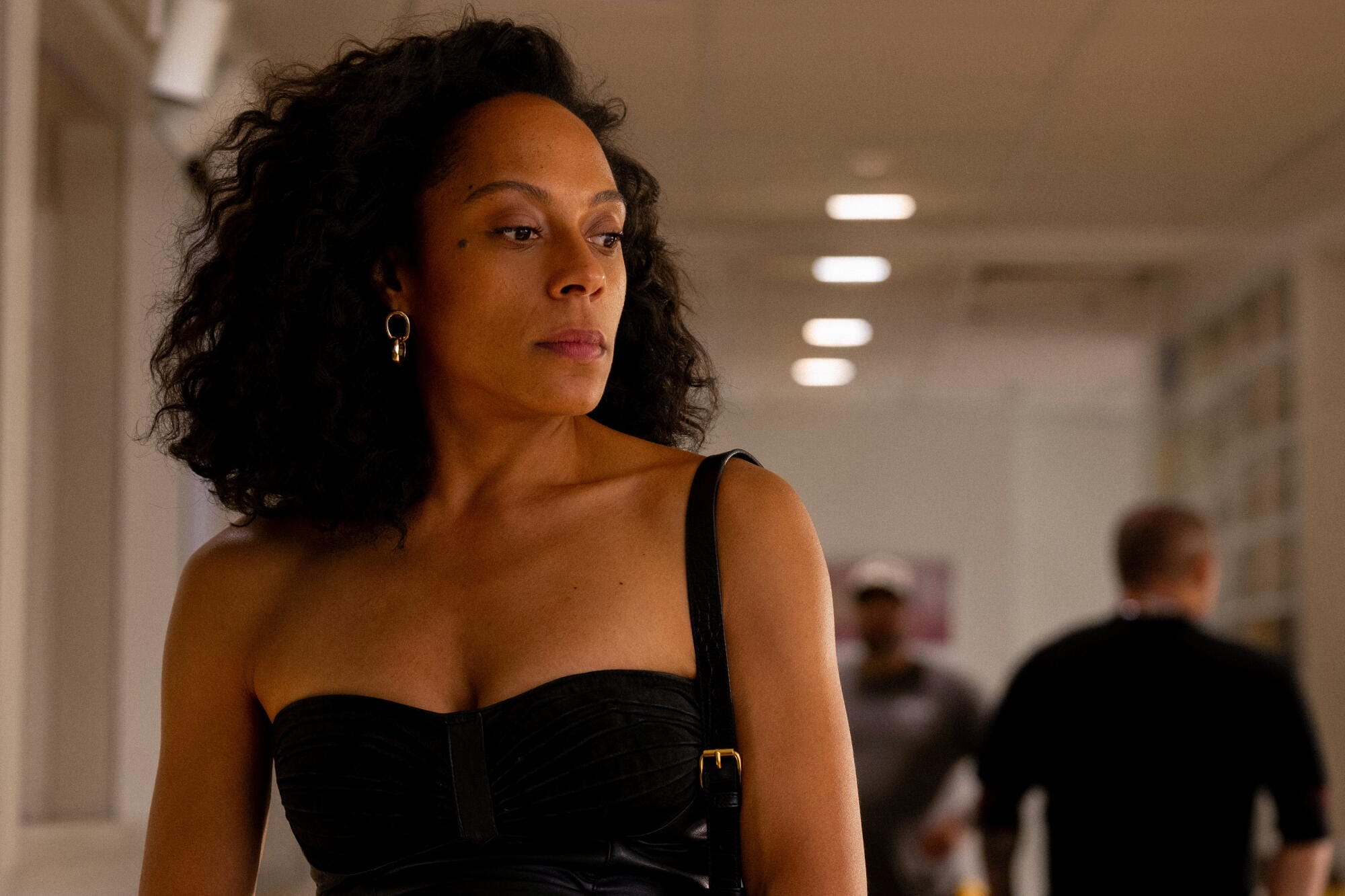
Everyone used to know Misty Green’s name, but that was a while ago. As the breakout star of the network drama Red Eye, Misty (Rosalind Eleazar) won awards and landed on the cover of magazines, back when magazine covers still mattered. Now, as Misty Green opens, she’s settled into a groove of occasional work and much partying. It’s a lifestyle she’s been able to maintain by living rent-free in an apartment owned by her late producer lover, an arrangement she’s continued to maintain after his death under believing he’d gifted her the place. This assumption turns out to be misplaced, however, as Misty learns when Celine (Amy Landecker), the producer’s widow, unexpectedly arrives to kick her out one morning. Then, partly out of respect for who Misty used to be, Celine gives her a one-week reprieve to clear out, which effectively doubles as a deadline for Misty to get her shit together and her career back on track.
That’s easier said than done in the Hollywood of Chris Rock’s fourth film as a director, and his first since Top Five in 2014. Required to audition for roles that once might have been handed to her, Misty finds herself surrounded by younger actresses who don’t have her reputation for being difficult. (The public’s memory may be short, but the same can’t be said for casting directors.) Misty’s own impulses don’t serve her well, either. She’s kept a fire for performing flickering by singing at high-end hotels, but her love of partying threatens to snuff it out. In this, her chief enabler is Zach (Adam Driver, memorably sleazy), a filmmaker who seems to know everyone and enjoy all the fruits of success even though his films never seem to get released. When Zach suggests he knows a quick way to make money by spending time with some wealthy acquaintances in Dubai, Misty recoils at the suggestion she prostitute herself, to which Zach notes that he thinks of their own drugs-and-sex arrangement as essentially prostitution by another name. Maybe everything in their line of work involves prostituting themselves to one degree or another.
Rock’s film seems to agree, which both gives Misty Green its bite and its lingering sourness. (It might not be coincidental that Rock casts himself as the film’s most clearheaded character, a director who forms a connection with Misty while preparing to shoot a new version of Dreamgirls.) Misty has talent and good intentions—her mentally ill brother Jay’s (Daniel Kaluuya) release from a psych ward intensifies her need to find a firm footing—but even if she keeps her demons at bay, she’s stuck in a rotten, dehumanizing system. The film walks a fine line between critiquing this world and suggesting that its residents, particularly women, might just have to accept its rottenness and their place within it.
That balancing act gets a bit wobbly at times, particularly in a subplot involving Misty’s friend Naomi (Anna Kendrick), who’s trying, and failing, to convince herself that she’s not marrying for money and security while suppressing her own desires. But even if the film’s satirical edge sometimes feels more like a blunt instrument than a razor, Eleazar’s performance is rich with depth and nuance. Best known for her work on the excellent espionage drama Slow Horses, she’s given a breakout role here and runs with it, playing Misty as a woman who not only can’t help getting in her own way, but seems to treat getting in her own way as a point of pride. Misty Green gives her a week to find her way back into the business from which she’s drifted away out of a combination of recklessness and disgust. Eleazar’s performance suggests that even if Misty makes it, she knows she’s already lost a part of herself she’ll never recover. —Keith Phipps
Misty Green is in theaters tonight.
Tomorrow: Look for reviews of Other Mommy and The Last First: Winter K2.




Discussion