My Time at a Student Newspaper or: The Virtues of Stinking in Public
Looking back at a precious time in the early-to-mid '90s when I could fail in front of my peers.

The first time I cursed in front of my mother, I was 18 years old.
Given how habitually and colorfully—and, dare I say, precociously—I cursed at school, at work, and among friends and my little sister, I still consider this a remarkable achievement, borne less out of respect for my mother’s strict Catholic upbringing than the terror of her sharp disapproval. And yet, when my first acceptance letter arrived in the sort of thin envelope that usually meant bad news, I was so startled and ecstatic that the sturdy wall of my inhibitions finally cracked: “Holy shit, I got into the University of Pittsburgh!”
“What did you just say?”
“I mean, oh geez, I got into the University of Pittsburgh.”
The reason for my outburst was simple: I had wanted to be a professional film critic since I first got a job at a suburban Atlanta movie theater at age 16 and Pitt was one of the few schools that both offered a Cinema Studies major and might plausibly admit a underachieving student with mediocre tests scores who once got a “C” in gym class for failing to “dress out” too many times. (Gym class itself, in an enormous Cobb County public high school, largely involved a guy we called “coach” who unlocked the closet that held all the basketballs.) Pitt was a reach school for me academically and a reach school for my parents financially, which in retrospect accounts for my mom’s lack of enthusiasm in the moment. When the University of Georgia came through with the acceptance letter a couple weeks later, I wasn’t even the one to open it. I was presented with a congratulatory cupcake with a candle in the middle. In-state tuition at UGA was $1,800/year in 1990. The lack of a certain niche major was not a concern.
Enjoying The Reveal? Now's a great time to become a paid subscriber. You'll get access to everything we publish—from articles to audio commentaries—and help support independent film criticism.
Still, I was by no means discouraged in following my intended career path. When you’re that locked into a dream as foolhardy and improbable as film criticism, you’re more than willing to take roundabout paths to your destination. And so in the absence of a Cinema Studies major, my alternate plan was to get my degree in something reading-and-writing related and devote as much energy to film as possible. (I wound up with a B.A. in Comparative Literature, a field I confess to not fully understanding then or now. I recall an entire class devoted to reading poorly translated Hungarian poetry.) I took every film history and theory class offered through the drama school, plus an independent study in which a fellow cinephile and I spent a quarter adapting Philip K. Dick’s The Man in the High Castle for our favorite professor. (The old man tolerated our efforts enough to give us an “A,” and laughed heartily when we described a space as “subversively lit.”) I spent all four years in Cinematic Arts, a student programming club for the Tate Theater, the excellent campus movie house, and would later work there as a projectionist. I co-hosted a show on the school radio network called “The Film Thing.” And then, finally, I got the long-coveted position of film critic for UGA’s student newspaper, The Red & Black.
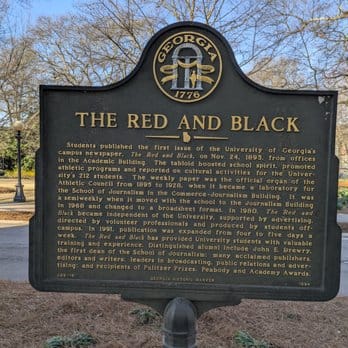
That last gig took a little persistence. For my first two years in college, the main film and music critic was Noel Murray, who’d present a standard for versatility, insight, and depth of knowledge that I’d spend the rest of my career chasing. I admired him from afar before admiring him from a much closer distance—first as a chum in Cinematic Arts and then after he graduated and got romantically involved with Donna Bowman, a great friend and constant moviegoing companion toward the end of undergraduate term. (The two would marry and they remain my oldest pals.) Noel’s rave review of Defending Your Life helped trigger my subsequent obsession with Albert Brooks, which eventually led to me writing the liner notes essay for the Criterion Collection edition of Brooks’ Lost in America, and I still tease him about his controversial pan of U2’s Achtung Baby, one of the band’s canonical albums. Noel has never been a provocateur by nature—even this review, as I recall, was more a mild rebuke than a hatchet job—but you inevitably become one inadvertently when your taste doesn’t align with that of the reading public.
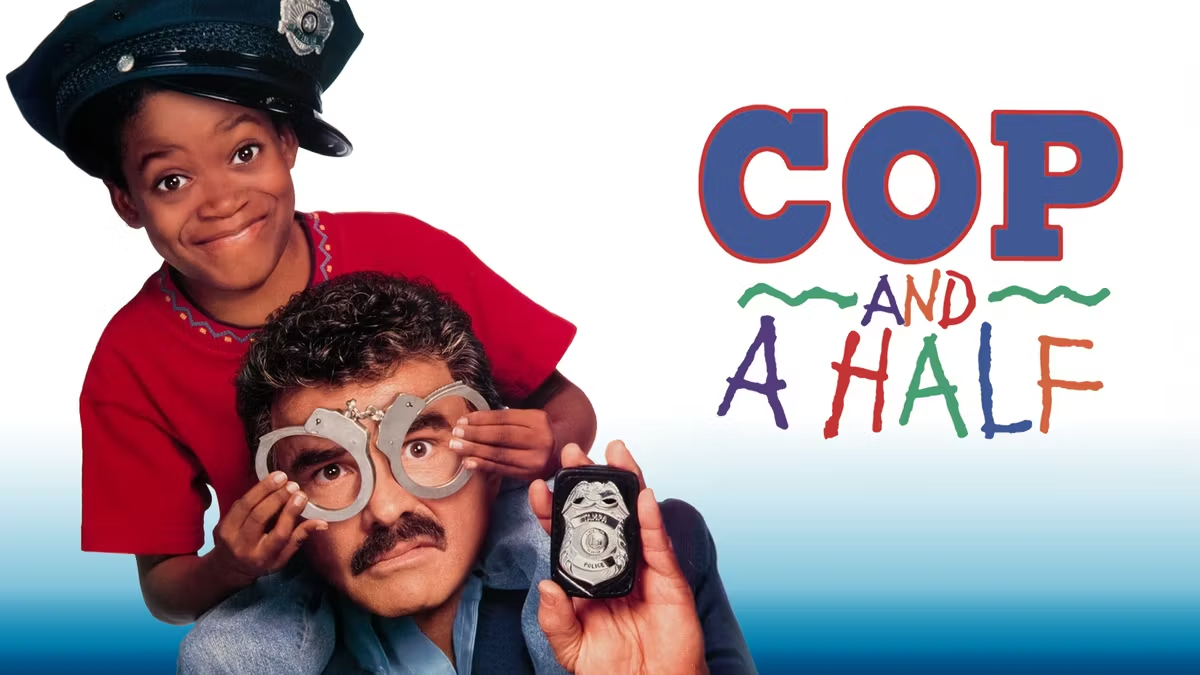
I had hustled for the job after Noel graduated in the summer before my junior year, but another writer slipped into the position instead, which was bitterly disappointing even before this person confessed to me that he reviewed the sequel to a hit movie without actually seeing it. But I stayed hungry, poring through magazine reviews on the bottom floor of the library while logging countless hours on the top floor, where they kept a large catalog of VHS and Laserdisc titles you could watch in tiny cubicles. Finally, in spring of 1993, I persuaded an editor to assign my first review at The Red & Black, a stock buddy comedy for families called Cop & a Half, directed by Henry Winkler and starring Burt Reynolds, whose career had long since hit the skids. It probably did not require much finesse on Reynolds’ part to summon the cantankerousness necessary to play a police detective assigned to a role he thoroughly detests.
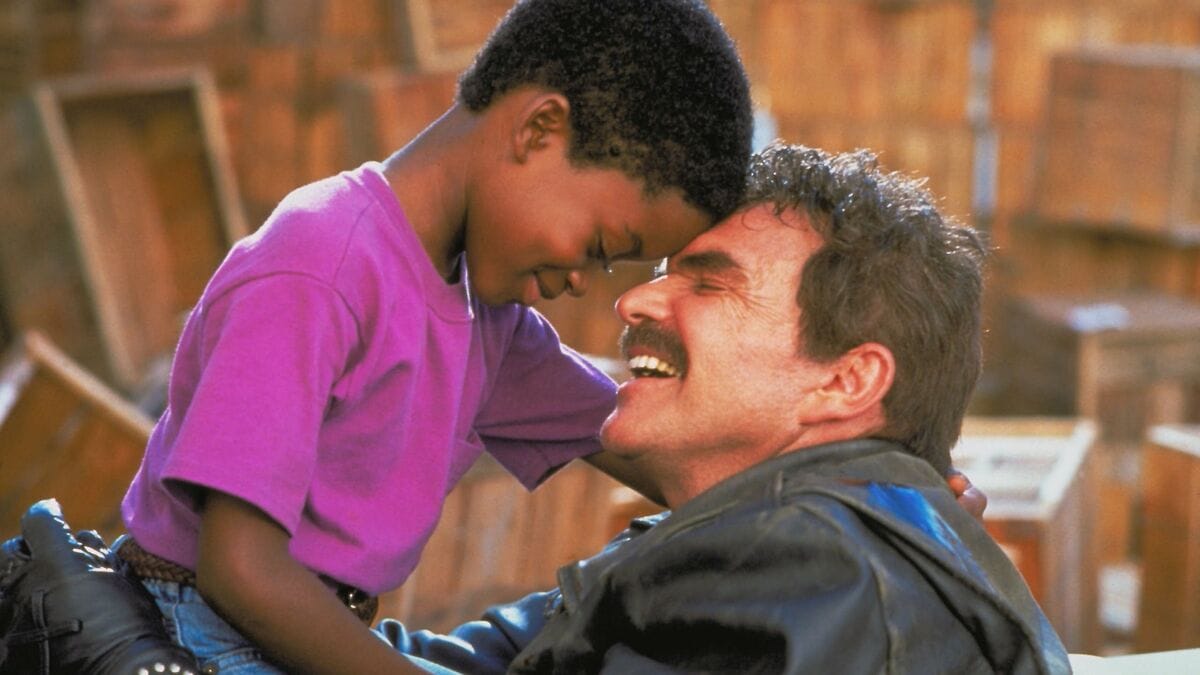
For the longest time, I used to keep clipping of all my old Red & Black reviews in a folder near my desk—more on that in a bit—but they seem to have disappeared in a box somewhere, so you will be spared any excerpts from my first published review. The only memory of the film itself that stuck with me is a line from young Norman D. Golden II as Devon Butler, a bullied elementary school kid whose dream of being a police officer is fulfilled long enough for him to ticket the principal for speeding. (“I’m your worst nightmare,” he says, “An eight-year-old with a badge.”) All other memories have been supplanted by the surprising twist that this forgettable family comedy would become one of Gene Siskel and Roger Ebert’s most famous on-air dust-ups. After Ebert mildly recommended the movie, singling out Golden as “very bright and very funny,” Siskel was aghast: “Wow-wee! Where’s your big red suit and hat, Santa? You just gave them a gift.”
As Matt Singer would recount in his great book on the pair, Opposable Thumbs: How Siskel & Ebert Changed Movies, the Cop & a Half dispute would lead to an amazing practical joke in which Ebert was presented with a signed publicity photo of Golden thanking him for his support, only for Siskel to reveal himself as the signatory. Watching the film again for the first time in 33 years, I still feel comfortable with my original pan, but Ebert was right about Golden’s performance being a bright spot and there’s a pretty good running joke about a mob kingpin (Ray Sharkey) who imagines himself as a Frank Sinatra-like crooner and makes his poor, suffering henchmen listen to demo recordings of him butchering standards. That’s a nuance I surely missed in 1993, and such details may not have been something I’d have prioritized, either. The first and hardest thing you have to get over as a critic is the impulse to sound like a critic, larding up reviews with blurb-able declarations and broad language in lieu of any specific insight you might bring to the table.
It seems absolutely inconceivable now, but in 1993, there was no internet, so every bit of writing at the paper had to be submitted—or, more often, written outright—at a two-story office space in downtown Athens, Georgia. Sources on a specific movie were limited to press kits and whatever supplemental information could be pulled from various dog-eared reference books. The Red & Black was a daily newspaper that was patched together every day in the office, sent off to the printer at night, and distributed in boxes across campus the next morning, when it seemed like every student was leafing through it. This was a point of pride for me at the time, especially on days when I could see my peers pausing to read a review, a physical and tangible experience that isn’t often possible in our digital world. Yet whenever I looked at those same reviews years later, I was retroactively embarrassed. I stunk. And it would take years of agonizing evolutionary growth for me to stink less.
Yet there are some takeaways from my student newspaper experience that were vital to me as a future writer and editor, and perhaps useful to you, too:
1. It is a luxury to stink in public. One advantage to writing in the analog world is that if readers were unhappy with a piece of writing, they wouldn’t just blast away in the comments. They would have to write a formal Letter to the Editor, which meant taking a stamp they bought with their own money and affixing it to an envelope, with no guarantee that the paper would consider it fit for publication. This is a blessing for thin-skinned young writers who are still in development, though I’m still bruised by the furious missive I received after giving The Lion King a C- and decrying its racial politics with the insufferable stridence of someone in the early 20s.
In the mid-’90s, before the internet came along and gobbled up newspapers and magazines, the media landscape was like an informal farm system for writers to hone their craft before reaching the majors. You could be mediocre or worse at a student newspaper or at dailies in small- or mid-sized cities, which still had the resources to employ one or two full-time, salaried film critics. This would give you time to improve, accumulate some non-terrible clips, and potentially move up the ladder. Now, young writers have to be excellent immediately, and even then, there’s no guarantee that they can survive what has amounted to a frantic 30-year game of musical chairs. There are accelerants on the internet to get better—access to more cultural inputs, more writing and discussion about the films of the day, a wealth of information to draw upon—but it’s still normal for new writers not to be anything close to a finished product. With such a short runway, there’s no way my career would have gotten off the ground.
2. Student newspapers are vitally important incubators. When you write for a student newspaper, especially one that’s focused on putting out a print edition every day, you learn things that self-publishing cannot teach you. You learn about the editorial process. You learn how to work for an editor. You learn about writing for a broad readership and thus thinking about the audience for your work. You learn about the hard limits of filling a news hole, when you’re required to hit a specific word count and need to write with economy and punch. (That last one is a problem for writers in the digital age, where space is unlimited and the work can be as borderless as, say, this essay you’re reading.) You learn that you’re not operating on an island but acting as part of a complex organism, with ongoing and ever-shifting relationships within the staff and with readers who are scrutinizing what you do. If it’s a healthy operation—and back then, The Red & Black was thriving and hit its 100-year anniversary while I was on staff—then you get to experience an esprit de corps that feels special to journalism.
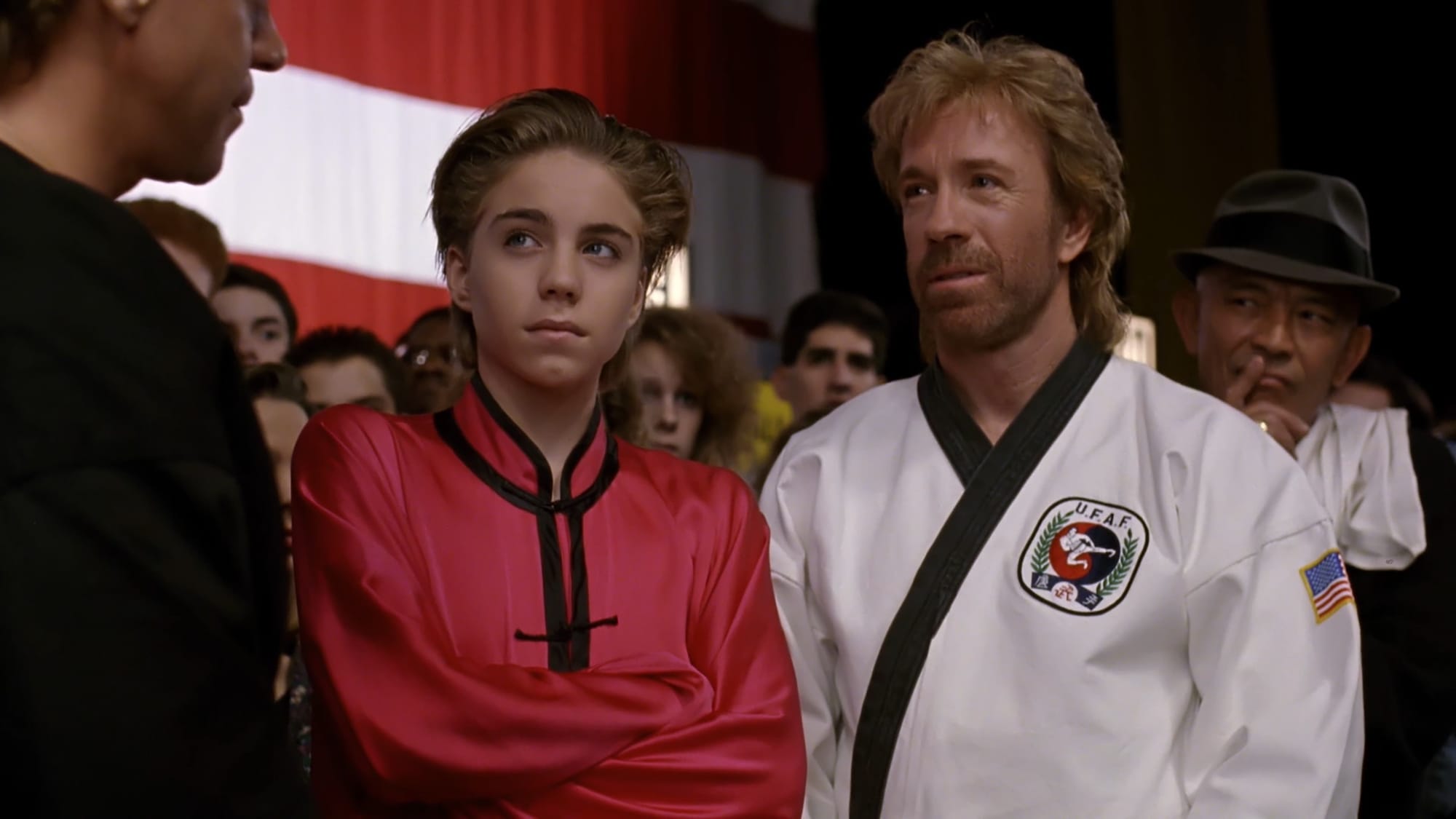
3. Editors should remember to praise their writers. One perk of The Red & Black at that time is that we had a kind of in-house ombudsman who would read each issue cover to cover and offer some brief remarks on all the articles that made the paper on a given day. This person loved my review of Cop & a Half, and it was the first outside feedback I ever received for something I’d written for the public. Now, he had issues with my next review, for the family-friendly Chuck Norris movie Sidekicks, which he correctly pilloried for a tortured kindergarten metaphor in the lede graf. (See #4.) But when you become an editor yourself, sometimes you can get lost in the weeds and take your writers for granted, which can make them feel insecure and sap their confidence. Getting that occasional pat on the head from the ombudsman or an editor helped alleviate the paralyzing self-doubt that can afflict writers on any level. So if you’re an editor and you pause to admire some insight or turn of phrase, it’s a good idea to let a writer know about it.
4. If you dish it out… Critics should know better than anyone that they need to take criticism. My friend and former A.V. Club colleague Steven Hyden once said that his job as a writer was to make his editor’s job easier. Without selling yourself out completely, you still have to have the humility to accept edits, acknowledge your shortcomings, and not see any of it as a damning, hostile referendum on your worth as a human being. And a little self-laceration can be healthy, too: Confidence can spill over into complacency, which is why I kept those student newspaper reviews by my side all those years. I could remind myself that I was once bad and was probably still bad, but I’m not that bad anymore.
By the time I graduated in 1994, I thought I had accumulated enough quality clips to launch a career in film criticism, but the internet access was still a year away and the job market for this whimsical occupation was a great unknown. My only real option was to curate my favorite clips (which were all lousy), write a catchy cover letter (which was also regrettable), and blindly cast out résumés to newspapers across the country, hoping that one of them would have an opening. I mostly got back form letters and a couple of handwritten notes, including one from the late Susan Stark of The Detroit News, whose encouragement and advice was absolutely not required and something I’ll never forget. A couple of months later, I put my Comparative Literature degree to use at a quarry in Northwest Ohio, where I spent a couple of months shoveling limestone sand from under the conveyor belts.
I was too determined a fantasist to give up my dreams, however, and I’d eventually wedge my way into another student newspaper at the University of Miami in the late ’90s, all while putting myself into an economic sinkhole for a three-year Cinema Studies program I’m still a thesis away from completing. The writing was a little better this time around. An editor named Keith Phipps liked my clips.
Discussion