10 Thoughts After Finally Watching ‘Major League’
With baseball season underway, The Reveal has dedicated this week to pieces about baseball movies. First up: some belated first impressions of a much-loved comedy.

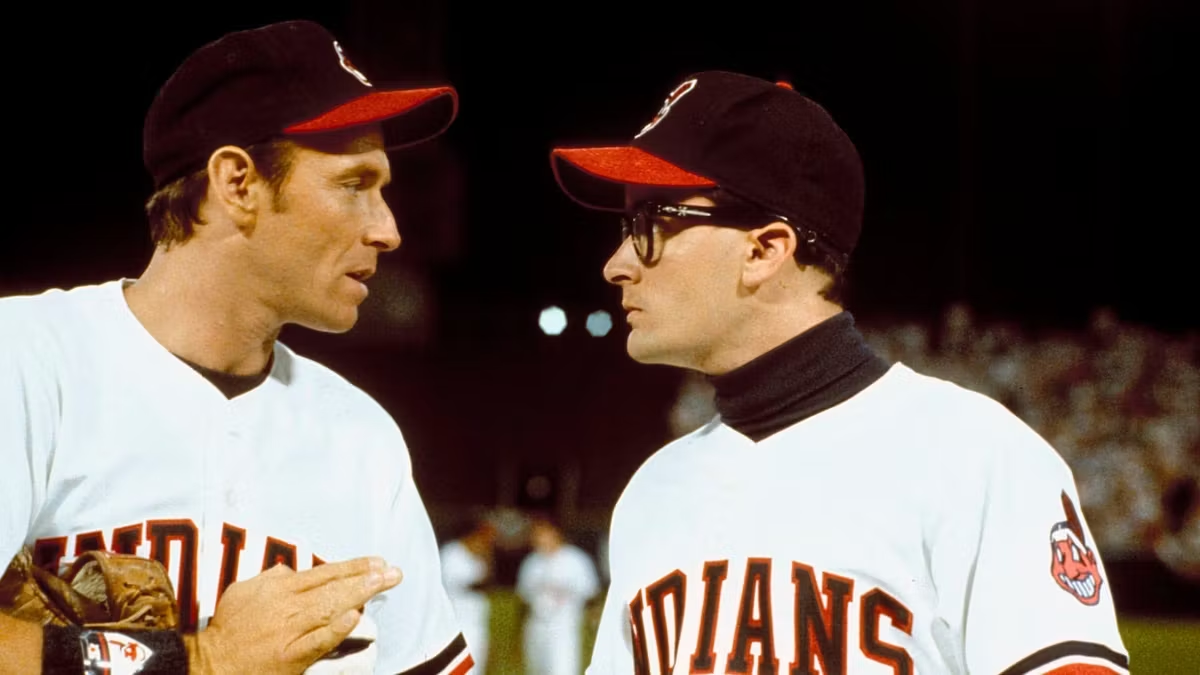
With baseball season kicking off, The Reveal has decided to dedicate this week to pieces about baseball movies.
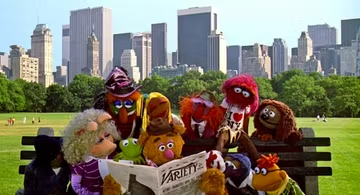
I watch movies all the time and have for years yet I sometimes come across films that seemingly everybody has seen but me. One example: The Muppets Take Manhattan, which I wrote about seeing for the first time a couple of years ago. I’m not sure when I became aware that writer-director David S. Ward’s Major League was such a film, nor can I explain why I had not seen it until writing this piece. I like baseball. I like baseball movies. And Major League came out in 1989, an era in which I either saw most major releases in the theater or caught up with them a few months later when they appeared on VHS. Of the top ten films at the box office for April 7th of that year, I now have only not seen the Jean-Claude Van Damme film Cyborg. (And, honestly, I don’t know how I’ve managed to miss that one.) What’s more, Major League has since become culturally ubiquitous. A hit in its day, it picked up even more fans via home video and cable and regularly shows up on lists of the best baseball movies of all time (and would probably rank even higher on lists compiled exclusively by MLB players).
Clearly I was overdue to catch up with the film. So I did. Here are ten observations after seeing it for the first time:
1. It wasn’t quite the movie I expected.
If I can point to one likely reason I’d never seen Major League, it’s that I thought it looked like an obnoxiously broad, raunchy comedy in the vein of, say, Police Academy. It is a broad, (mildly) raunchy comedy, but not obnoxious at all. In fact, Major League plays like a valentine to baseball, the city of Cleveland, and Cleveland baseball from the its opening moments—a montage of Cleveland images set to Randy Newman’s “Burn On,” a song inspired by the once pollution-filled Cuyahoga River’s tendency to catch on fire—to its final scene, in which (spoiler for everyone but me, I guess) the Cleveland Indians take a big step toward winning the AL pennant after a 35-year drought by way of a one-game, end-of-season tiebreaker against the New York Yankees.
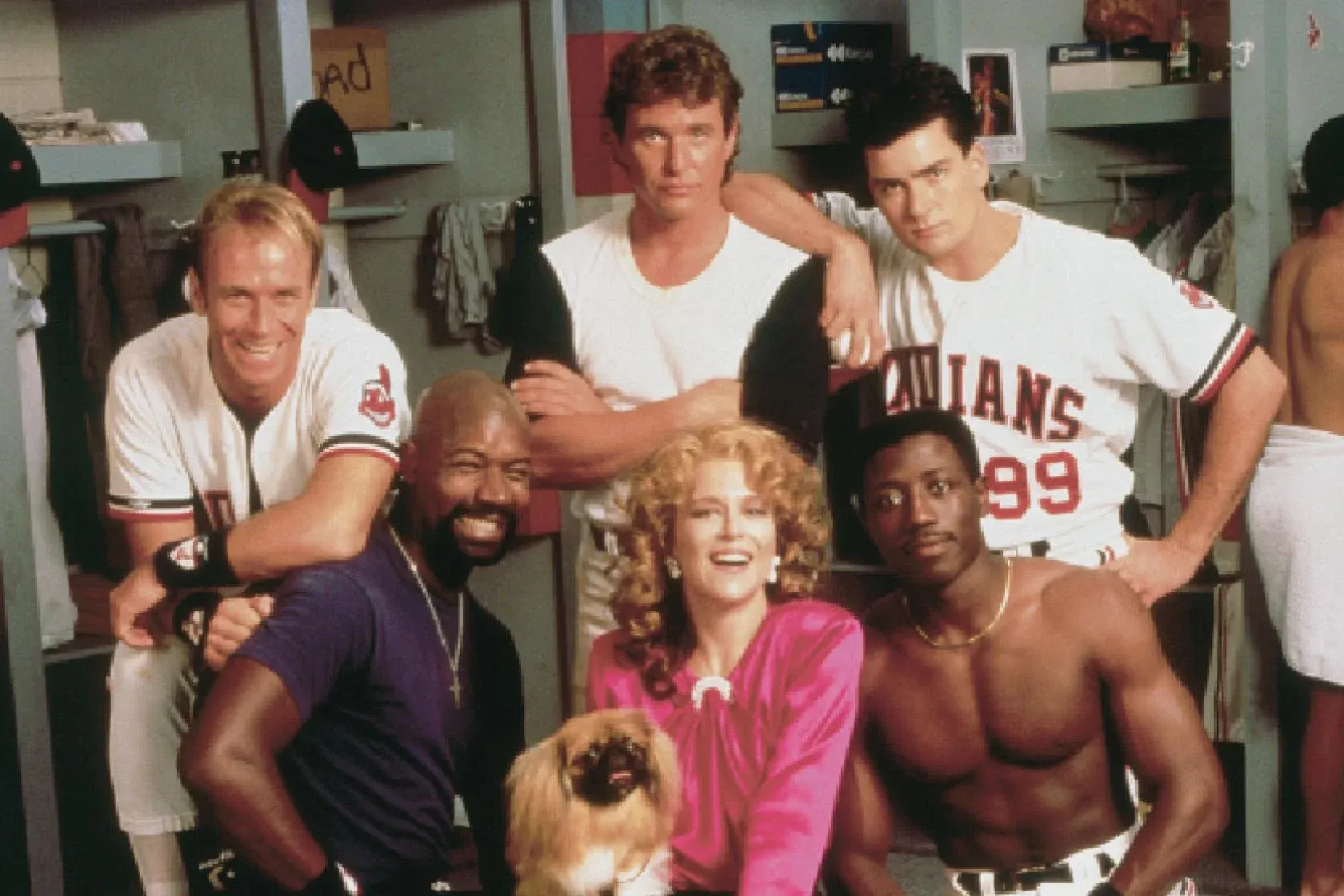
Similarly, the film has a lot of warmth for its misfit characters. (Well, except for one, but more on that in a moment.) No one but Jake Taylor, the aging catcher with bad knees played by Tom Berenger, gets drawn with much depth. Yet Ward has an unmistakable fondness for the familiar lovable loser baseball types assembled by Rachel Phelps (Margaret Whitton), in an attempt to drive down attendance so she can move the team to Miami. These include everyone from Ricky “Wild Thing” Vaughn (Charlie Sheen), the fireball hurling rookie who struggles to hit the strike zone (or anywhere near it) to aging teammate Eddie Harris (Chelcie Ross), who uses everything from K-Y Jelly to snot to alter the trajectory of his curveball to Willie Mays Hayes (Wesley Snipes), an uninvited walk-on whose speed earns him a shot at making the lineup. If there’s a knock against Major League, it's that Bull Durham does everything it does better while telling a complicated story about aging, love, and changed plans. But expecting every baseball comedy to be Bull Durham is a bit like expecting every team to be the 1927 Yankees.
2. Hey, that plot sounds a lot like the plot of Ted Lasso!
It sure does! Rachel even has a big-hearted reluctant sidekick a la Ted Lasso’s Higgins (Jeremy Swift) in the form of Indians general manager Charlie Donovan (Charles Cyphers). The similarities don’t go that much further, however. Rachel barely interacts with the team apart from one memorable locker room visit and, unlike Lasso’s Rebecca (Hannah Waddingham), she never experiences anything approaching a change of heart despite the course of the season.
This makes Rachel, though no fault of Whitton’s, the film’s only truly dislikable character. She’s also the subject of a sexist gag concerning her showgirl past in the form of a scantily clad standee that becomes a totem of the team’s hate for her, just as the film sometimes seems to be using her as a totem for a distaste of women getting involved in sports. But it wasn’t always so: Major League originally included a late-film revelation that Rachel had done everything because she loved Cleveland, the Indians, and the wealthy husband who left her the team. She’d made them hate her to motivate them to win. What’s more, she was the real mastermind behind their success, having scouted players she could pick up on the cheap who “had flaws concealing their real talent.” This would have made Rachel a sabermetrics pioneer almost a full decade before Billy Beane became general manager of the Oakland A’s. But test audiences didn’t like the twist, so she remained a shrewish baseball dunce.
Enjoying The Reveal? Now's a great time to become a paid subscriber. You'll get access to everything we publish—from articles to audio commentaries—and help support independent film criticism.
3. It’s baseball from another time.
From the monochromatic, primitively animated scoreboards of the Indians’ run-down stadium—which was actually the Milwaukee Brewers’ run-down and since-replaced County Stadium—to the choices made by manager Lou Brown (James Gammon), Major League offers a glimpse of the strikingly different way baseball used to be played not that long ago. However stats savvy Rachel might have been (as the character was originally scripted), Lou’s an old school manager who listens to his gut. So what if one of his players has never been successful against the opposing team’s pitcher? That doesn’t mean this time won’t be different. And, in another example of how the game changed…
4. Your Cleveland, sigh, Indians
As a Cleveland area native and lifelong fan of the Indians, Ward naturally chose to make the film about his favorite team, which changed its name to the Guardians in 2022. In the process, the team discarded a lot of unfortunate baggage concerning its old name and mascot, Chief Wahoo, a Native American caricature that the team had been downplaying in the years leading up to the name change. But Wahoo’s all over this movie, further cementing Major League in a particular point in baseball history. Incidentally, the Guardians’ name is taken from the “Guardians of Traffic,” the striking figures that have stood watch at the entrance to Cleveland’s Hope Memorial Bridge, near the team’s home, since 1932. And, hey, guess what image opens Major League? A lovely shot of one of the Guardians that would later lend their name to the team.
5. “Romantic Comedy Behavior Gets Man Real-Life Arrested”
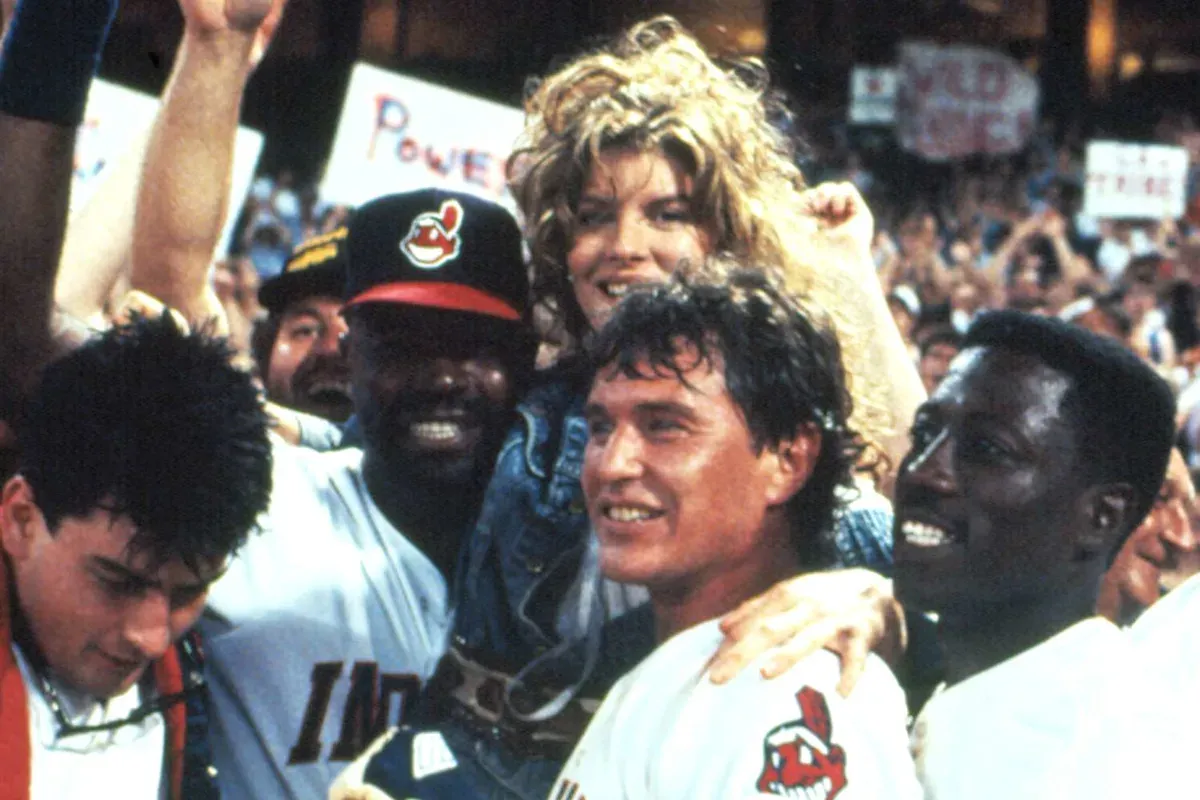
Berenger’s Jake—who sees this season as his last shot at professional success and a final chance to redeem himself in the eyes of Lynn (Rene Russo), the ex-wife he still loves—gets the film’s richest storyline. But it’s also one that repeatedly reminded me of the classic headline from The Onion quoted above. Jake reconnects with Lynn, whom he hasn’t seen in years, after spotting her on a date at a fancy restaurant with the man she’ll soon reveal as her fiancé. When Jake insists that he let her call her, Lynn gives him a fake number. Undeterred, he first shows up at her place of business, then later follows her to the apartment he believes to be her home and lets himself in, only to discover that the place belongs to her fiancé. Later he follows Lynn to her actual home where he again lets himself in. Of course, by movie logic this is all fine because he knows she really loves him, but that’s also how stalkers think, isn’t it?
6. Also from the department of not aging well…
If played by anyone but Dennis Haysbert, an actor who carried himself with a Gregory Peck-like dignity even before Far From Heaven and his stint as the President of the United States on 24, the character of Pedro Cerrano might have been a total disaster. A Cuban power hitter who fled his home country for one where could freely practice his religion, Vodou, Pedro never becomes a one-dimensional stereotype thanks to Haysbert’s performance. That’s no mean feat given that the film plays vaguely Caribbean music to accompany images of Pedro tending to his shrine to Jo-Bu, a deity invented for the film. (Also overlooked: as a Cuban, Pedro probably would practice Santeria.)
7. Bob Uecker was one of the best.
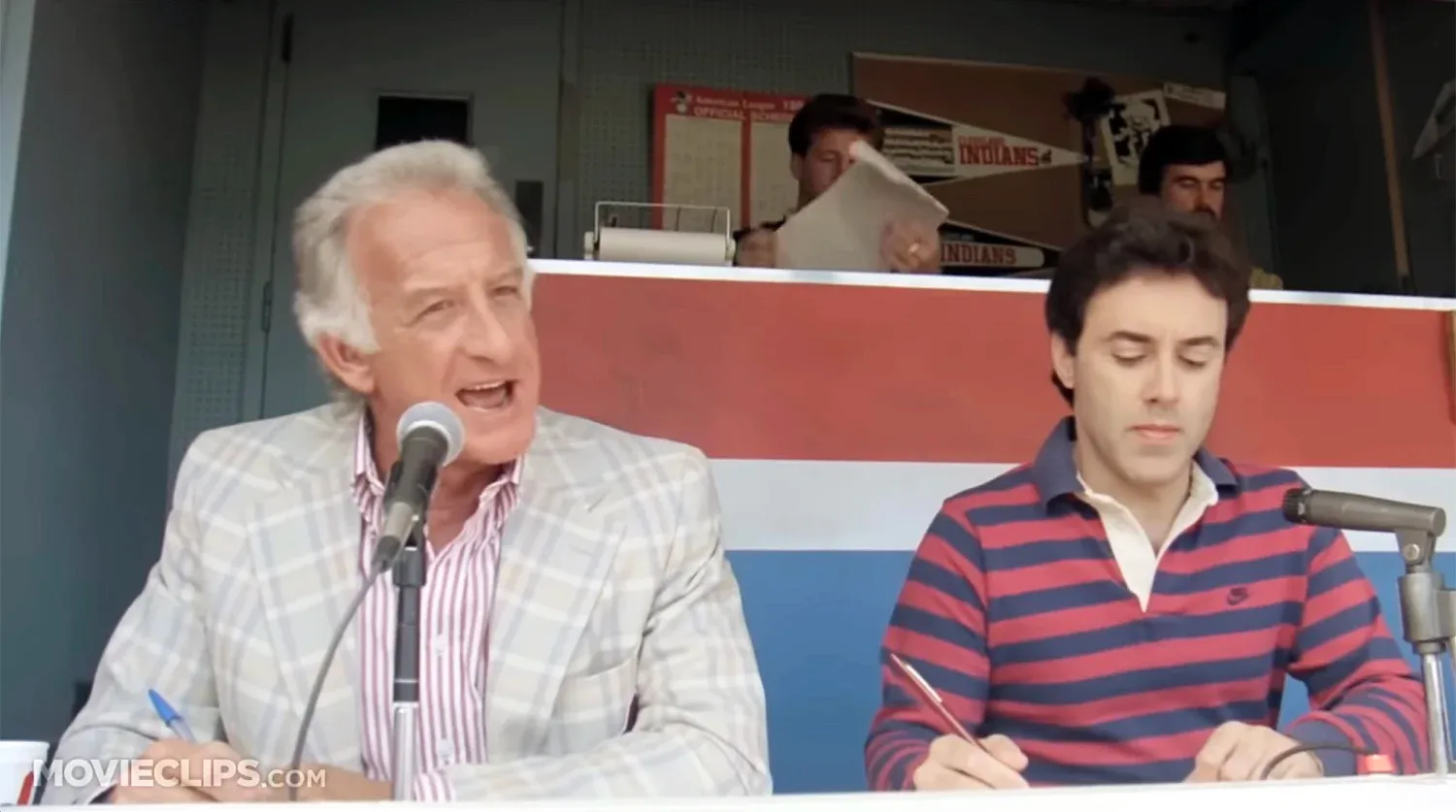
A former MLB catcher, the Milwaukee-born Uecker served as the informed, self-deprecating voice of the Brewers from 1971 to 2024, a year before his death at the age of 90. Uecker simultaneously cultivated a sideline career as a frequent talk-show guest and actor. Uecker’s essentially playing himself here (apart from, presumably, all the drinking on the job) and gets the film’s biggest laugh, and most-quoted line, when he describes one of Ricky’s way-off-the-mark pitches as “Juuust a bit outside,” using almost exactly the same intonation he’d use if it really were just a bit outside. Uecker understood the language of baseball announcing in much the same way master musicians understand their instruments. He drew from a deep well of knowledge and could bend the notes for effect, making even the most familiar tune sound like a new invention.
8. Charlie Sheen deserves a tip of the cap for convincingly playing an enthusiastic Cleveland player.
Based on what I know of Sheen’s personal life, I struggle to find a lot of positive things to say about his character except this: he’s remained a steadfast fan of the Cincinnati Reds. The Sheen/Estevez family hails from the Dayton, Ohio area, a region thick with Reds fans. So does Rob Lowe’s family. Like Sheen, Lowe grew up a fan of the Reds and, as far as Reds fans knew, remained one as an adult. Until, that is, last year when Lowe made an appearance at the Reds vs. Dodgers playoff series decked out in Dodgers gear, an act that caused Lowe’s own brother Chad, a true Reds fan, to speak out. Sheen, whatever his flaws, would never. (Another Reds fan hailing from the Dayton region who was appalled by Lowe’s betrayal: me.)
9. Major League prophesied both Cleveland’s future success and its limitations.
In 1995, six years after Major League’s release, Cleveland finally won the AL pennant, but lost the World Series to the Atlanta Braves. The team won it again in 1997 but lost to the Florida Marlins, a team based in Miami, the then-MLB-less city to which Rachel wanted to move the Indians in Major League. Both appearances were part of an era in which Cleveland dominated the AL Central, a division it won every year between 1995 and 1999 (and again in 2001 and 2007) but just couldn’t quite go all the way. When the team returned to the World Series in 2016, they lost to the arguably even more at-the-time historically hapless Chicago Cubs. But Cleveland can be said to have beaten the Cubs on the movie front at least. Who calls Rookie of the Year their favorite baseball movie?
10. Who sleeps on a wicker bed?
When we get a glimpse of Lynn’s bedroom, we see that she sleeps on a bed made of wicker. This seems like a terrible idea. Wicker cracks and splinters. No matter how well woven, it can only hold so much weight. Wicker doesn’t encourage a lot of movement. Yet a simple Google search reveals that plenty of people seem to enjoy wicker beds. So maybe I have it all wrong? Movies truly do increase our understanding of the world, don’t they?

Discussion