Catching Up with the Critics 2026 (Part 1)
With a little help from our critic friends, here's a mid-year check-in on the essential films we missed.

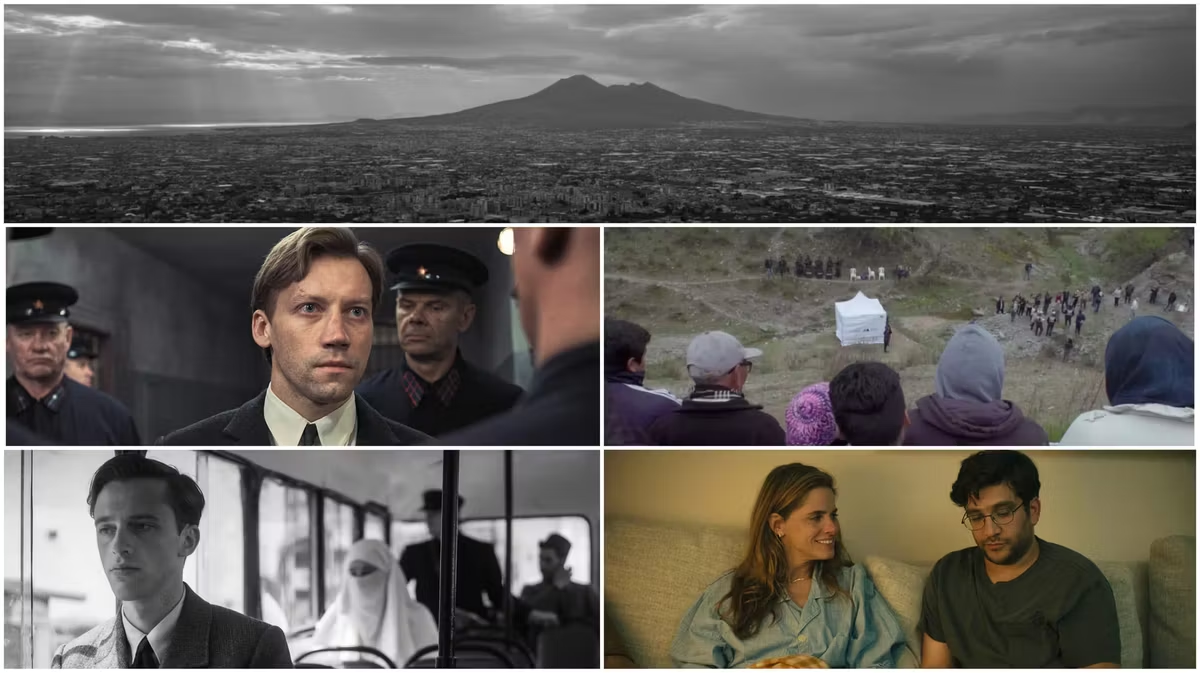
We do not come remotely close to covering the waterfront with reviews of new theatrical releases at The Reveal. We generally reserve Thursdays for our review days and have to strike a balance between covering mainstream movies that are accessible to readers everywhere and arthouse films that seem important or compelling to us. Inevitably, this results in painful choices, regrettable omissions, and a mad scramble to catch up with the highly regarded films that we missed, especially when it comes time to make “best of” lists at the end of the year.
Since 2021, I’ve been making a biannual project out of patching up these holes. Originally, I consulted Metacritic for the highest-ranked films I missed (2021: Part 1, Part 2; 2022: Part 1, Part 2; 2023: Part 1, Part 2), but relying on a review aggregator felt too impersonal and unreliable. So starting in 2024, I’ve chosen instead to lean on trusted voices in the critical community and allow them to nudge me in the right direction. This approach, called “Catching Up with the Critics,” has resulted in more locks for my Top 15 list, including films like About Dry Grasses, Red Rooms, Eephus, Misericordia, and Sirat. (Previous “Catching Up” columns: 2024: Part 1, Part 2; 2025: Part 1, Part 2.)
Enjoying The Reveal? Now's a great time to become a paid subscriber. You'll get access to everything we publish—from articles to audio commentaries—and help support independent film criticism.
This year’s pre-summer batch of critical favorites is heavy on auteurs who may not be household names, but are longtime stars in the festival world. While only one of the five seems likely to crack my best-of list, all of them were championed for good reason, with two uniquely stylized documentaries, an elegant crack at a seemingly uncrackable existential novel, an urgent (yet droll) historical drama from Ukraine, and a chance to reassess the career of Amanda Peet. Here they are, in no particular order:
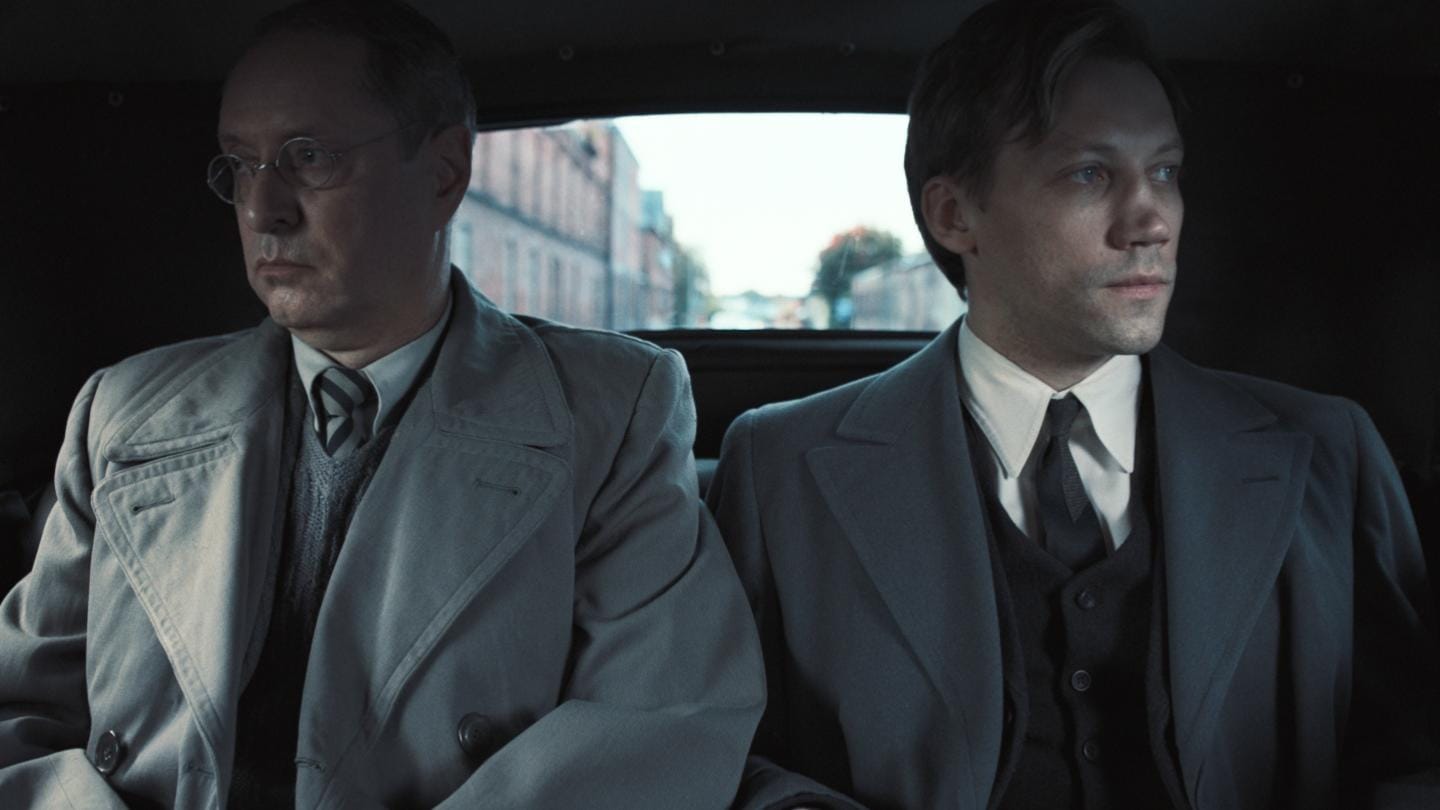
Two Prosecutors (dir. Sergei Loznitsa)
The critic: Justin Chang, The New Yorker
How to watch: Buy-only digitally. Criterion Channel on June 23rd.
List-worthy?: Yes.
Premise: Set in 1937 during the height of the Great Terror, where Joseph Stalin launched a series of corrupt show trials mostly to purge Bolsheviks from the Communist Party in the Soviet Union, Loznitsa’s adaptation of Georgy Demidov’s novella follows the legal odyssey of an idealistic young prosecutor. Responding to a missive written by an aging but resolute prisoner in Bryansk, Kornev (Aleksandr Kuznetsov) returns to Moscow convinced that the man has been unjustly tortured and jailed, but runs up against bureaucratic hurdles that inevitably turn sinister.
Justin’s thoughts: “Loznitsa’s methods are grim and exacting, but the effect is never monotonous; there are shivers of Hitchcockian suspense, plus a whispery cackle of satire that veers toward the Kafkaesque. Whether Kornev is navigating the bowels of a prison or a labyrinth of bureaucratic absurdity, the rooms and anterooms he must pass through are like successive circles of Hell.”
My thoughts: You don’t get a more “Bambi Meets Godzilla” scenario than a naive justice-seeker squaring off against Stalinist functionaries and loyalists, but Two Prosecutors nonetheless turns the inevitability of Kornev’s quixotic mission into what feels like a slow, feature-length strangulation. Loznitsa, a Ukrainian director who oscillates between documentaries and fiction films like My Joy and Donbass, structures the film around two long scenes that have the effect of opening a door and then slamming it shut: The first a prison conversation between Kornev and the heroically obstinate old Bolshevik who summoned him, the second a meeting with Kornev’s boss, the other “prosecutor” of the title, who hears him out and subtly seals his fate. There’s no mistaking the connection Loznitsa is making here between Russia’s past and present, especially in light of the war in Ukraine and the nature of Vladimir Putin’s grip on power, but Two Prosecutors has universal resonance as a story of the corruption and sadism that can infect an entire system under authoritarian rule. It’s also mordantly funny at times, with an ending that suggests the juvenile goons of the “manosphere” are not a 21st century phenomenon.
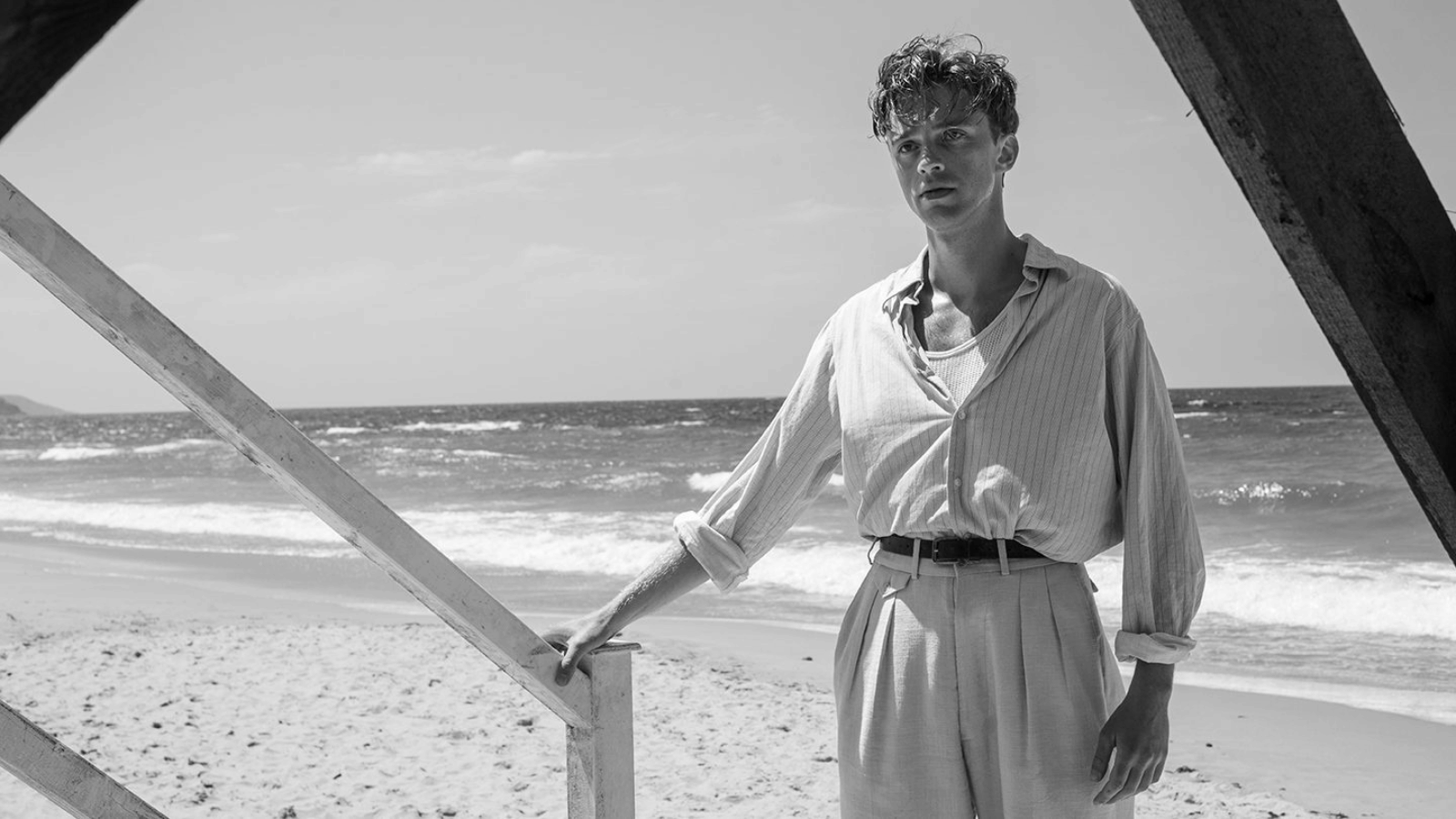
The Stranger (dir. François Ozon)
The critic: Jessica Kiang, Variety.
How to watch: Digital rental.
List-worthy?: Honorable mention.
Premise: In this largely faithful adaptation of Albert Camus’ existentialist classic, Benjamin Voisin stars as Meursault, a disaffected Frenchman in colonial Algiers who shows little emotion during his mother’s funeral, in his relationship with a lovely young woman (Rebecca Marder), or amidst a violent encounter with an Arab that lands him in prison. What is this man’s purpose? What makes him tick? These are questions that everyone but him seems to be asking.
Jessica’s thoughts: “[Ozon’s] evocation of the specific political environment of pre-war Algeria is an intelligent contemporary expansion on the novel. But in the more fundamental sense Ozon changes very little and so preserves the narrative’s timeless appeal: As he has always been in the book, the Meursault of the film remains magnificently resistant to diagnosis or psychologizing.”
My thoughts: Perhaps because even his best films, like The Stranger, never quite punch through to emphatic greatness, it’s been easy to take Ozon for granted, despite a varied, prolific, and consistently strong filmography that now dates back about 30 years. (Under the Sand, 8 Women, and In the House are personal favorites, but there are others of roughly equivalent value.) His cool detachment as a director is an achilles heel of sorts—it can be hard to locate the stake he has in his own work—but that makes him the ideal director to take on Camus’ classic novel, which peers into the same void. Photographed in gorgeous monochrome, The Stranger offers the lithe, elegant Voisin as a sociopath along the lines of Alain Delon’s Tom Ripley in Purple Noon, but with Ripley’s ambition swapped out for mirthless indifference. Ozon does particularly fine work in drawing out the tension between the French and their Arab counterparts in Algiers, who are foregrounded as victims of colonial racism and injustice. Ozon’s decision to limit the novel’s interiority to just a couple of lines of voiceover narration makes Meursault an even tougher nut to crack, but when they’re this impeccably stage, his actions are made to speak louder than words.
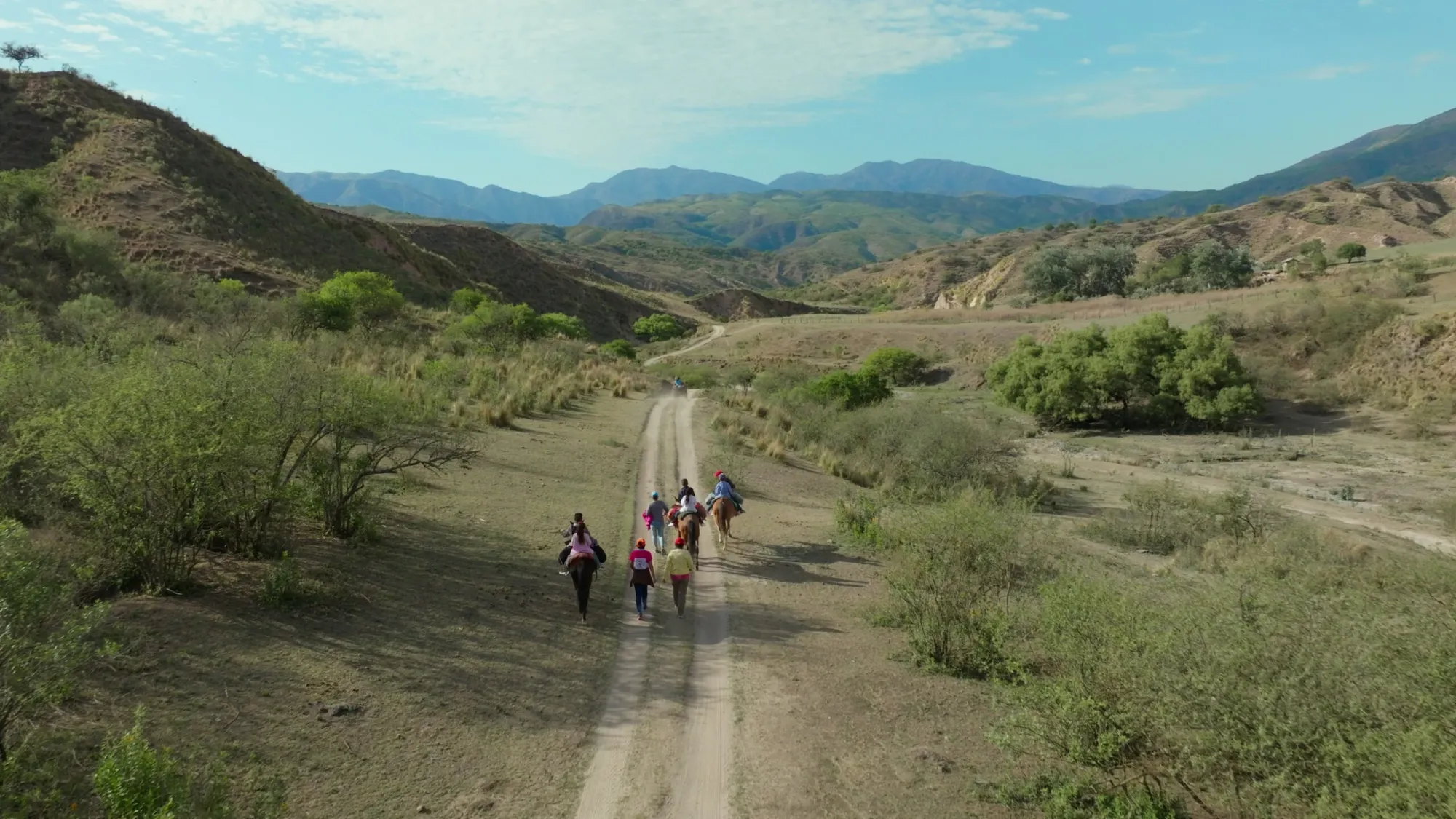
Our Land (Nuestra Tierra) (dir. Lucretia Martel)
The critic: Jonathan Romney, Screen Daily
How to watch: In theaters.
List-worthy?: No.
Premise: For her first documentary, Argentine director Lucretia Martel (La Cienaga, The Headless Woman) ruminates on the murder of Javier Chocobar, an Indigenous activist from the Chuschagasta community who was shot in 2009 during a dispute with three white men at a quarry on ancestral land. The case took nine years to come to trial, mainly on the basis of shaky cell-phone footage of the incident.
Jonathan’s thoughts: “While various experts also state the case for the Chuscagasta, what is essential about [Our Land] is that, above all, it lets the people tell their own story. As the end titles suggest, though, theirs continues to be a hard-fought struggle, even if justice appears at times to briefly—all too briefly—prevail.”
My thoughts: For much of Our Land, you feel like you’re in the hands of a solid nonfiction director, one who avoids the arm-tugging of lesser advocacy docs in making something akin to Michael Apted’s Incident At Oglala, another film that evokes Indigenous culture while exposing a violent injustice against it. But Martel’s features have been so consistently audacious that it feels a bit disappointing that she isn’t more assertive here, save for her notably persistent use of drone cameras. Vulture critic Alison Willmore gets into it in detail here, but there’s a strangeness and rigor to Martel’s drone work that redeems Our Land from a trend that’s been a pox on documentaries for the last few years. It’s unusual enough that she doesn’t try to hide the fact that she’s using a drone—it can heard buzzing around, and at one point, a bird knocks it off course—but as the camera continues to probe the landscape from above, it suggests a colonial incursion, like the helicopters swooping overhead in Apocalypse Now. The trial itself is plainly articulated, as are the film’s righteous politics, but Martel has redeemed a seemingly irredeemable technology.
Pompei: Below the Clouds (dir. Gianfranco Rosi)
The critic: Manohla Dargis, The New York Times
How to watch: Streaming exclusively on Mubi.
List-worthy?: On the cusp.
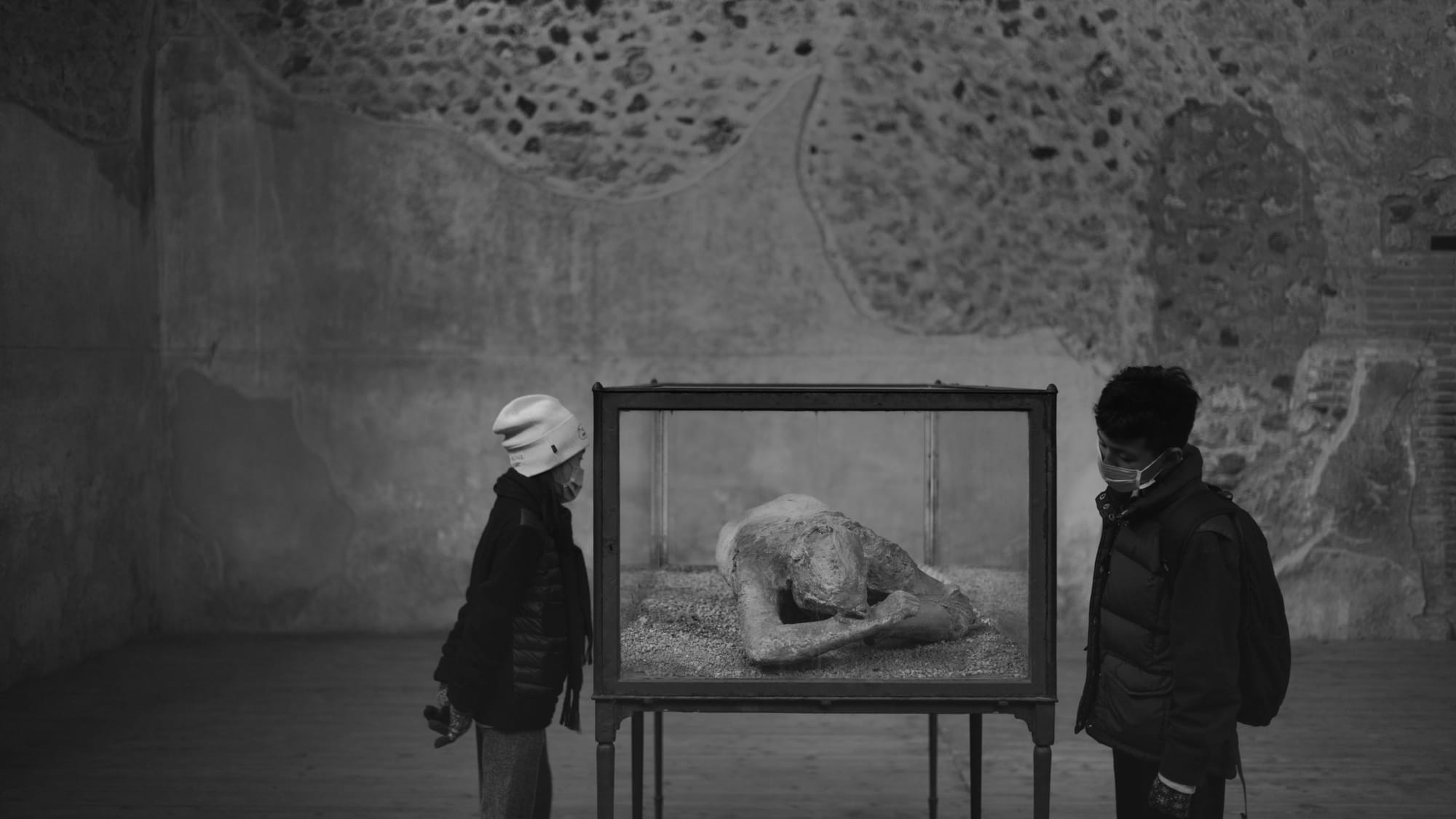
Premise: Opening with the Jean Cocteau quote, “Vesuvius makes all the clouds in the world,” Rosi’s latest documentary is a black-and-white, impressionistic portrait of Naples, a city that exists in the shadow of Mt. Vesuvius and seems to have its identity shaped by it. As the famous eruption that buried (and eerily preserved) the region in 79 AD continues to haunt the city, the film offers a fragmented view of its people, from modern tomb raiders to fire department dispatchers who field anxious calls every time there’s a mysterious rumble.
Manohla’s thoughts: “Set in and around Naples, Italy, in the shadow of Mount Vesuvius, it is a movie about the precarity of life, the certainty of death, the secrets of the ancient world and the mysteries of the new. It’s the kind of work of art that turns critics into evangelists—so, dear readers, think of this review as a hosanna.”
My thoughts: Rosi is one of the best documentary filmmakers in the world, distinguished by the impeccable beauty of his images, which still go hand-in-hand with an observational and episodic approach to nonfiction. He set a high bar for himself—and frankly, for me—with his 2016 film Fire at Sea, which addressed the migrant crisis from the Italian island of Lampedusa, and his 2020 follow-up Notturno, another politically engaged doc about displaced peoples, this time the occupants of Middle Eastern war zones. The urgency inherent in those previous two films is absent from Below the Clouds, but Rosi’s artistry is still intact, felt in the rich black-and-white images of a contemporary city that’s uniquely anchored to the past. While there’s no one through-line to the mosaic that Rosi is piecing together here, the individual anecdotes have a cumulative power, especially when he draws connections between the ruins of Vesuvius and presence it still holds in everyday life.
Fantasy Life (dir. Matthew Shear)
The critic: Stephen Saito, Variety
How to watch: Digital rental.
List-worthy?: Tops on the Amanda Peet list, maybe!
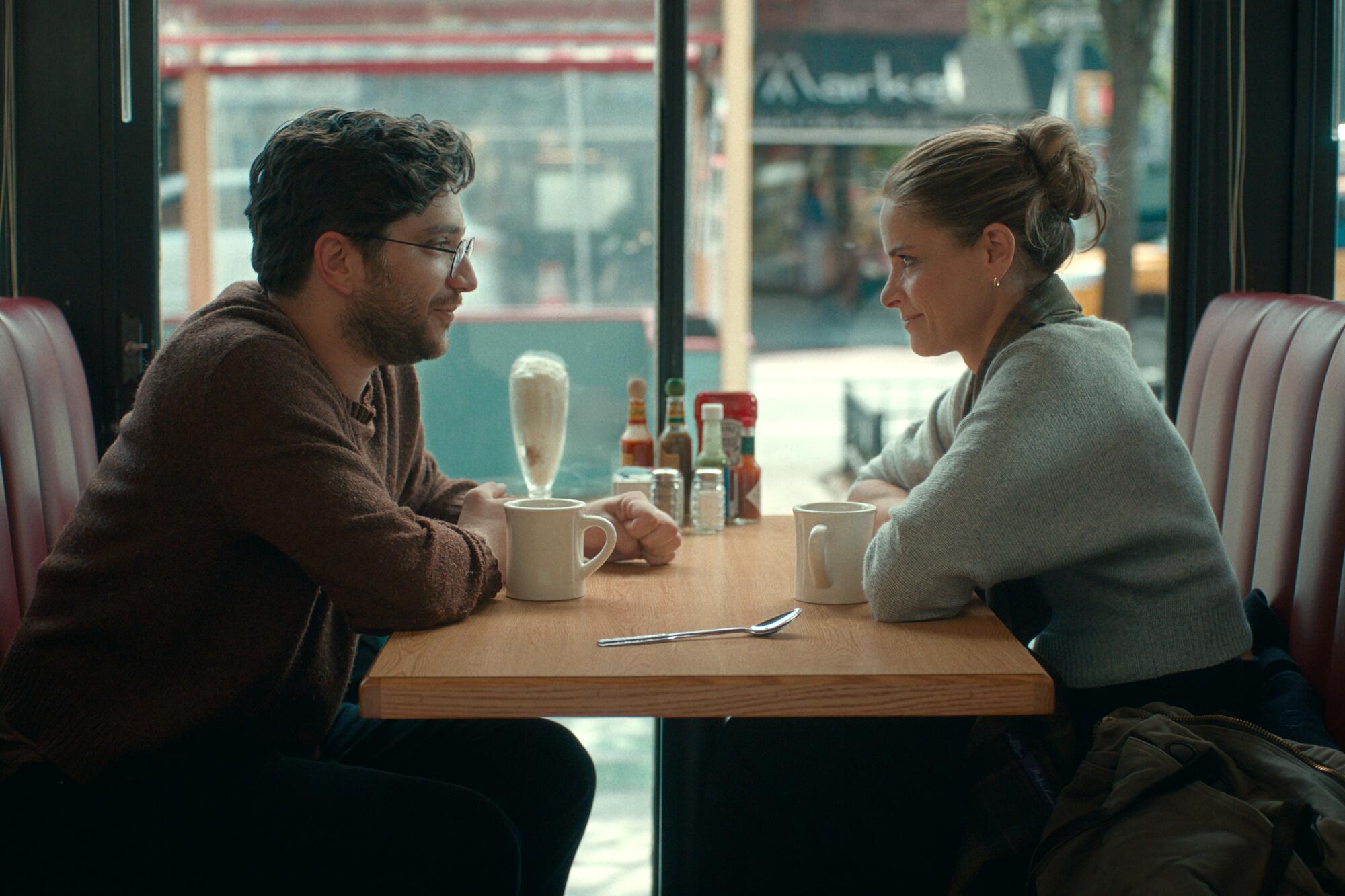
Premise: In his directorial debut, writer/star Matthew Shear plays Sam, an anxiety-ridden young paralegal who loses his day job and stumbles into a gig as a nanny for three pre-teen girls. The more time Sam spends with the kids at their homes in New York and Martha’s Vineyard, the more he’s drawn to their mother Dianne (Amanda Peet), a former actress who’s trying to get back into the business, but is hampered by depression and a shaky relationship to her musician husband (Alessandro Nivola).
Stephen’s thoughts: “It isn’t hyperbole to say that Amanda Peet gives the performance of a lifetime in Fantasy Life. There probably shouldn’t be any confusion between the actress and the role she inhabits as Dianne, a one-time screen star now in her early fifties who stopped booking parts a decade ago when the material wasn’t up to snuff. But there’s a wisdom and weariness to suggest Peet’s seen some things, and it can be unnerving to realize that it’s been about as long since she has been on the big screen herself.”
My thoughts: How badly did I underestimate Amanda Peet? That’s a question I asked myself when she shined in a major role in the uproarious TV comedy Brockmire. Then I asked it a second time when she penned a beautiful essay for The New Yorker about her battle with breast cancer, which coincided with her parents receiving hospice care on opposite coasts. And now I’m asking it yet again as Peet, an actress perhaps best known for a scene-stealing role in the terminally mediocre comedy The Whole Nine Yards, plays what feels like some unvarnished version of herself in Fantasy Life and is effortlessly funny and affecting in the role. The writer/director/star, Matthew Shear, has popped up in a few Noah Baumbach comedies, and he’s working more or less in that same vein, with a second half that feels like a kinder (if still contentious) Margot at the Wedding sans nuptials. Shear struggles to carry the film on his own in the 20 minutes or so before Peet turns up, but the two make an ingratiating pair, an odd couple by age and appearance, but great partners in low-hum angst. Bonus points for the gallery of ace supporting players Shear brings into the picture, too, including Judd Hirsch, Bob Balaban, Jessica Harper, Andrea Martin, and Zosia Mamet.
Discussion