In Review: ‘Michael,’ ‘Mother Mary’
Two music tales dominate the week's new releases: A Michael Jackson biopic is filled with songs and evasions while a new David Lowery film uses pop stardom as a jumping off point for a mystic journey.


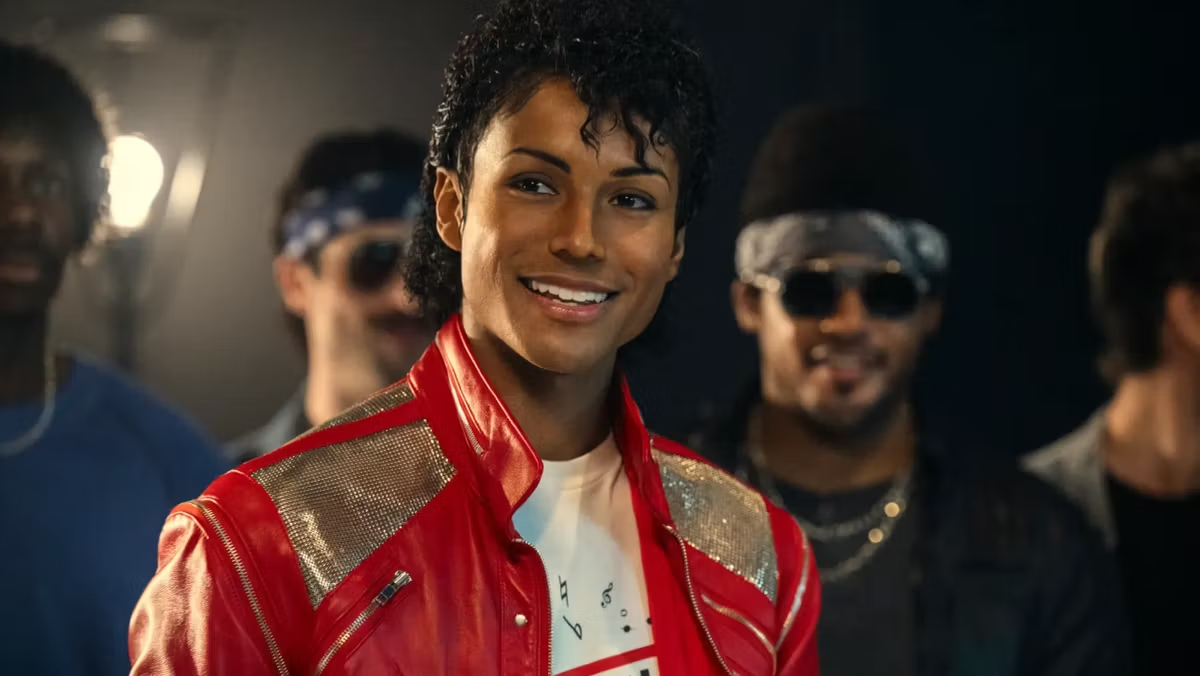
Michael
Dir. Antoine Fuqua
127 min.
If you go see Michael—and that’s not a recommendation—consider attempting this thought experiment: Imagine you knew nothing about Michael Jackson. And, yes, that’s asking the impossible. Jackson’s music remains inescapable, even over 40 years after Thriller became the bestselling album of all time. His influence can be felt across multiple genres. His image is iconic. The details of his biography, at least in the broad strokes, are well known. But try anyway. What kind of story is this estate-approved, tune-filled, slickly directed biopic trying to tell? And what are we to make of its subject, the kid from humble Gary, Indiana roots who became the global superstar who defined the very idea of global superstardom?
The answer to the first is pretty easy. The only consistent narrative throughline in Michael—which otherwise serves as a fictionalized highlight reel of his life from the early days of the Jackson 5 through the release of the 1987 album Bad—is the relationship between Michael (played as a child by Juliano Krue Valdi and as an adult by Michael Jackson’s real-life nephew Jaafar Jackson) and his father Joe Jackson (Colman Domingo). A steel mill worker who sees his musically talented children as his ticket out of Indiana, Joe forces the Jackson 5 to rehearse and tour endlessly in his quest for fame, punishing any perceived failures but reserving his cruelest abuse for the preternaturally talented Michael, the group’s youngest member. Directed by Antoine Fuqua and scripted by John Logan (Gladiator, The Aviator), Michael streamlines the Michael Jackson story until it becomes simply a tale of escape from abuse.
Enjoying The Reveal? Now's a great time to become a paid subscriber. You'll get access to everything we publish—from articles to audio commentaries—and help support independent film criticism.
That choice both gives the film focus and allows it to put on blinders that make the second question in this thought experiment harder to answer. The Michael Jackson of Michael never colors outside the lines of the image Jackson and his team attempted to project while alive—that of a childlike, endearing eccentric, kindhearted genius. It’s a hard act to keep up for the length of a feature film. One pivotal sequence focuses on Michael’s decision to record the 1979 album Off the Wall with Quincy Jones (Kendrick Sampson). (His fifth solo album, though the film treats it as his first.) It’s his chance, Michael explains, to fully express himself and all the new, grown-up feelings he’s experiencing. But feelings about what? The moment arrives amidst scenes of Michael interacting with his pet llama and adopting a chimp named Bubbles, whose introduction to the Jackson family’s Encino compound is treated with the importance a childbirth scene might have in another biopic.
To give credit where it’s due, the music remains undimmed and both Valdi and Jaafar Jackson are thoroughly convincing playing Michael as a performer. But only Valdi is able to stay convincing off stage as a sensitive kid in search of love and support unavailable to him at home. That’s less a failing of Jaafar Jackson than of the film around him; Michael either never figures out how to depict Michael Jackson as a human being with an interior life or, more likely, doesn’t even try. Instead we get a highlight reel: Here’s Michael filming the Thriller video. Here’s Michael and his super-cool, effortlessly handsome manager John Branca (played by Miles Teller; Branca also serves one of the film’s executive producers) inspiring CBS Records’ Walter Yetnikoff (Mike Myers) to force MTV to play Black artists. Here’s Michael sort of brokering a truce between L.A.’s Bloods and Crips via the “Beat It” music video. (No really. That’s in the movie.) To return to that thought experiment, the Michael Jackson that emerges from Michael doesn’t add up to a consistent or coherent character, just an attempt to reaffirm the most positive aspects of his public image.
There is, of course, more to the Michael Jackson story. An earlier version of the film apparently included at least some of the accusations of sexual abuse levelled at Jackson, if only to swat them away. But you won’t find any of that here, just a beautiful, too-pure-for-this-world soul who loved making music. (Also conspicuous by their absence, Janet Jackson, Randy Jackson, Rebbie Jackson, Joh’Vonnie Jackson, Diana Ross, Brooke Shields, Tatum O’Neal, Elizabeth Taylor, and others.) It’s an accomplished act of brand management, but one that can’t help occasionally telling on itself. The many scenes of Michael with admiring children have an uncomfortable undercurrent, introducing elephants into the room that Michael then expects us to ignore. Jackson matriarch Katherine Jackson’s (Nia Long) passiveness in the face of her husband’s abuse anticipates the alleged behavior of the parents who brought their children into Michael Jackson’s orbit. Motown head Berry Gordy (Larenz Tate) tells the 10-year-old Michael that, as far as the public is concerned, he’s now eight years old. That’s a better story. Or, as Gordy puts it, “In this business, you can make up just about anything.” If you have an audience that doesn’t mind a story that includes lies, aversions, and omissions so long as it doesn’t get in the way of thinking too much about the songs they love and uncomfortable truths about the artist who created them, you don’t even have to put that much effort into what you’re making up. —Keith Phipps
Michael is currently in theaters.

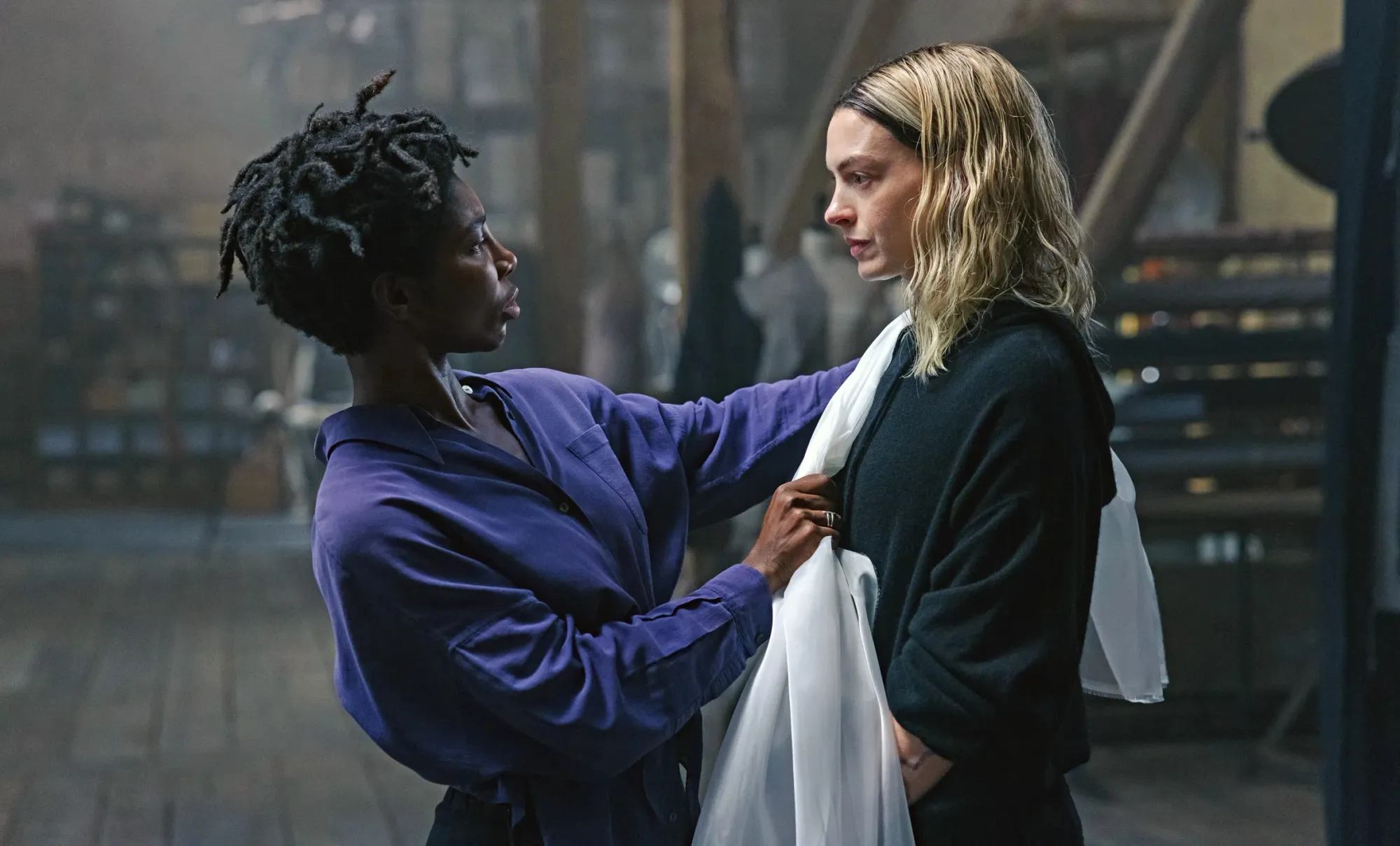
Mother Mary
Dir. David Lowery
112 min.
Mother Mary is a tedious film. To say so feels lazy and disengaged, as if you’ve refused to accept the challenge its accomplished writer-director, David Lowery, has presented to his audience. It is recognizably the work of the audacious fantasist responsible for A Ghost Story and The Green Knight—and, to no small extent, even mainstream fare like Pete’s Dragon and Peter Pan & Wendy—and he’s exploring uncharted waters here, stripping the plotting to the barest essentials while drifting off into metaphysical and spiritual realms that wholly dispense with convention. Yet the basic gamble with a project as abstract as Mother Mary is that the filmmaker will be able to bring you onto his wavelength, and there’s no shortage of effort on Lowery’s part to conjure the audiovisual rapture necessary to make it happen.
YMMV. Your Mileage May Vary.
Without the emotional ballast of A Ghost Story, in which a bedsheet specter experiences the passing of time in the same space, or the chivalric quest of The Green Knight, Mother Mary plants its feet on much shakier ground. Despite the ear-catching language over the opening images, in which one woman describes another as a “malignancy” and a “carcinogen,” Lowery sets up a two-hander that’s less dramatically combustible than it seems. In the wake of a catastrophic accident, the arena-filling pop star of the title, played by Anne Hathaway, flies to England in a crisis, seeking an image makeover from Sam Anselm (Michaela Coel), her estranged costume designer. Mary and Sam had once been close collaborators—and, the film suggests, friends on a more intimate level than that—but their partnership ended abruptly and Sam isn’t happy to see Mary turn up at her remote studio, asking for a new dress.
There’s a hushed intensity to the dynamic between Mary and Sam that comes through more in the performances—Coel measured and intense, Hathaway a steady rivulet of tears—than in dialogue that dances around the conflict. Though he takes advantage of the austere theatrical space of Sam’s studio, Lowery occasionally cuts away to Mary’s live shows, where her Biblical chic image and shimmering anthems (Charli XCX and FKA Twigs are among the songwriters) have made her a cult of personality. Yet Sam finds her in a vulnerable place, her stardom dimmed to a level where the two can revisit a breakup that Sam hasn’t gotten over, despite her own ascendence to the top of the fashion world.
Given Lowery’s interest in fantasy and the supernatural, Mother Mary doesn’t limit itself to interpersonal conflict for long, pivoting instead to a more mysterious connection between the two women involving a shared spirit. In the film’s most gripping scene by far, FKA Twigs cameos as a fan who leads Mary and her entourage through a séance that takes a few shocking turns and changes the trajectory of her life. (Or, perhaps, realigns her trajectory with Sam’s.) Lowery tries to express Mary and Sam’s psychological stress in exultant visual terms, but there’s so little clarity to their relationship that the images feel like elements of a music video that are just getting assembled. The words these characters say to each other are mostly boring and obscure, and it’s a mad scramble to figure out what’s making them so agitated. Keeping up with the film becomes as hard as it is to care. — Scott Tobias
Mother Mary is now played in limited release.




Discussion