In Review: ‘Lee Cronin’s The Mummy,’ ‘Normal,’ ‘Blue Heron’
Mummies, guns, and troubling memories: This week's new releases have it all.


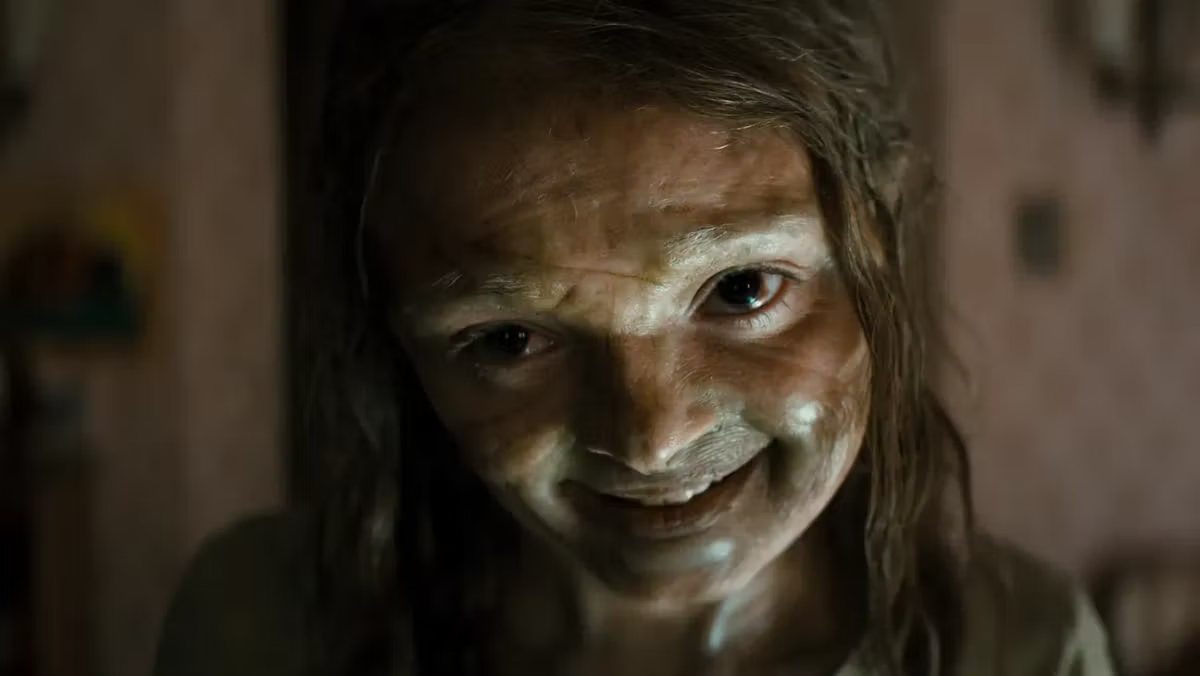
Lee Cronin’s The Mummy
Dir. Lee Cronin
133 min.
If a professional critic needs to look up your name to see your filmography, you should not be granted a possessive before the title, but as long as we’re handing them out, Lee Cronin’s The Mummy is a film with many fathers. It’s William Friedkin’s The Mummy, given how much it bends the classic creature mythology into a de facto reboot of The Exorcist. It’s Hideo Nakata by way of Gore Verbinski’s The Mummy, spending a ton of screen time on an investigation into a viral curse and the contents of a VHS tape. And it’s Fede Álvarez’s The Mummy, staged with the maximalist intensity and visceral punch of the 2013 Evil Dead remake and its Cronin-directed 2023 sequel, Evil Dead Rise, which sucked most (if not all) of the fun out of Sam Raimi’s original trilogy. None of this is to say that Cronin is a poor craftsman or an outright hack, but you would only know The Mummy is his because his name is part of the branding.
Enjoying The Reveal? Now's a great time to become a paid subscriber. You'll get access to everything we publish—from articles to audio commentaries—and help support independent film criticism.
After opening with an ancient ritual gone awry in Egypt, The Mummy shifts to an American family of four that’s living temporarily in Cairo, where broadcast journalist Charlie (Jack Reynor) is wrapping up an assignment before coming back home to Albuquerque. Just before he and his wife Larissa (Laia Costa) depart, their youngest child Katie (played as an elementary-school-aged kid by Emily Mitchell) gets abducted by a neighbor and the local police, led by detective Dalia (May Calamawy), cannot find her. Cut to nine years later in New Mexico, where Charlie and Larissa are raising a second daughter along with their teenage son Seb (Shylo Molina) and receive the astonishing news that Katie (now played by Natalie Grace) has been found in Egypt.
There is a catch, however: She is extremely fucked up. The doctors at the dimly lit institution in Cairo—let’s call it David Fincher Memorial Hospital—warn Charlie and Larissa that Katie is given to involuntary twitches and erratic behavior, and that she’s been put under a sedative. But there’s no explanation for why her body is gray and mangled or why her skin flakes like ancient parchment paper or why she expresses herself with chattering teeth and the low growl of a rabid dog. She simply goes home with the family under the assumption she’ll get better with a little TLC from mom and dad, despite her not resembling a normal human child in any way, shape, or form. While it’s fair to allow The Mummy to write all of this off as a family relying on faith and hope, rather than the evidence of a monster in their midst, it gets nonsensical fast.
Made in the current style of aggro horror blockbusters—think James Wan’s The Conjuring or Scott Derrickson’s Sinister or The Black Phone movies—The Mummy pummels the audience with sound effects and a Brian De Palma-level affection for the split diopter. Derivative as it is, it’s hard to deny that the film doesn’t deliver the goods as a no-holds-barred demon possession thriller that gets by on sheer relentlessness. But like Cronin’s Evil Dead Rises, there’s not much willingness on the filmmaker’s part to acknowledge its own pulpy absurdity, save for a couple of scenes where Katie orchestrates terror on multiple planes of action at once. A film like The Exorcist gets away with being po-faced because Friedkin is genuinely engaged in issues of faith and motherhood. The Mummy takes its silliness far too seriously. — Scott Tobias
Lee Cronin's The Mummy opens in Regal's and AMC's and Alamo Drafthouse's The Multiplexes tonight.

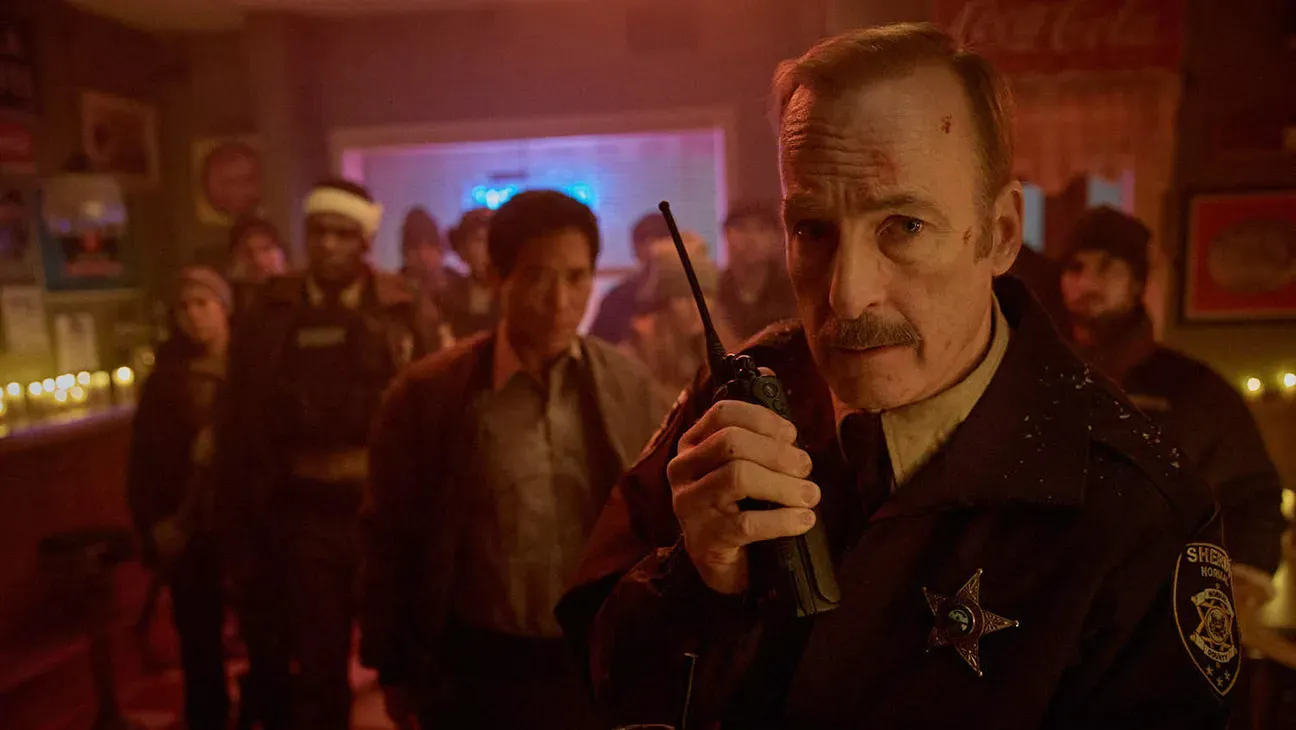
Normal
Dir. Ben Wheatley
90 min.
There’s a new sheriff in town but he doesn’t plan to stay long or do all that much while he’s there. In Normal, Bob Odenkirk plays Ulysses, a veteran lawman who’s traveled to Normal, Minnesota to take a job as the town’s interim sheriff. It’s a nice, sleepy community with a downtown that’s not exactly bustling. But it’s also not lined with the boarded-up windows so common in similar small towns. It’s a place Ulysses plans to coast for a few weeks without much drama. He’s had too much of that in the past, including an incident that’s led to his wandering ways and seemingly destroyed his marriage. (Ulysses’ unreturned voicemails to his estranged wife double as the film’s voiceover.) That’s been hard. But this, he thinks, ought to be easy.
He’s not exactly right. There’s something fishy about Normal, as the film makes clear from an opening scene set in Japan that ends with a pair of disgraced yakuza members being dispatched to Normal for reasons that will only become clear later. Ulysses senses it, too. His predecessor died under exceedingly odd circumstances and it’s clearly more than prejudice that leads the locals to attempt to keep his non-binary child Alex (Jess McLeod) away from a memorial service held in his honor. The arrival of a pair of bank robbers (Reena Jolly and Brendan Fletcher) might be the most dramatic event in another town of Normal’s size. Here, it’s the inciting incident that unearths a deep well of secrets.
Directed by Ben Wheatley (A Field in England, Meg 2: The Trench) and scripted by Derek Kolstad from a story he conceived with Odenkirk (the two previously collaborated on Nobody and its sequel), Normal breezily twists its way through a story that begins as a snowy noir, segues into a full-on action movie, and ends in blood-drenched farce. Two qualities remain consistent throughout, however: Odenkirk’s appealing, compassionate performance and an annoying glibness. Let’s address the latter first. Without spoiling Normal’s central twist, suffice it to say that it leads to a lot of gunplay that allows Wheatley to off one character after another in violent, sometimes explosive fashion. It’s more wearying than shocking, but not fatally so thanks to a brisk pace, a willingness to shift gears with little warning, and, again, Odenkirk’s humane performance. (He’s especially good in scenes with McLeod, playing a character who seemingly hasn’t heard a kind word from anyone in way too long.) Maybe next time, Sheriff Ulysses can take a job somewhere a little less frenetic, one where he, and we, might want to stick around for awhile. —Keith Phipps
Those loud bangs you hear? That's Normal dropping into theaters tonight.

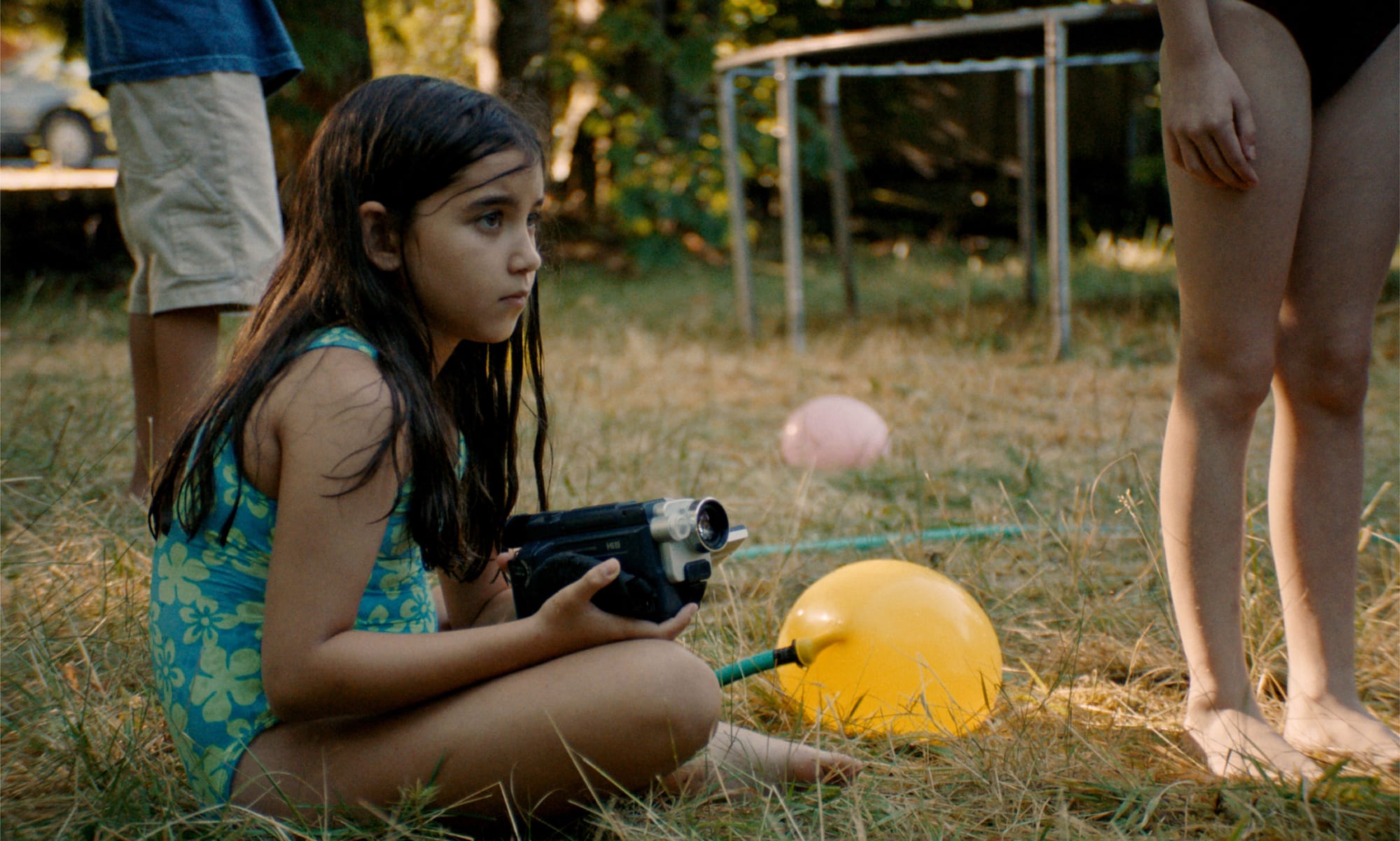
Blue Heron
Dir. Sophy Romvari
90 min.
No one remembers their childhood clearly. Memories don’t unfold in scenes, timelines are blurry, and attempts to reconstruct the past are often informed—which is to say, misinformed—by photographs or anecdotes or other unreliable, incomplete methods of storytelling. In her exceptionally clever and sneakily devastating debut feature Blue Heron, writer-director Sophy Romvari attempts to make an autobiographical film while implicitly questioning its conventions, which is no small undertaking. Romvari constructs the first half in fragments laid out like pieces of a puzzle where the borders are in place, but the middle is patchy and incomplete, and it’s not easy to fill in the gaps where the picture isn’t entirely clear. The events we do see are vivid and specific, but Romvari isn’t interested in manufacturing any larger narrative flow in order to give them a wholly satisfying context or clean timeline. It may seem like a frustrating or limiting perspective initially, but it leads to an ingenious conceptual shift later that snaps the whole film into place.
Opening on Vancouver Island in the late ’90s, Blue Heron stays close to Romvari’s alter-ego Sasha (Eylul Guven), an eight-year-old who’s moved to a new home with her Hungarian-Canadian family, which is having trouble settling into the neighborhood. As Sasha and her two close-aged brothers enjoy a summer of trampolines and station-wagon excursions to local parks and beaches, her parents (Iringó Réti and Ádám Tompa) fret over her stepbrother Jeremy (Edik Beddoes), an antisocial teenager from her mother’s previous relationship. Always a strange and taciturn kid, Jeremy has only gotten more erratic with age and the countless interventions from psychologists and social workers haven’t curbed behavior that’s lately taken on a dangerous, even criminal edge. Sasha’s parents are in the impossible situation of doing their best for Jeremy while shielding their other children from him.
Romvari approaches this entire situation from the side door of Sasha’s perspective, which isn’t rigorous to the point where the girl has to be present for every scene, but doesn’t attempt anything like omniscience. We see everything in bits and pieces, from small moments like Sasha diving onto a pool cover and needing to be rescued to more consequential ones, like Jeremy getting escorted home in cuffs after a shoplifting attempt. There’s enough buzz around the house to feel the tension between Sasha’s parents as they grasp desperately at a solution to the problem, but nothing they’ve tried has worked and nobody seems to have any good answers for them. As for the girl, she has a separate experience with Jeremy, who treats her with occasional sweetness and whose hand-drawn maps of towns and cities leave an impression.
It takes some effort on the audience’s part to come to terms with Romvari’s attempt to rework the memory piece—hey, it turns out all those conventional scenes and subplots exist for a reason!—but Blue Heron brings the hammer down in its second half, which pivots to a grown-up Sasha (Amy Zimmer) and a couple of fresh new conceits. It’s best to experience this part of the film cold, but suffice to say that Romvari, who’d addressed her past in the 2020 documentary short “Still Processing,” is comfortable straddling the hazy lines between fiction and nonfiction techniques. While Blue Heron has an experimental quality that might encourage you to intellectualize the way film processes memory, its payoff is as personal and emotional as movies get. It’s one from the head and the heart. — Scott Tobias
Blue Heron opens at IFC Center in New York tomorrow and expands from there.




Discussion