In Review: ‘All of a Sudden,’ ‘Josephine’
This week's new releases include the latest from Ryusuke Hamaguchi and an unsettling Sundance favorite.


(Programming note: This is the second installment of this week's reviews. Reviews of The Further Mis-Adventures of Cliff Booth and Paper Tiger can be found here. Happy Thanksgiving to all. We'll be back with more next week.)
All of a Sudden
Dir. Ryusuke Hamaguchi
197 min.
“Don’t forget, we’re in a transition period,” Marie-Lou (Virginie Efira), the director of a facility dedicated to the care of elderly dementia patients just outside Paris, tells her staff early in All of a Sudden. She’s referring specifically to the implementation of “Humanitude,” an approach to care that emphasizes empathy and personal connection, but the line could double as the film’s thesis statement. The latest film from Ryusuke Hamaguchi (Drive My Car, Evil Does Not Exist), emphasizes how everyone and everything is forever in a transition period, that life is itself one long period of transition, and that maybe that’s what makes it meaningful. But that’s the film’s concern at its headiest level, one it reaches with great care and patience via a story of friendship built around philosophical dialogue. Hamaguchi asks the same patience of viewers. (Note the running time but also note that every minute feels essential to the film.)
Transition can also be a struggle and Marie-Lou finds her plan, despite being rooted in studies that back up Humanitude’s effectiveness, challenged on multiple fronts. Superiors question her progress and requests for more funds. Idealistic nurses and aides leave to start smaller homes of their own that will allow them to achieve more easily Marie-Lou’s hopes of dedicating more time and attention to each resident. Long-time employees like Sophie (Marie Bunel) do little to hide their skepticism.
We hope you're enjoying these reviews but The Reveal has much more than reviews to offer. Become a paid subscriber and you'll get access to everything we publish—from articles to lists to audio commentaries—and help support independent film criticism.
All this weighs heavily on Marie-Lou when she disembarks to help Tomoki (Kodai Kurosaki), a young, non-verbal autistic man she spots running alongside her tram. This chance act of kindness proves life-changing. Tomoki is the grandson of Gorō (Kyōzō Nagatsuka), a Japanese actor currently starring in an avant-garde play directed by Mari (Tao Okamoto). After attending a performance and finding it reflective of her own situation, Maire-Lou seeks out Mari. The two find they share a strong and instantaneous connection while conversing during a long walk—think Before Sunrise, but platonic—one that only deepens when Mari reveals she is, in her words “a cancer patient at death’s door” before acknowledging this is “a bit of a conversation-stopper.”
Hamaguchi co-wrote All of a Sudden with Léa Le Dimna as an adaptation of the 2019 book When Life Suddenly Takes a Turn, a collection of letters exchanged between philosopher Makiko Muyano and medical anthropologist Maho Isano. Though loose and fictionalized, All of a Sudden doesn’t abandon its non-fiction roots. As their first night together stretches late into the night, Mari joins Marie-Lou as she works the night shift and uses a coffee break to describe, with help from a white board, the fatal flaws of capitalism. Her lecture and the discussion that follows run for a combined 10 minutes, but it’s not really a digression. The growing divide between insiders and outsiders connects directly to Marie-Lou’s professional experiences and to both women’s desire to find ways to live apart from the system’s destructive cycle, even though Mari knows her own time is limited.
None of this should work. All of it does, thanks to All of a Sudden’s disarming intimacy. Efira and Okamoto deliver assured performances that make Mari and Marie-Lou’s closeness feel relaxed and real but also perilous. Mari inspires Marie-Lou to redouble efforts to implement Humanitude at the risk of her job. But Mari’s condition also gives their friendship a sense of fragility. The two come to mean everything to one another, but what does that mean to the one destined to be left behind? Hamaguchi lets scenes play out at their own, usually relaxed pace and takes time to incorporate small details and gestures that cumulatively create a sense of what this short intermingling of two lives means to both women, and what influence it might have on those around them. Mari’s lecture touches on several of the 21st century’s biggest problems, existing and looming crises sure to affect billions of people. But it’s also a world in a transition period that might be influenced by the connections we form one link at a time. —Keith Phipps
All of a Sudden opens in limited release today.

Josephine
Dir. Beth de Araújo
121 min.
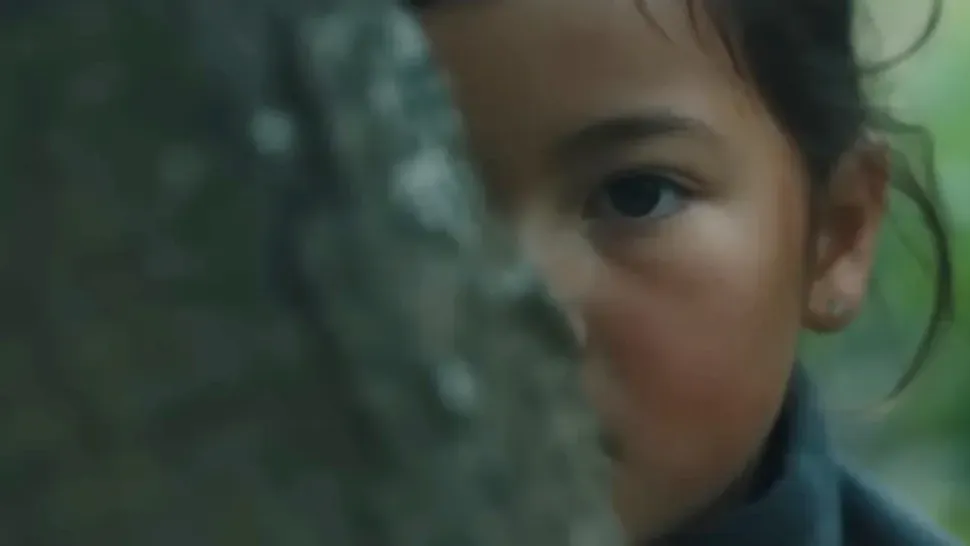
Josephine opens with a scene shot from the point-of-view of the film’s title character (Mason Reeves), an eight-year-old girl living in San Francisco who’s about to set out on a weekly Sunday morning run through the park with her father Damien (Channing Tatum). Writer-director Beth de Araújo doesn’t stick with this conceit once Josephine and Damien leave their garage, but it immediately establishes that what follows will be Josephine’s story and that the film will stay close by her side. (She’s in every subsequent scene but one.) It doesn’t take long to realize just how uncomfortable this will be.
Deep in the park, Josephine runs ahead and reaches a fork in the path out her father’s sight. He turns right but she’s already turned left to hide at the top of a nearby hill where, while waiting, she witnesses a jogger’s violent rape at the hands of a man we’ll later learn is named Greg (Philip Etinger). (Fair warning: It’s depicted in graphic detail.) She watches in silence until Damien arrives and scares the rapist off then gives chase before circling back. When the police arrive, Damien accompanies them, leaving Josephine in the back of a squad car in the company of an insensitive cop where she’s joined by the victim (Syra McCarthy), whose shock has led her to focus on a lost hair tie. Josephine is still by the victim’s side when she identifies her attacker after the police bring him back in handcuffs. Then Damien tries to go about their day as if nothing has happened.
This, understandably, doesn’t work. Her sense of security shattered and unable to understand what she’s witnessed, Josephine begins acting out shortly after she and her dad arrive home, where Damien and his wife Claire (Gemma Chan) almost immediately find themselves at odds over how to talk to their daughter about the event (with Damien preferring not to talk about it at all). There’s not really a road map for these situations, nor is there one for when a previously sweet child begins lashing out at school, and every choice Damien and Claire make feels like it could be the wrong one. Further complicating matters: because she’s the only eyewitness to the rape, Josephine is drawn into the police investigation and, later, the trial.
This is just Araújo’s second feature (after 2022’s Soft and Quiet) but she brings a veteran’s assurance to the fluid, immersive direction. The film’s tight perspective allows it to depict the way Josephine starts to feel the weight of strangers’ eyes in public and how the experience clouds her inner life. With no warning or fanfare, Greg becomes an unwelcome and intrusive presence, popping up as a wordless, malevolent imaginary companion (though this device causes a few later moments to edge a bit too close to horror movie territory). Tatum and Chan capture the confusion of parents with no good options and Reeves is astonishingly good, delivering a natural, intuitive performance as a kid filled with conflicting emotions. While being questioned by a court counselor, she looks glum and haunted then breaks into goofy mugging when she realizes there are people watching behind a one-way mirror. She’s the ideal center for a tough story about an innocent trying not to be crushed by the realization the world around her is far more dangerous than the one in which she thought she’d been living. —Keith Phipps
Josephine is currently in theaters.





Discussion