In Review: ‘The Further Mis-Adventures of Cliff Booth,’ ‘Paper Tiger’
Our first batch of reviews this week cover a David Fincher/Quentin Tarantino collaboration and a James Gray crime drama.

(Programming note: Check back tomorrow for reviews of All of a Sudden and Josephine.)
The Further Mis-Adventures of Cliff Booth
Dir. David Fincher
143 min.
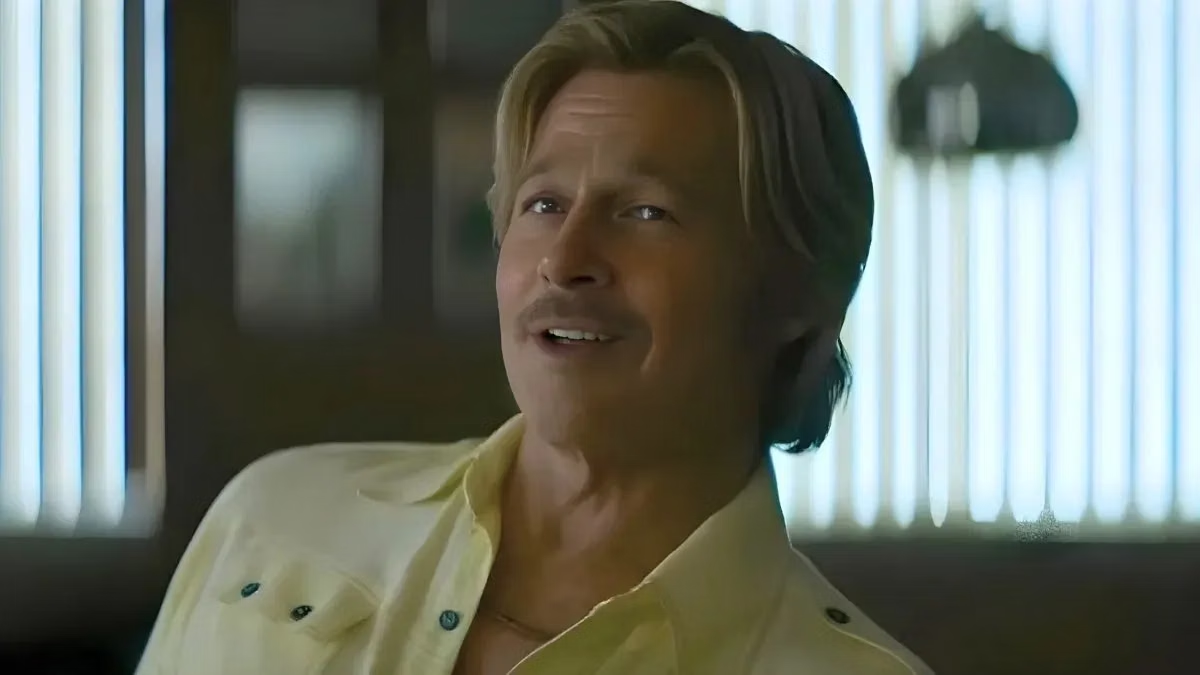
Though technically spun off from Once Upon a Time… In Hollywood, Quentin Tarantino’s immersive evocation/alternative history of 1969 Los Angeles, The Further Mis-Adventures of Cliff Booth might be better understood (and enjoyed) as the type of story that Tarantino told in his novelization, which wasn’t all that interested in transcribing his movie to the page. While certain scenes carried over, along with some basic narrative architecture, the book is more of an odds-and-sods collection of vignettes within that world, minor stories that weren’t included in the film but could play in the sandbox. They did not have to be consequential, either: An entire chapter, for example, is devoted to the time when Cliff Booth, the stuntman and all-around fixer played in the film by Brad Pitt, took a studio receptionist on a date to see the Swedish erotic film I Am Curious (Yellow). (The setting mostly gives Tarantino a chance to use Booth as a mouthpiece for his own moviegoing likes and dislikes.
We hope you're enjoying these reviews but The Reveal has much more than reviews to offer. Become a paid subscriber and you'll get access to everything we publish—from articles to lists to audio commentaries—and help support independent film criticism.
Building an entire feature around a sidekick like Booth may sound like a bad idea, because he’s not a terribly complicated guy and spending more time with him adds detail without adding dimension. Yet it gives Tarantino, through Fincher, the opportunity to make a true piece of pulp fiction, a noir-inflected thriller in the Elmore Leonard vein that gives itself over to the chaotic, impulsive, violent tendencies of Booth himself. Its pleasures are determinedly minor but nonetheless vivid, because it continues to occupy the cinematic terrain of Once Upon a Time… In Hollywood—albeit eight years later and through Fincher’s lens—and plays ride-along with a thrill-seeker and ne’er-do-well who constantly gets himself into trouble. Fincher’s too fussy and curatorial about his own directorial projects to allow himself to make a genuine B-picture, but he’s written himself a good one here.
After fending off murderous Manson Family hippies together in 1969, Booth parted ways with fading Western star Rick Dalton, but in 1977 acting as a hired hand for Hollywood entertainers is still part of his freelance portfolio. In the opening sequence, he’s shown operating the projection booth at the New Beverly Cinema before settling a theft and extortion scheme for an older client after hours in the same locale. He also makes a mean daiquiri at a bar job and stumbles into sketchier gigs without having to try too hard. Tarantino and Fincher kick the A-plot as far down the road as they can before introducing Booth to Karen Crosby (Elizabeth Debicki), a talent agent with long legs and a mean right hand, and her client Charlie Peters (Scott Caan), who winds up needing him as Dalton once did. While Charlie was up to no good in the Philippines, he foolishly activated the services of two gangsters (Matt Groove and JB Tadena) who have now arrived in Los Angeles to finish a job that Charlie no longer wants done.
Though there’s small amount of overlap in Tarantino and Fincher’s obsessions—the former’s habit of pointing out L.A. locations sparks a Zodiac-like precision to the titles from the latter—The Further Mis-Adventures of Cliff Booth doesn’t have the relaxed, slice-of-life qualities of Once Upon a Time… in Hollywood, which seemed blissfully content just to ride shotgun with Booth through ’69 Los Angeles. Fincher is colder and less given to chatter, but he does well to allow Tarantino’s script the breathing room necessary to develop Booth’s rapport with Karen and get to know Charlie’s mysterious wife (Carla Gugino) and Booth’s father, played a charmingly ornery Peter Weller. There’s mud-wrestling and a demolition derby and fetishistic slapping and a climax that’s up to agreeably nasty standards. That’s all. And that’s fine. — Scott Tobias
The Further Mis-Adventures of Cliff Booth opens in IMAX theaters tomorrow. It starts streaming on Netflix on December 23rd.

Paper Tiger
Dir. James Gray
114 min.
In the pale evening light that reflects on the water in James Gray’s Paper Tiger, the Gowanus Canal doesn’t glisten so much as glare, its surface greasy from the “black mayonnaise” of industrial sludge that’s consumed the 1.8-mile waterway since the early-to-middle part of the 20th century. Even in the 21st century, when it was finally declared a Superfund site in 2010, it’s still considered one of the most polluted waterways in the country, stymieing efforts to develop the valuable real estate around it. Paper Tiger opens with two brothers attempting to consult on environmental relations in 1986, and though Gray’s gritty, immersive crime drama creates a fiction around the canal, the date alone is a good indication of how well they fare. All that sludge that’s coughed into the water like phlegm? That’s a metaphor for the surrounding area, too.
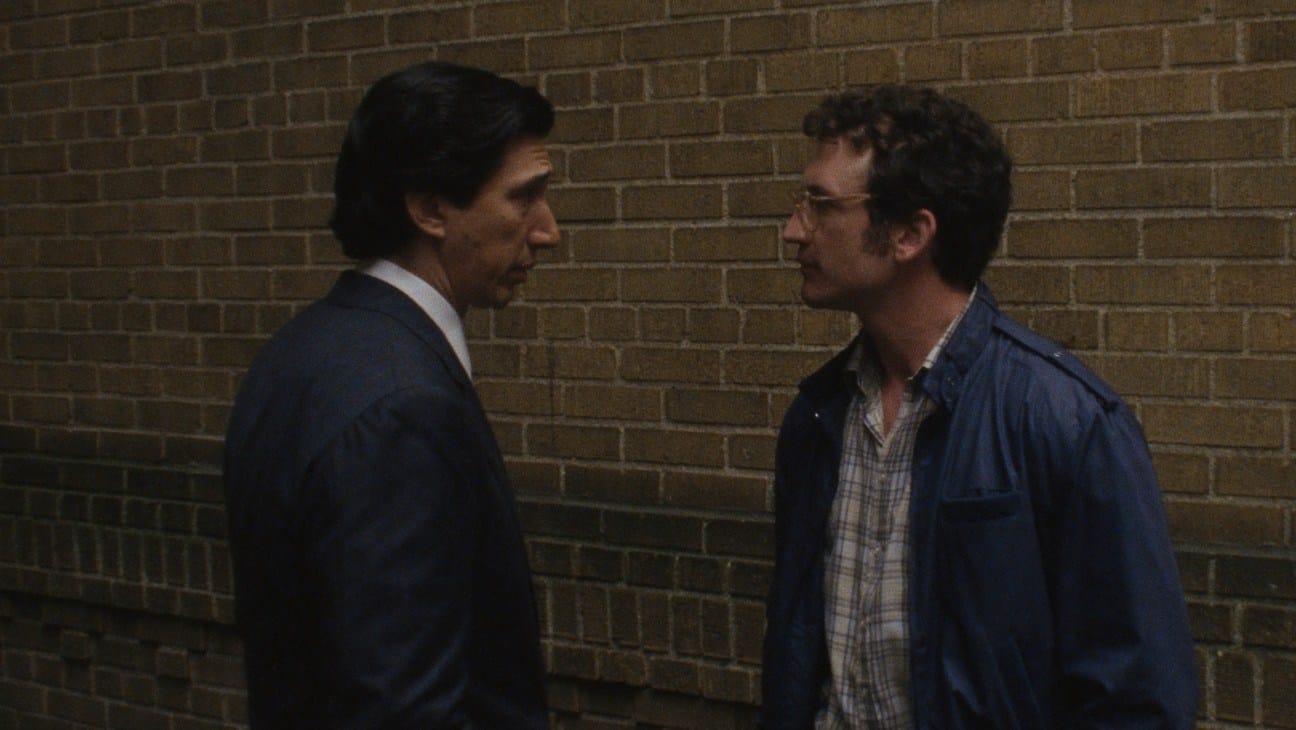
Like his 1994 debut feature Little Odessa, about an immigrant family in Brighton Beach that’s drawn into dangerous contact with the Russian mob, Paper Tiger is drawn heavily from Gray’s own family history and it’s notable for the lack of romanticism that colors its tragedy. There’s nothing seductive about associating with the criminal kind, but for Irwin Pearl (Miles Teller), a middle-class engineer raising two boys with Ivy League aspirations, there’s a practical sense that the American dream might run through them. When his older brother Gary (Adam Driver), a retired cop living conspicuously high on the hog, comes to him with the idea of a lucrative partnership with a shady Russian outfit, Irwin is naturally suspicious. But Gary is one of those preternaturally confident men who can set such worries at ease: Irwin can simply do his job in helping the Russians handle environmental regulations on the canal, and he’ll take care of the rest.
The speed with which everything goes wrong is breathtaking. One night, Irwin naively drives his boys to the Gowanus site for a spot inspection and stumbles upon criminal activity that he cannot unsee. He and his sons barely survive the night, and Gary is left to scramble for their lives and his own, all while Irwin’s wife Hester (Scarlett Johansson) processes a diagnosis from her doctor that will darken the family’s future on its own. Photographed in a high-grain 35mm that evokes an earlier age of New York crime drama, Paper Tiger features several tense setpieces, but it’s muted by a tone of inevitability, as if the Pearls are slowly getting squeezed by a boa constrictor. Belying Gary’s absurd assurances that they’re “paper tigers” who are willing to negotiate, the Russians are aggressive in flexing their muscles and don’t think twice about terrorizing a family like Irwin’s to send a message.
Yet the Russian mob is not the subject of Paper Tiger so much as a black light that reveals the complex tensions and bonds within the Pearl family. Gary and Irwin are imperfect partners, and Teller is exceptionally good at telegraphing Irwin’s combination of wariness and jealousy of Driver’s “cool uncle” type, who wows his kids with his Mercedes and hidden sidearms while masking his mysterious sources of income. Yet it’s Johansson’s performance as Hester that’s the film’s most devastating, because she so plainly adores a husband who has endangered them all and goes to astounding lengths to protect him and the boys. Turns out there are sacrifices more courageous than walking into the teeth of the Russian mob. — Scott Tobias
Paper Tiger is currently playing in limited release.



Discussion