In Review: ‘Spider-Man: Brand New Day,' ‘I Want Your Sex'
Bondage is the theme that connects this week's reviews, from a weary web-slinger to an artist who keeps her assistant tied to his job.

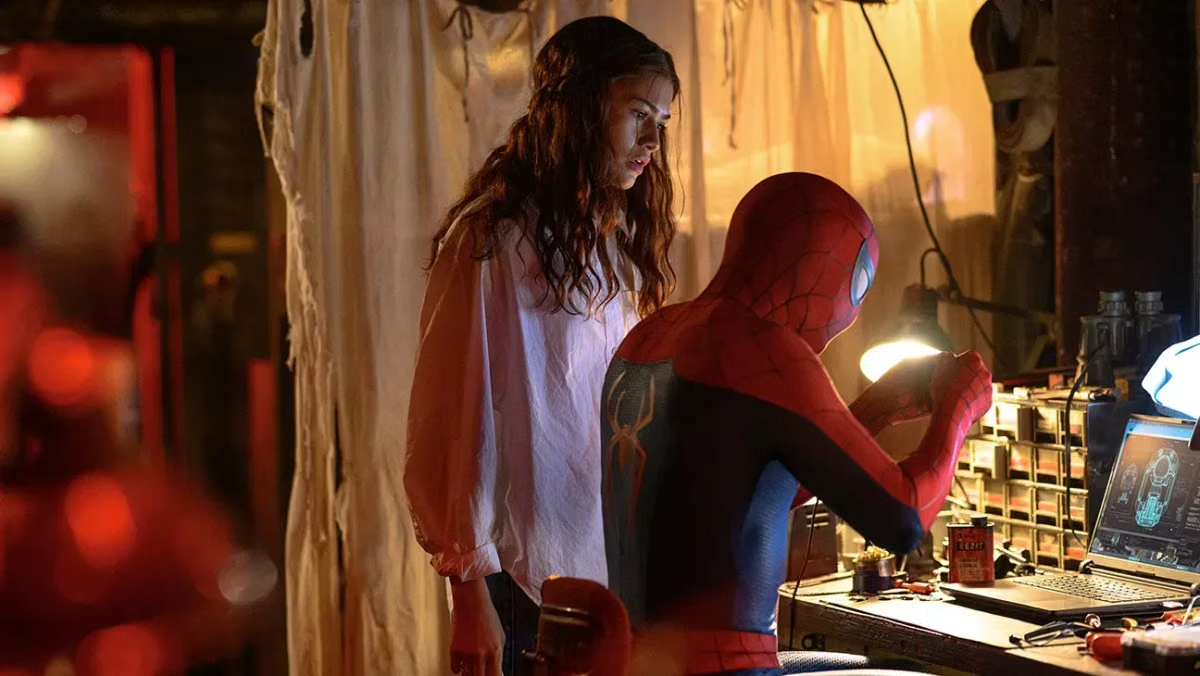
Spider-Man: Brand New Day
Dir. Destin Daniel Cretton
145 min.
As the last entry in our summer of franchise fatigue, following the twin sighs of Star Wars: The Mandalorian and Grogu and the DCU’s Supergirl, Spider-Man: Brand New Day seems to have expected a little dog-days exhaustion, and not only because it arrives in late July, as a natural anticlimax to The Odyssey. The previous Spider-Man, 2021’s No Way Home, cracked open the multiverse and brought in previous screen iterations of Peter Parker (Tobey Maguire and Andrew Garfield), along with memorable villains like Green Goblin (Willem Dafoe) and Doc Ock (Alfred Molina), a grand-finale event that unloaded every firework on the platform. It ended with Doctor Strange (Benedict Cumberbatch) unleashing a spell, at the hero’s request, to make the world forget about Peter Parker and Spider-Man, because it was no longer safe to know him. With great power and great responsibility came the great burden of solitude, too.
We hope you're enjoying these reviews but The Reveal has much more than reviews to offer. Become a paid subscriber and you'll get access to everything we publish—from articles to lists to audio commentaries—and help support independent film criticism.
To the degree that Brand New Day isn’t a by-the-numbers Marvel adventure featuring unlikely team-ups and a new character to bring into future cycles, the theme of loneliness turns out to be its most potent (and least expensive) weapon on offer. While there’s no shortage of world-weary superheroes out there—just ask Mando and Supergirl!—Tom Holland is asked to give a real performance as Peter Parker, and there’s an affecting distance here between the boyishness of his 2016 introduction in Captain America: Civil War and his bruised, craggy presence in Brand New Day, where crimefighting is a 24/7 job that’s draining the life out of him. He takes cold comfort in the Instagram reels that his girlfriend MJ (Zendaya) and his best buddy Ned (Jacob Batalon) are happily posting from MIT, the dream school that they’d planned to attend together. But he needs to stay busy to keep the melancholy at bay.
The MCU has the mythological resources to do just that. After breezing his way through common hoods and less formidable villains in daily clean-up duties for the New York police department—Liza-Colón-Zayas of The Bear is appealing as his detective contact—Peter faces a more vexing threat. A mischief-maker with a grudge against the Department of Damage Control (DODC) has been staging audacious attacks against its facilities through a potent, transferable consciousness that can “jump” from one ordinary citizen to the next. The source and motives of this mysterious power are a surprise the film keeps under a hooded sweatshirt, but Peter and his friends here, including Frank Castle/Punisher (Jon Bernthal), Black Widow (Florence Pugh), and Bruce Banner/Hulk (Mark Ruffalo) work together at various times to stop it.
Of Spidey’s crimefighting partners, The Punisher gets the most screen time, and even Bernthal’s considerable charm can’t prevent the partnership from seeming a little forced, given the gap between Peter Parker’s general-audiences wholesomeness and Frank Castle’s TV-MA vigilantism. Black Widow and Hulk’s appearances are more like extended cameos, with Pugh doing an easy couple days’ work around a Russian spa pool while Ruffalo toggles rotely between academic and beast. Though the major villain is set up in part as a preview for coming attractions, he-or-she does have a backstory that aligns nicely with Peter’s emo phase, each feeling like their special abilities have isolated them and robbed them of their closest companions.
To that end, Peter’s inevitable reunion with MJ and Ned leads to the most persuasive scenes in Brand New Day, because it gives the actors, Holland and Zendaya especially, some room to express their angst. The terrible curse of Strange’s spell is that MJ and Ned have their memories wiped while Peter remembers everything, so any attempt to resume contact puts them woefully out of step. It’s tempting to credit director Destin Daniel Cretton for hitting this strong emotional register, because he debuted with the piercing 2013 indie drama Short Term 12 before becoming one of the MCU’s house directors. But so much of Brand New Day is pro forma Marvel action that Cretton and the actors have minimal space to work. That the film’s best scenes could have been shot on a Short Term 12 budget is a telling indictment of the whole MCU project. — Scott Tobias
Spider-Man: Brand New Day swings reluctantly into theaters tonight.

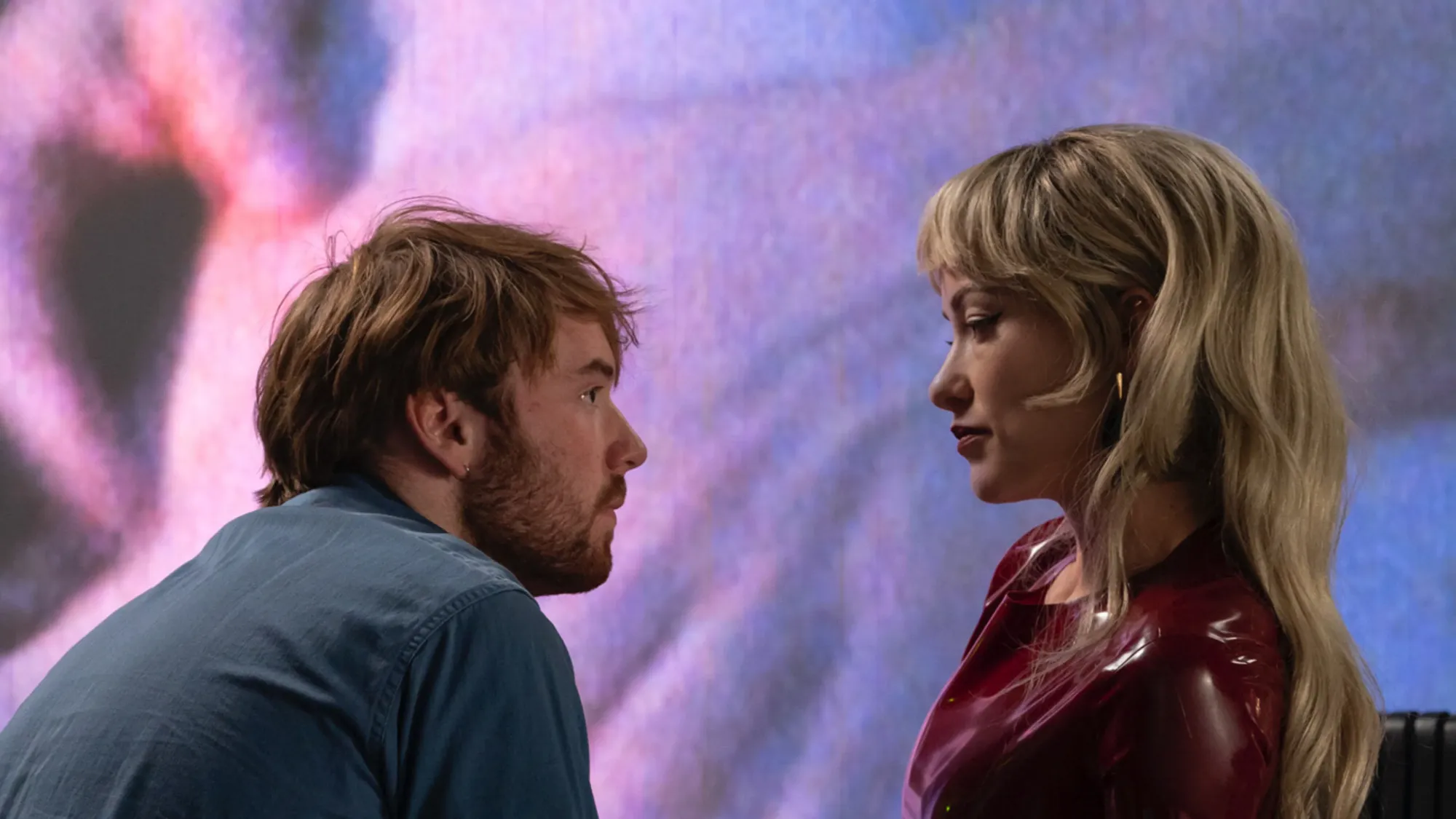
I Want Your Sex
Dir. Gregg Araki
90 min.
In Gregg Araki’s 1992 breakthrough indie The Living End—his third feature, a queer Thelma and Louise produced for the princely sum of $20,000—two HIV-infected men peel off on a nihilistic adventure together, following their impulsive, libidinous whims to the end of the line. At one point, they fantasize about abducting then-President George H.W. Bush and injecting him with a syringe full of their blood, which leads to an unforgettably mordant punchline: “How much you wanna bet they’d have the magic cure by tomorrow?” The Living End was an important moment in the New Queer Cinema that emerged in the early ‘90s, and that line encapsulates both the fury of a generation ravaged by the AIDs epidemic and Araki’s specific sense of humor. Like John Waters, he’s always been more of a provocateur than a polemicist, and the implied message behind his most darkly comic jibes seems to be, “Come on now, lighten up.”
Apart from a couple of for-hire gigs as a TV director, Araki has mostly been quiet in the seven years since pouring his obsessions into Now Apocalypse, a pansexual Day-Glo alien invasion series for Starz that pushed the TV-MA rating to heretofore unknown limits. With that magnum opus out of the way, Araki has returned triumphant to the “come on now, lighten up” theme in the kinky 90-minute comedy I Want Your Sex, which finds humor in the gap between his generation and young adults whose libidos have fallen into slumber. There’s an inherent slipperiness to Araki’s comedy that can make his actual point-of-view hard to pin down, but the overall effect of this too-hot-for-HR workplace sex romp is playful enough to keep from raising anyone’s hackles. His giddy tone weakens your defense, and the razor’s edge the film tiptoes along somehow turns into a gooey, pliable marshmallow.
Chock-a-block with cultural references, another Araki hallmark, I Want Your Sex teases the audience with the classic Sunset Boulevard image of a body floating in a swimming pool, then flashes back nine-and-a-half weeks (wink-wink) earlier to explain how it got there. The body belongs to Erika Tracy (Olivia Wilde), an artist whose sexually provocative installations are at once a reflection of her voracious kinkiness and a cynical exercise in brand management. “Contemporary art is a scam,” Erika tells Elliot (Cooper Hoffman), her abashed new assistant. “The real art is convincing people you’re making something meaningful and complex when it’s really just arbitrary masturbation.” Erika doesn’t wholly believe what she’s saying, of course, but she loves to get a rise out of Elliot in the office and, more literally, behind closed doors. Her NDA is as binding as her BDSM gear.
Much like Hoffman’s fumbling young naif in Licorice Pizza, Elliot submits to the allure of an older, more powerful woman and Wilde has the time of her life as Erika, torturing this poor dope with her body and her wit. Though Elliot technically has a girlfriend in Minerva (Charli XCX), a neuropharmacology grad student who thinks sex every 11 days is too burdensome a schedule, he eagerly agrees to be Erika’s plaything, despite her callousness. Their dominant/submissive dynamic is more or less the same as the one shared by the leads in this year’s Pillion, only Araki doesn’t care much to engage earnestly in this relationship. It’s not an insult to say that he likes to keep things on the surface.
And that surface is bright and engaging, recalling earlier Araki comedies like Kaboom, Smiley Face, and Splendor, which keep the pop-culture Cuisinart whirring away. Though I Want Your Sex puzzles over the kids of today, its perspective is unabashedly Gen-X, hence a reference to Erika once having sex with Vincent Gallo at the premiere of The Brown Bunny or the stunt casting of Margaret Cho and Johnny Knoxville as hard-nosed police interrogators. Erika may well be a sociopath who would be cancelled a million times over in the real world, but Araki’s candy-coated sex farce reserves an unmistakable affection for a woman who’s trying to use art to pry people from their inhibitions. — Scott Tobias
I Want Your Sex scandalizes select theaters this weekend.





Discussion