#45 (tie): ‘The Battle of Algiers’: The Reveal discusses all 100 of Sight & Sound’s Greatest Films of All Time
Gillo Pontecorvo's docudrama depicts the rise, fall, and resurrection of a popular uprising against French colonialism, one small detail at a time.


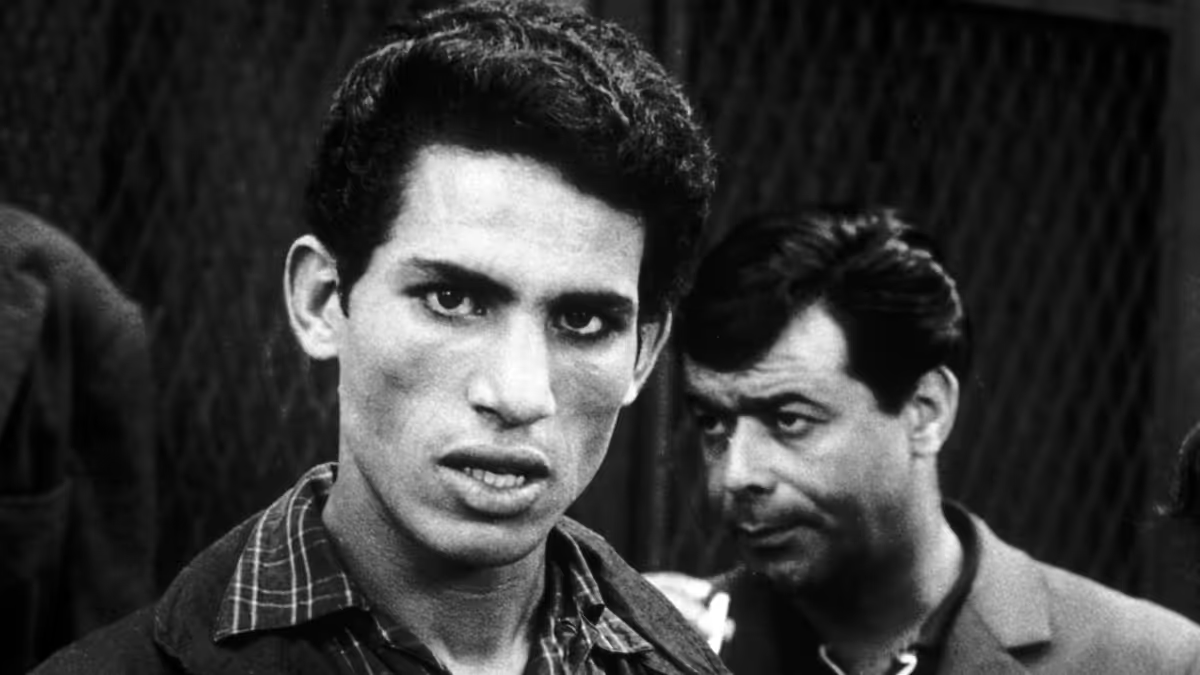
On December 1st, 2022, Sight & Sound magazine published “The Greatest Films of All Time,” a poll that’s been updated every 10 years since Bicycle Thieves topped the list in 1952. It is the closest thing movies have to a canon, with each edition reflecting the evolving taste of critics and changes in the culture at large. It’s also a nice checklist of essential cinema. Over the course of many weeks, months, and (likely) years, we’re running through the ranked list in reverse order and digging into the films as deep as we can. We hope you will take this journey with us.
The Battle of Algiers (1966)
Dir. Gillo Pontecorvo
Ranking: #45 (tie)
Previous ranking: #49 (2012), #90 (2002).
Premise: In Algeria in the 1950s, the Algerian Front de Libération Nationale (FLN) organizes a terror campaign against the French colonial government in an effort to stoke a larger independence movement and work towards a goal of self-determination. Among those leading FLN’s efforts is Ali la Pointe (Brahim Hadjadj), a former petty criminal who’s recruited after a prison stint by the more pragmatic El-Hadi Jaffar (Saadi Yacef), who needs him to help build a sophisticated organization to carry out attacks, one that will be difficult for the French authorities to suppress. After the FLN successfully executes coordinated bombings in the European sector of the capital city, the French send in Lt. Col. Phillippe Mathieu (Jean Martin), a veteran of the Indochina War and the French Resistance, to lead an influx of paratroopers to dismantle FLN. Mathieu’s methods involve enhanced security measures, counter-propaganda, targeted arrests, and, most controversially, torture.
Scott: Where to even begin here, Keith? The Battle of Algiers is just such an astounding achievement, so immersive as newsreel history and political polemic that you have to remind yourself to appreciate the artistry involved in bringing it to life. Though the filmmaking principles deployed by Gillo Pontecorvo here have their roots in Italian neorealism, specifically the location work and nonprofessional actors used in Roberto Rossellini’s war trilogy (1945’s Rome Open City, 1946’s Paisan, and 1948’s Germany Year Zero), the commitment to verisimilitude is so beyond anything I can imagine that you have step back sometimes and realize that someone behind the camera is pulling the strings.
We can get into Pontecorvo’s technique in a bit, but I think a good place to start here is to grapple with his approach to the combustible politics of the film, which was so controversial in France that it wasn’t screened in the country for five years, despite winning acclaim and the top prize at the Venice Film Festival when it premiered. The Algerian War was still a touchy subject in France, to put it mildly, and the government’s years-long ban on the film was extended several more years because distributors feared a backlash. (When it finally did get unveiled in 1971, right wing bomb threats to theaters and death threats to Pontecorvo inevitably followed, but it found a much more receptive audience, especially considering that a cadre of French journalists who refused to see the film at Venice and walked out of the festival after it won the Golden Lion.) Pontecorvo has always insisted that The Battle of Algiers was a politically neutral and “objective” film, which of course is absolutely not true, but speaks to a narrative strategy that proves shrewd and devastatingly effective.
Enjoying The Reveal? Now's a great time to become a paid subscriber. You'll get access to everything we publish—from articles to audio commentaries—and help support independent film criticism.
I want to start here by calling attention to a scene between Ali la Pointe, our fierce man of action, and Ben M’Hidi (Si Mohamed Baghdadi), one of the brains behind FLN. At this point in the movie, the FLN has put a shock into the French occupation by executing a series of coordinated attacks in the European sector and they’re planning a general strike aimed at displaying its discipline and strength to the United Nations. “Terrorism is useful as a start,” Ben tells Ali, “but then, the people themselves must act. It’s hard enough to start a revolution, even harder to sustain it, and hardest of all to win it. But it’s only afterwards, once we’ve won, that the real difficulties begin.” I think one of the most basic takeaways from The Battle of Algiers is the understanding of terrorist acts as a strategic tool of urban warfare, rather than an expression of nihilist fury. The FLN is a stateless organization seeking a state, and it’s truly radical for Pontecorvo to confront audiences with the cold calculations involved in achieving a political goal.
To that end, the greatest virtue of The Battle of Algiers—and the reason why we might entertain Pontecorvo’s claims to objectivity—is that it doesn’t minimize the horrors of urban guerilla warfare. During that masterful sequence where three women pass through French barricades to execute timed bombing attacks on three different locations, Pontecorvo could have simply admired the ingenuity of the planning and the courage of the women in enacting this dangerous mission. But Pontecorvo lingers on the faces of women, children, and other innocents who are about to lose their lives, simply for choosing to spend the afternoon at a café or a dance hall. It’s plain to me that Pontecorvo sympathizes with the Algerian cause in the film—and if you need further affirmation of his revolutionary politics, they would be confirmed in the excellent Burn! with Marlon Brando three years later—but he’s notably clear-eyed about it.
Just as remarkably and provocatively, he’s clear-eyed about the use of torture as a strategy, too. We see images and a full montage sequence of various FLN members being tortured for information—dunked in water, singed with a blowtorch, electrocuted, put in stress positions, et al.—but the man in charge, Lt. Col. Mathieu, is never vilified. We are reminded that this same man had fought for the French Resistance and he does not approach torture as a sadist but rather a tool, like terrorism, for achieving a goal. Pontecorvo’s decision to put terrorism and torture on the same tactical plane is bold to say the least, because it tacitly justifies actions that are repugnant on their face. Yet the message is simple: This is what war can look like.
What do you think, Keith? Did seeing The Battle of Algiers rewire your assumptions about these types of conflicts in the same way it did mine? And what stands out to you about Pontecorvo’s brand of realism? It’s almost diabolical how well the film is served by its scrupulousness.
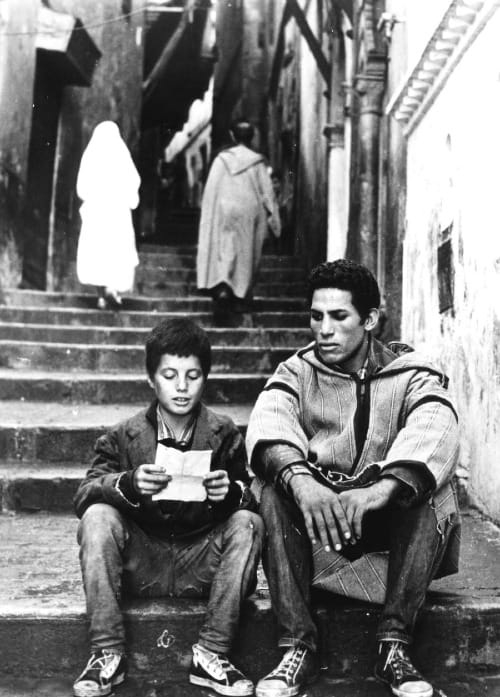
Keith: It’s remarkable to see history recreated like this in the very locations where they happened, isn’t it? But, despite the often newsreel-like texture of the film, I think you’re right to point to neorealism as Pontecorvo’s primary inspiration rather than documentaries. Like Rossellini, De Sica, and the others, Pontecorvo’s style here remains plain and understated even beyond the use of real-life locations and non-professional actors, but he’s also attempting to elicit an emotional reaction. There’s the shots of doomed, unsuspecting faces you mentioned but also the images of Ali and others hiding in the hollow space behind the false front he’s built in his apartment’s bathroom. No matter how matter-of-fact he films the torture scenes, it’s impossible not to respond to the images of bodies in agony, just as it’s impossible not to be roused by the FLN’s underdog victory, no matter how repellant the tactics used to reach that moment. A filmmaker wishing to be truly objective wouldn’t commission an awesome Ennio Morricone score.
Nor would such a filmmaker represent one side with a character like Mathieu, who has a grizzled integrity and demonstrates a surprising amount of respect for his foes but is still essentially a steel-tipped boot in human form. Part of what makes Mathieu fascinating is he does seem to think he’s objective. He makes a few nods to the necessity of smothering the rebellion before it spreads, based in part on past experience, but doesn’t seem to be all that concerned about the legitimacy of France’s claims. No one in the film makes much of a case for colonialism which, of course, would be tough to do convincingly. But they also feel like they don’t have to. It’s just the way it is, in their minds. And that’s the monolithic way of thinking the FLN is up against.
Still, before we completely abandon the notion that Pontecorvo is going for some sort of objectivity here, I don’t think we get a triumphant “the ends justify the means” conclusion to this film, even if its rooting interest isn’t hard to sniff out. As you point out, Pontecorvo refuses to look away from the “war is hell” aspects of his story. Beyond the bombing sequence you mention, the racetrack explosion is as chaotic and awful as, well, the real thing must have been. (I’m still not sure how he staged that without killing extras.) That The Battle of Algiers treats terrorism as an unavoidable part of the cycle of rebellion makes it an often uncomfortable film to watch. It presages the terrorism we’d see in the decades that follow (and still see today). Some of it is strategic. Some of it is nihilistic. The bodies pile up either way. But I also think the matter-of-factness about this, and about the actual history it’s depicting, is one of the film’s greatest strengths.
Scott, I’d love to get your take on Mathieu, but also on Ali, who undergoes something like a conversion process early in the film, becoming a true believer in a cause that probably meant little to him before. (And I think the scenes of kids rounding up drunks that clerics have declared unfit to live—though we don’t see any executions—is another point where we see some ambiguity in the film.) To what degree do you see the film as a clash between faith and politics? And what do you make of the decision to begin with Ali’s cornering then loop back to an early point in the timeline?
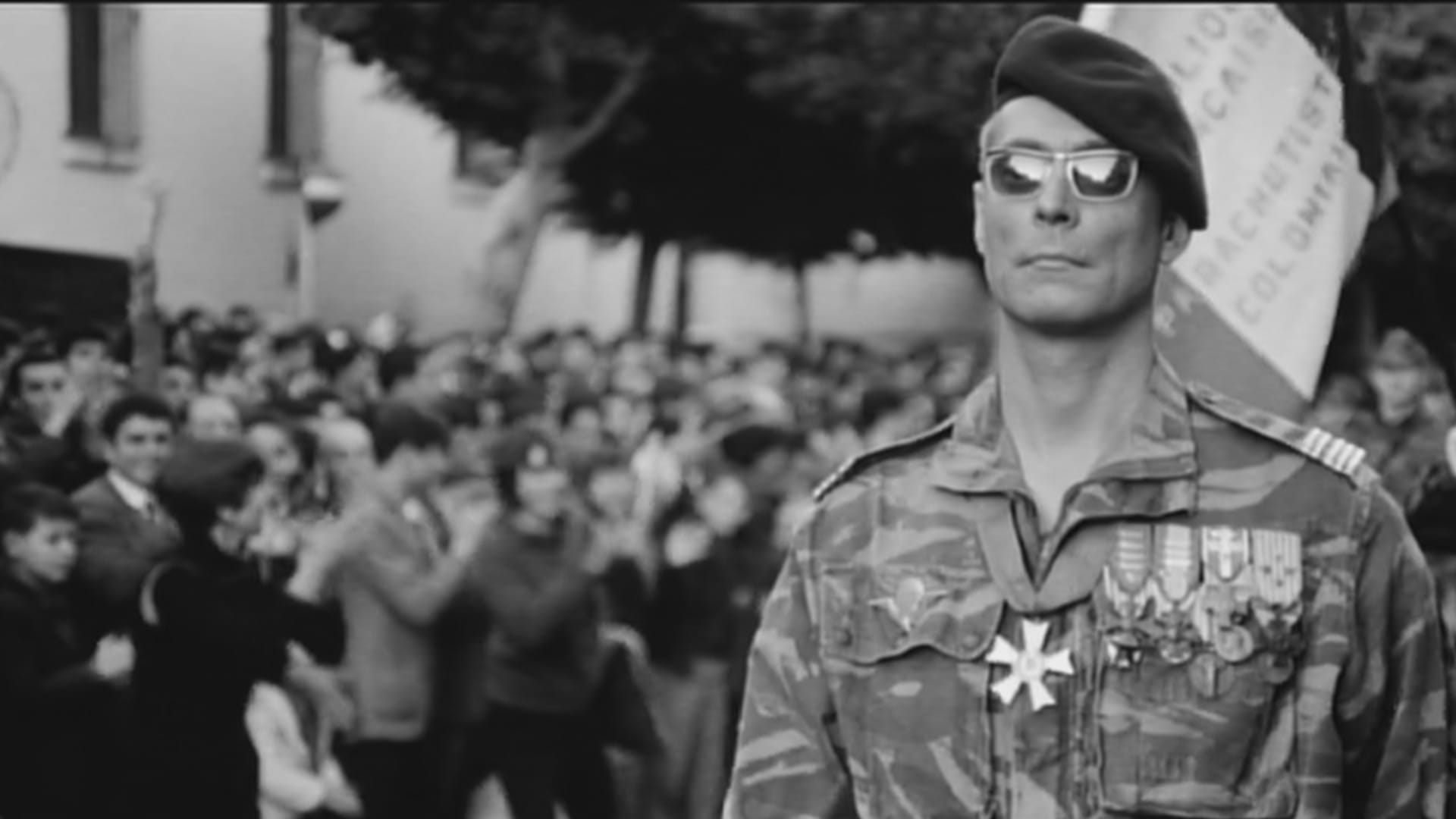
Scott: Let me start with Mathieu, because he’s such an effective tool for what Pontecorvo is trying to accomplish with this movie. There’s an alternate scenario where Mathieu might simply represent the leader of an oppressive and vile colonial force, one that’s swept into Algeria to put down the rebellion by any means necessary, the Geneva Convention be damned. Pontecorvo chooses to make Mathieu the noblest possible version of someone in his position, a military professional that you would have to consider heroic for his part in the French Resistance and you might at least consider pragmatic for his actions to dismantle the FLN here. He may use torture as a means to break up terrorist cells—Pontecorvo doesn’t seem to question the efficacy of torture as a way of getting information, which should be a controversy in itself—but he is not a sadist. He is serving colonial France, but he’s not an ideologue. He sees it as his job to serve the will of his country and he’ll carry out the mission even if he might personally question it.
Two more notes about Mathieu: This is the one major character where Pontecorvo cast a professional actor, Jean Martin, and you can see the difference between him and the non-actors in terms of his specific gravity and command over his scenes. (Like his character Martin also served in the Resistance and in Indochina, so his real-life background obviously mattered here, too.) Also, I think one of the most important scenes in the film, at least in terms of Pontecorvo’s tactically “objective” approach to this conflict, is news surfaces that Ben M’Hidi, the FLN leader the French captured by pure luck, had hanged himself in his cell using strips of his shift. Speaking to the press, Mathieu sincerely memorizes M’Hidi, saying how much he appreciated his “moral fiber, courage, and commitment to his ideal,” when he might have callously dismissed him as a terrorist. It’s in this same press conference that Mathieu, when asked about the torture issue, insists to the press that “we’re neither madmen nor sadists,” and that these are the consequences necessary for France wanting to stay in Algeria.
As for Ali, his arc reminded me so much of The Autobiography of Malcolm X, in which the author recalls his past as a petty hoodlum named Malcolm Little before getting to his conversion to Islam in prison and his eventual rise as a civil rights icon. (The film was indeed an influence on Spike Lee’s Malcolm X, and you can watch a video where he and four other prominent directors talk about the film here.) He’s a prime example of the zeal of the converted, and you see how his combination of street-level pugnaciousness and pure commitment to the cause makes him a useful weapon for the FLN. (You can also see a lot of Ali in the Evaristo Márquez character in Burn!, who undergoes a similarly dramatic change in response to oppression.) One of the key early moments for me in The Battle of Algiers is when Ali is running from the police, who have broken up his three-card monte scam, and he gets tripped up deliberately by a white European at a bus stop. I think the European’s expectation is that Ali will get up and keep on running, but instead he punches the guy in the face. We learn later, via voiceover, that he also got an eight-month stint for a confrontation with a prison guard. He’s just not the type of guy who’s going to let himself get pushed around.
As for the interaction of faith and politics, on the Algerian side of things, it’s hard for me to read exactly how the film feels about it, other than wanting to make it clear that the FLN connected a free Algeria to the state-sanctioned practice of Islam. How much you associate “freedom” with religious dogma is an open question, and I’m glad you brought up the disturbing scene where the children harass and pummel a drunk, which goes hand-in-hand with another sequence where FLN forces break up a prostitution operation. In the context of this historical moment, these initiatives can seem like FLN establishing the order, discipline, and identity necessary to present a united front, which bears fruit when they execute a successful general strike. But it’s also plain that self-determination for a new Algeria will also involve adopting an Islamic state and Pontecorvo leaves the audience to wrestle with that implication however they will. For the purposes of waging war against the colonial French, you could see how faith-based rule was essential.
Let me turn the question you asked about opening the film with Ali’s capture back on you, Keith. I think it’s clever to start The Battle of Algiers with the apparent failure of the resistance—”The organization’s finished,” Ali is told, as he’s huddled in his hideaway—and end it with the smoke clearing on a triumph. But it also establishes two of the film’s major strengths: The adherence to a timeline of historical events, which allows us to appreciate the planning of FLN’s terrorist actions, and Pontecorvo’s exceptional artistry when it comes to casting and allowing these compelling faces to tell the story. What do you make of Pontecorvo’s use of a timeline? When you think about memorable images and moments from The Battle of Algiers, what stands out for you? And somehow we haven’t brought up the film’s recent, conspicuous appearance in One Battle After Another. Is there a continuity between revolutionary movements there or does it seem like an ironic counterpoint in a movie about a middle-aged burnout of sorts?
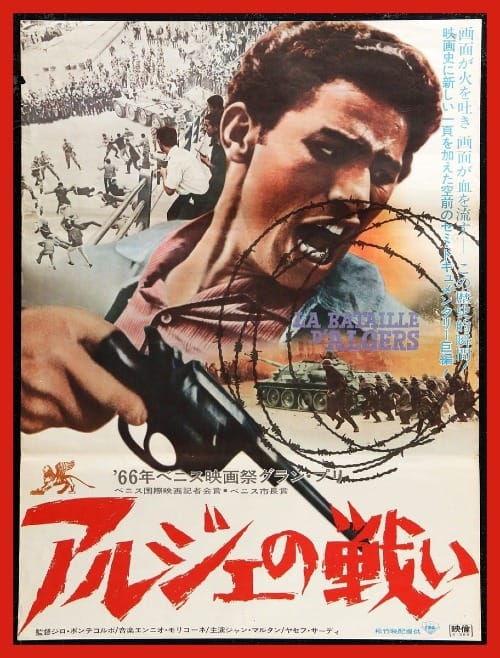
Keith: To start with One Battle After Another, I think both answers can be correct. We see a stoned Bob watching Battle of Algiers in the middle of the afternoon and the contrast between how he probably sees himself—as a revolutionary in exile but a revolutionary nonetheless—and how we see him—as a middle-aged slacker who’s deluding himself if he thinks he still has anything in common with the characters on screen—is pretty stark. But Bob’s journey brings him into contact with underground communities where we see some of the same ground-level organization and inventiveness we see in Pontecorvo’s film. It’s almost as if he’s compelled to make good on the feelings Battle of Algiers inspires in him.
I think the chronology of the film is pretty brilliant, in part because Mathieu is not wrong. The organization is effectively finished at this point in the story. You could see the long flashback that follows, and makes up the bulk of the film, as a depiction of its downfall, if what happens after Ali’s death didn’t prove out Ben’s notion that the FLN and its terror campaign wasn’t just one phase of the revolution. The FLN’s flame gets snuffed out and a popular uprising emerges from its embers. And then everything was all right in Algeria forever.
OK, maybe not. But I don’t think the film necessarily leaves us thinking it will be either. Pontecorvo’s scope is limited to depicting what happened in Algiers within the film’s timelines. Pontecorvo doesn’t offer any promise that a utopia will follow. Which dovetails with my answer to your third question. I admire this film’s clearheadedness, and while I appreciate that Pontecorvo clearly sympathizes with the FLN’s cause, those images of innocent victims at that cafe and the racetrack attendees fleeing in panic stick with me just as indelibly as the amazing and undeniably rousing scenes of street battles and the tension built into the way the film stages the FLN’s actions. Beyond the politics, films naturally align our sympathies with those in danger of being caught and found out. We can’t help but want to see the three women behind the cafe bombing succeed, particularly after watching them being harassed by the police. Then the film makes us consider the consequences of what we’ve just seen. It may not be objective, but it’s also honest.
Scott, you know who’s not honest? That rascal Redmond Barry, protagonist of Stanley Kubrick’s 1975 film Barry Lyndon, which is where this journey through Sight and Sound’s list will take us next.
Previously:
#95 (tie): Get Out
#95 (tie): The General
#95 (tie): Black Girl
#95 (tie): Tropical Malady
#95 (tie): Once Upon a Time in the West
#95 (tie): A Man Escaped
#90 (tie): Yi Yi
#90 (tie): Ugetsu
#90 (tie): The Earrings of Madame De…
#90 (tie): Parasite
#90 (tie): The Leopard
#88 (tie): The Shining
#88 (tie): Chungking Express
#85 (tie): Pierrot le Fou
#85 (tie): Blue Velvet
#85 (tie): The Spirit of the Beehive
#78 (tie): Histoire(s) du Cinéma
#78 (tie): A Matter of Life and Death
#78 (tie): Celine and Julie Go Boating
#78 (tie): Modern Times
#78 (tie): A Brighter Summer Day
#78 (tie): Sunset Boulevard
#78 (tie): Sátántangó
#75 (tie): Imitation of Life
#75 (tie): Spirited Away
#75 (tie): Sansho the Bailiff
#72 (tie): L’Avventura
#72 (tie): My Neighbor Totoro
#72 (tie): Journey to Italy
#67 (tie): Andrei Rublev
#67 (tie): The Gleaners and I
#67 (tie): The Red Shoes
#67 (tie): Metropolis
#67 (tie): La Jetée
#66: Touki Bouki
#63 (tie): The Third Man
#63 (tie): Goodfellas
#63 (tie): Casablanca
#60 (tie): Moonlight
#60 (tie): La Dolce Vita
#60 (tie): Daughters of the Dust
#59: Sans Soleil
#54 (tie): The Apartment
#54 (tie): Battleship Potemkin
#54 (tie): Blade Runner
#54 (tie): Sherlock Jr.
#52 (tie): Contempt
#52 (tie): Ali: Fear Eats the Soul
#50 (tie): The Piano
#50 (tie): The 400 Blows
#48 (tie): Wanda
#48 (tie): Ordet
#45 (tie): North by Northwest
Discussion