#48 (tie): ‘Wanda’: The Reveal discusses all 100 of Sight & Sound’s Greatest Films of All Time
Little seen in 1970, Barbara Loden's sole directorial feature is a grim portrait of one alienated woman's aimless existence that's been rediscovered and championed in the 21st century.


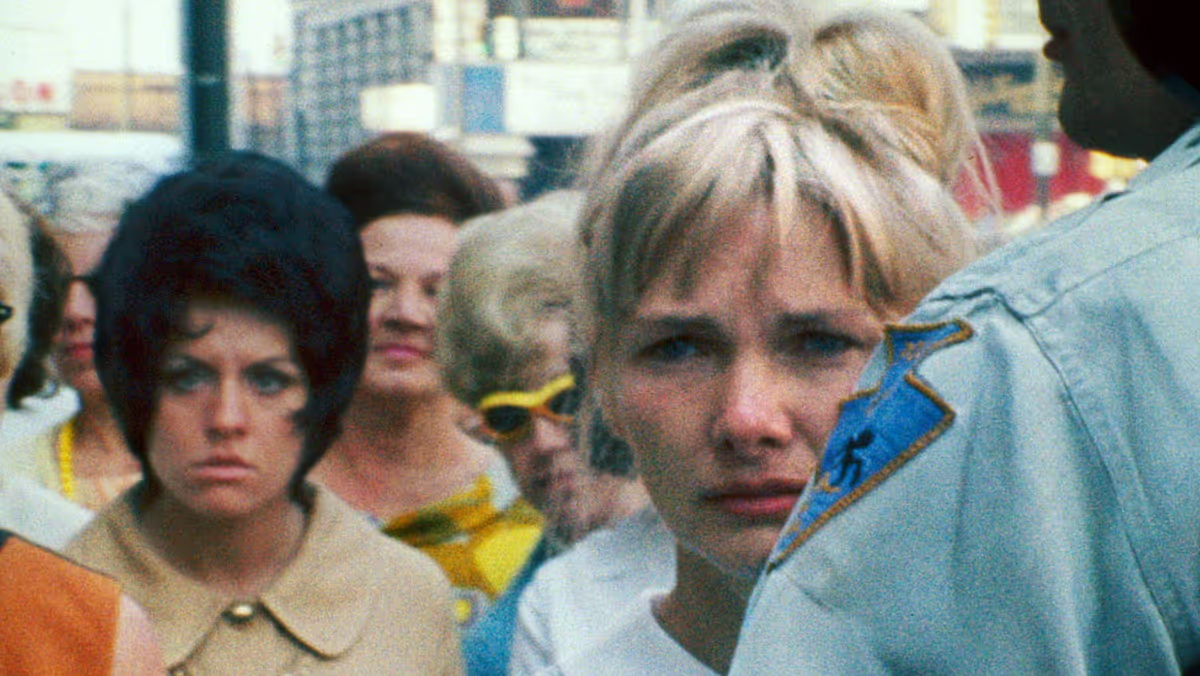
On December 1st, 2022, Sight & Sound magazine published “The Greatest Films of All Time,” a poll that’s been updated every 10 years since Bicycle Thieves topped the list in 1952. It is the closest thing movies have to a canon, with each edition reflecting the evolving taste of critics and changes in the culture at large. It’s also a nice checklist of essential cinema. Over the course of many weeks, months, and (likely) years, we’re running through the ranked list in reverse order and digging into the films as deep as we can. We hope you will take this journey with us.
Wanda (1970)
Dir. Barbara Loden
Ranking: #48 (tie)
Previous ranking: N/A
Premise: After leaving her husband and children, Wanda (Barbara Loden) leads an aimless existence in rural Pennsylvania. She spends her nights on her sister’s couch in a home next to a coal mine and her days half-heartedly looking for work, drifting through shops, falling asleep at the movies and going home with seemingly whoever will buy her beer. Eventually, she takes up with Norman (Michael Higgins), a small-time criminal, after unwittingly interrupting him as he robs a bar and he draws her into a scheme to rob a bank.
Keith: When Sight & Sound released its 2022 poll, much of the coverage concerned whether or not its decision to broaden its polling base to include a more diverse group of critics had been successful. Did it shake up the list enough? Too much? I don’t really want to revive that debate, but I think the changes undeniably allowed films by previously underrepresented filmmakers to move up the list and reach a wider audience, maybe even among those whose job it is to watch movies. All of which is a long way of saying I’d never seen Barbara Loden’s Wanda before and I know you hadn’t either, Scott. I can’t speak to your experience, but I do know when I was working my way through the established film canon in the ’90s, Wanda was nowhere to be found. And I undoubtedly should have watched it as its reputation grew over the years, particularly after the release of a restored version in the ’10s, but I didn’t. Thankfully, it’s never too late to watch a great movie and this one really got under my skin.
A thumbnail sketch of Barbara Loden, since she’s not a household name: born in rural North Carolina, Loden was abandoned by both parents and largely raised by her religious grandparents. After moving to New York at 16, she found work as a pin-up model before joining the Actors Studio, a move that led to work on stage and on The Ernie Kovacs Show. She met and eventually married Elia Kazan and found success on stage as the star of Kazan’s production Arthur Miller’s After the Fall but struggled to find a place in the film world. She made Wanda on a shoestring budget and brought it to the Venice International Film Festival, where it won the International Critics’ Prize for Best Film but never found proper theatrical distribution.
Loden died of cancer in 1980 at the age of 48. She never made another feature but she did direct two educational shorts: “The Frontier Experience” and “The Boy Who Liked Deer.” Encountering the latter title while reading up on Loden set off a lightning bolt. I had not seen Wanda but I definitely had seen “The Boy Who Liked Deer” as a child and I’ve been haunted by it ever since. Its educational purpose is to warn children away from vandalism via the story of a seemingly nice boy with a destructive streak that has disastrous consequences. I haven’t revisited it since seeing it in school but I don’t know that I need to. I think I remember every frame of it, including the devastating final scene that leaves the film’s protagonist to live in a state of loneliness and regret with no clear path back to happiness and human connection. I think if you asked me about it when I first saw it, I would have told you I hated it when really I just hated how it made me feel and the hard truths that, unlike most educational films, it did nothing to sugarcoat.
In that sense, it’s a bit like Wanda in miniature. Loden’s film has been compared to those made by John Cassavetes and I think that’s a useful comparison, but only up to a point. Cassavetes’ characters inhabited much different spaces than those of Wanda, which draws on Loden’s Appalachian upbringing. There’s a shot early in the film in which Wanda, clad in white, wanders across the black landscape of a coal field that captures the character’s isolation and alienation, feelings that only deepen as she drifts into a life of crime. Loden knows this world, which has clearly seen better days, and the film captures what it’s like to live on the margins of a place already filled with marginalized residents.
If you want to shorthand the film for someone who’s never seen it you might say it’s a bit like if Cassavetes made Bonnie and Clyde, but that’s more like a jumping off point than a summary that does it justice. Yet Wanda is certainly in conversation with the tradition of American crime movies, playing at times like a lovers-on-the-lam story stripped of all glamour. And, for that matter, of all love. Wanda’s a bit like a feather on the breeze, drifting from man to man until finding Norman (whom she never stops calling “Mr. Dennis” even after sleeping with him), who doesn’t love her but does believe he has a use for her.
Scott, there’s a lot to talk about here, but first I’d like to know what you think of Wanda as a character. We don’t really learn anything about her life before the events of the film, apart from the courthouse scene in which she doesn’t raise any objections when her husband offers a list of the ways she’s failed as a wife and mother. So who is Wanda? For as much time as we spend with her, I think she’s still something of a mystery, but I don’t think that’s a failing of the film. Related: what did you think of Loden’s performance?
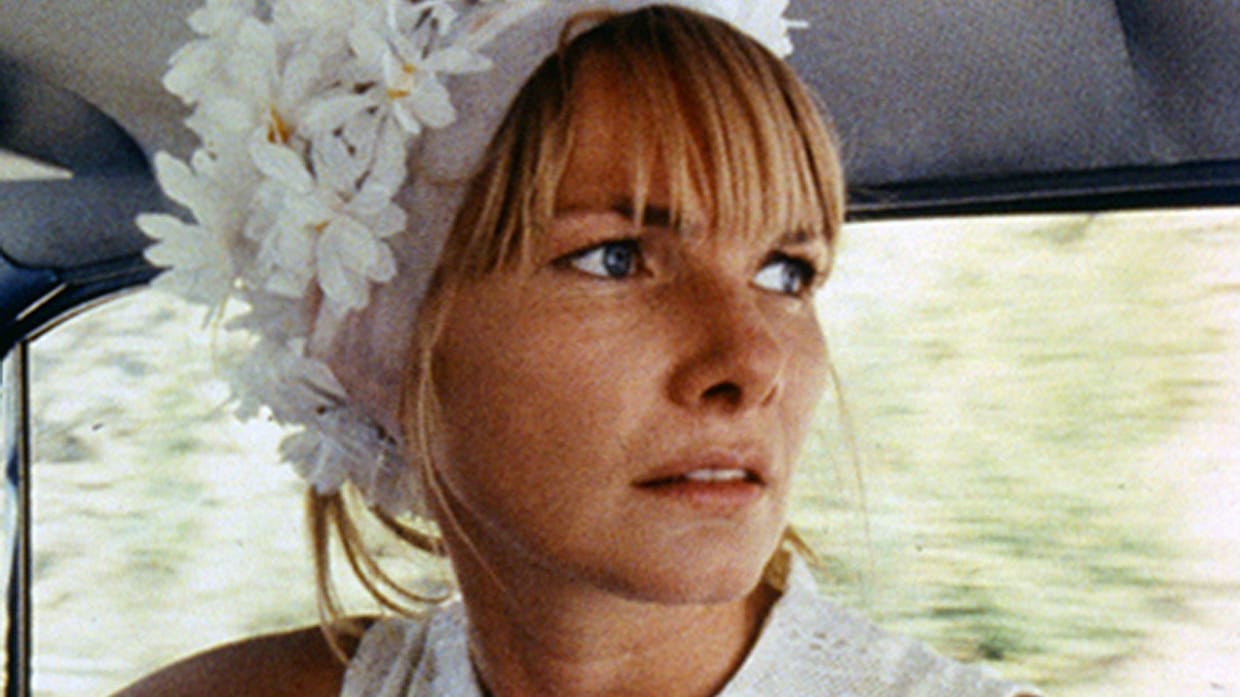
Scott: I will answer your question about the character of Wanda and Loden’s performance, Keith, but first I’d like to address that can of worms that you cracked open in the beginning of your missive about changes to the Sight and Sound poll, because the 2022 edition was obviously transformative and a little controversial. If you’ve spent any time in English departments in college—and we both have, with me as a Comparative Literature major and you as our resident Joyce scholar and advanced-degree holder—you know that the literary canon is a source of much contention among students and faculty members, who are inevitably divided over issues of representation and the Dead White European nature of the works that are considered “essential.” That’s a second can of worms I’m not getting into here—the name “Harold Bloom” is coming back to me like a jump scare—but we can broadly say that Sight and Sound pollsters examined past results (and, relatedly, the past voter pool) and found it wanting in diversity.
The word “diversity” covers a lot of ground, but since we’re talking about Wanda here, here’s how things have changed for women directors in the poll. In the 2012 version, only two of the Top 100 films were directed by women: Chantal Akerman’s Jeanne Dielman charted highest at #38 while Claire Denis’ Beau Travail debuted at #78. The 2022 edition has a whopping five times as many: Jeanne Dielman and Beau Travail made huge leaps to #1 and #7, respectively, and there are first-time charters up and down the poll, namely Agnès Varda’s The Gleaners and I at #67, Julie Dash’s Daughters of the Dust at #60, Akerman’s News from Home at #52, Jane Campion’s The Piano at #50, Wanda at #48, Céline Sciamma’s Portrait of a Lady on Fire at #30, Věra Chytilová’s Daisies at #28, and Maya Deren’s Meshes of the Afternoon at #16. Along with the changes in the voting body, I think there’s also been a related shift in repertory programming and restoration efforts that have brought films like Wanda the attention they deserve. Not only had I not seen Wanda until now, I was also completely unaware of it when I was coming up as a cinephile and a critic.
As much as I might lament some of the established classics that have skidded down the list to make room for these newcomers, the plain and obvious fact is that a Top 100 list with only two films directed by women was drastically limiting and in need of correction. And Wanda is a perfect example of that: You might compare it to a John Cassavetes film—you could easily slot in Ben Gazzara as “Mr. Dennis,” I think—but Barbara Loden’s perspective and approach to this material is nothing like what Cassavetes’ might have been, despite having Gena Rowlands as part of his troupe. Wanda is like the anti-Gloria: There’s a brassy, me-against-the-world quality to Rowlands’ Gloria squaring off against gangsters while managing an orphaned boy. Wanda is more passive, to put it mildly, and the film takes on a deeper interiority as a result.
When I was watching Wanda, the film I thought about the most was Francis Ford Coppola’s underrated The Rain People, which had come out the year before. The Rain People is a road movie about Natalie (Shirley Knight), a pregnant housewife who decides simply to leave her husband and embark on a trip across America, where she falls in with a couple of different men—one a brain-damaged former football player (James Caan) and the other a lonely cop (Robert Duvall). These men are kinder to our heroine in the Coppola film, but it shares with Wanda a feeling of dissatisfaction and ennui when it comes to expected gender roles. And they both start from the exact same place, just after these women have left their husbands and entered into the unknown. (Kramer vs. Kramer would have Meryl Streep doing something similar a decade later, but I think it’s a bit more judgmental about it.)
I only remember Loden from one screen performance before Wanda, but I think it’s a relevant comparison, too. In Kazan’s wild 1961 melodrama Splendor in the Grass, Loden plays a glamorous yet troubled former flapper who returns home to Kansas in shame after a stint in Chicago that yielded an annulment and rumors of an abortion. Her brother Bud (Warren Beatty), in the midst of his own crisis about his future, rescues her from an attempted rape, but the movie isn’t really about her and she seems to almost evaporate from the narrative. Though Wanda doesn’t have anything like the same backstory, you can see a connection between women who have been unlucky with men and entered a period of independence without any safety net or even much of a plan. They’re drifters in a man’s world, which severely limits their agency, and their bodies seem to be the only playable card they have in the deck.
Then again, is “agency” the right word to describe what Wanda’s doing here? There’s something almost ghostly about her passivity here. She was dissatisfied enough with her life to leave her husband and quietly concede her children to him and his new squeeze. But she has no apparent ambition to do anything with her newfound freedom, much less find herself. So she pinballs from one sad, dangerous encounter with men after another—one who drops her off at an ice cream stand and peels away, leaving her to nurse a soft-serve vanilla cone on her own—and ends up in a subservient spot with “Mr. Dennis,” who abuses her relentlessly because he’s vile and eager to exploit the power he holds over her.
I have more thoughts on Wanda, but let me throw it back to you, Keith? What do you make of this enigmatic woman? Do we ever really know what she wants? Or has she reached a place where she doesn’t expect anything from the world? After The 400 Blows, this the second-straight movie that ends with a brilliant freeze-frame. What are the 1,000 words that picture tells us? (Or rather, what are the reasonable number of words that you can conjure to describe it here?)
The Reveal is a reader-supported newsletter dedicated to bringing you great essays, reviews and conversation about movies. If you are not paid subscriber, we would love for you to click this button below and join our community.
Keith: If you didn’t bring up that echo of The 400 Blows, subject of our last entry, I was going to. We should try to find a connection between each previous movie and its successor. (Surely The Leopard and The Shining have something in common, right?) To my eyes that final look is one of complete resignation. It’s the expression of a woman with nowhere safe to land. I don’t fully understand Wanda, nor do I think we’re meant to. But I don’t think she’s only drifting from man to man. She has hopes for a better future, even if she doesn’t know what that future looks like. The ice cream man didn’t work out but she throws herself cheerfully into her time with Mr. Dennis until she short circuits her optimism. The line “I don’t like friendly people” establishes what he expects of her: silence and compliance.
Why does she give it to him? You could say she has no other options, which might be true. But I think it’s more complicated than that. Wanda has moments when she could leave or turn on Norman that she doesn’t take, opportunities that would leave her with nothing, but not really any worse off than she was before as she drifted through malls and streets filled with items she’ll never be able to afford. I think your comparison to The Rain People is apt. Both are movies about women who take a step into the unknown and find themselves in free fall. They know what sort of life they don’t want to live, but any sort of better life they might have imagined quickly proves unattainable. I see that final shot as the expression of a woman who’s surrendered what few illusions she had.
Wanda resembles The Rain People in another way, too, by offering an unvarnished glimpse at some usually undocumented corners of America. (I’m still kind of haunted by The Rain People’s roadside “zoo” filled with animals in tiny cages.) In addition to the wasteland-like images of the coal fields, Wanda visits an empty movie palace that’s switched to playing Spanish-language films for sparse crowds and stays in seedy spots that must surely have been condemned and torn down in the 50+ years since Loden made the film. One of the most striking stops brings Wanda and Norman to the Holy Land USA theme park in Waterbury, Connecticut, with its gigantic cross and simulated catacombs, which reduces faith to a tacky spectacle. There’s a pervasive sense nearly everywhere they go of a once-thriving place that’s been debased by changing times.
The Waterbury stop also includes a conversation between Norman and his father that casts Wanda’s companion in a different light. I hesitate to say the exchange humanizes Norman, but we at least get the sense that he, too, isn’t living the sort of life he imagined for himself, a suggestion underscored by his father’s obvious disappointment in how his son turned out. Scott, do you have a read on who Norman is? Like Wanda, we really don’t know that much about him. Scott, before we close this out I’d love to hear your thoughts on the film’s style. Loden had meager resources—she shot on 16mm with a four-person crew—but it’s clear she understood this as working in her favor. I don’t think Wanda would work nearly as well with glossier production values, do you?
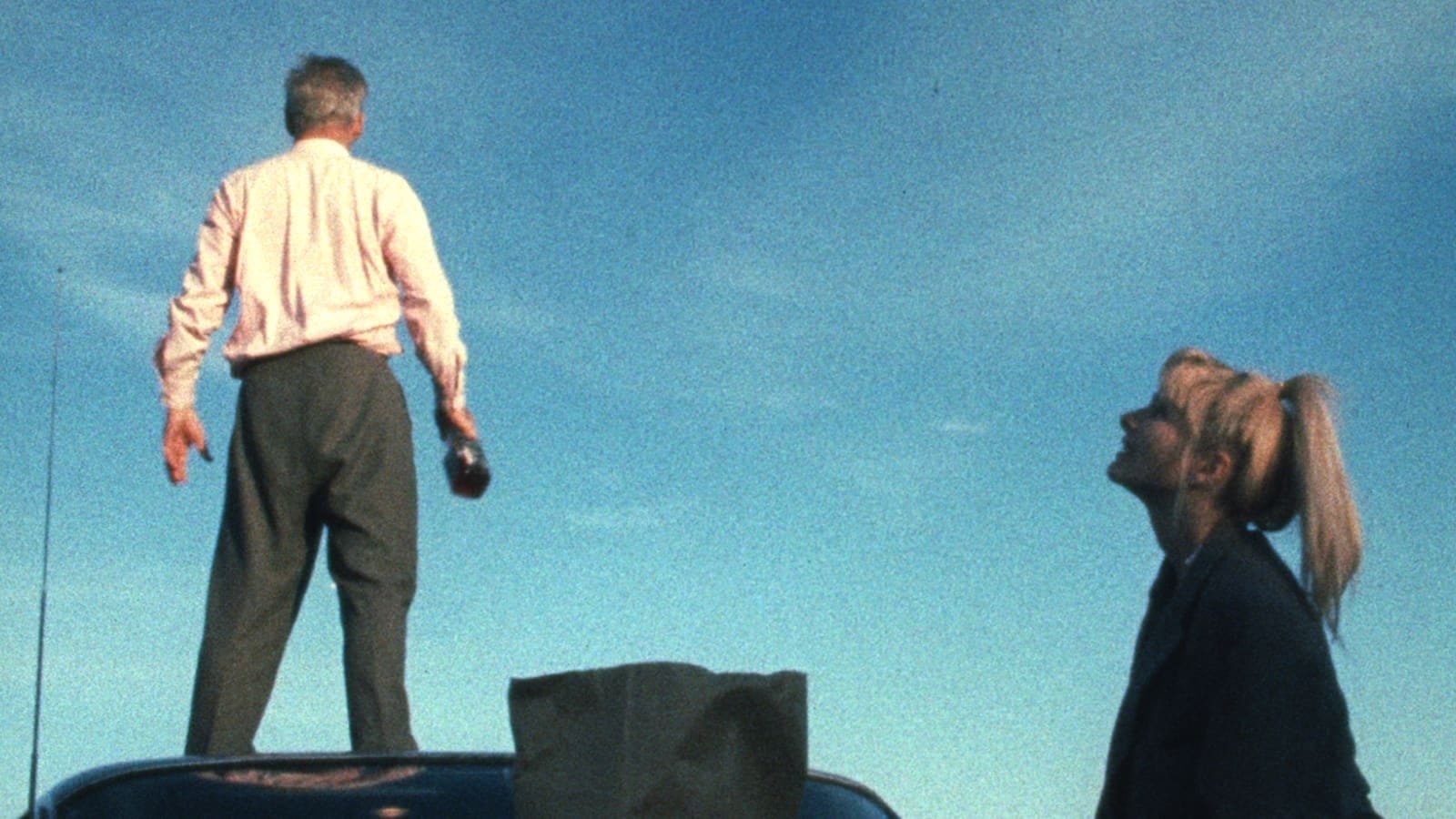
Scott: I do not think anything about Wanda would be improved by more money and resources, at least in terms of the look and feel of the production, which benefits so much from being independent and grounded in unadorned spaces. One thing that stands out immediately about Loden as a stylist is that she’s got an incredible eye: We’ve already talked about the money shot towards the beginning of the film when Wanda walks across an immense quarry wearing a white outfit against a black backdrop that’s so evocative of coal country and its working-class inhabitants. Right away, she strikes you like an outcast on an alien planet and though she does manage to get strangers to buy her drink—Loden, it should be said, is strikingly beautiful—she doesn’t exactly fit in. You get the sense that she’s estranged from the only home she knows.
To continue on the style front, the 16mm gives Wanda a nice grain that hasn’t been buffed out by the restoration, and there are times when it reminded me of the classic documentary Harlan County USA, which another Barbara, Kopple, would shoot in coal country six years later. Wanda’s misadventures do allow Loden to travel a bit to places outside Appalachia, like that trip to Waterbury and the big-city bank job that’s so far outside Norman’s capacity to pull off. (He’s like a Single-A crook who’s called himself up to the bigs. Neil McCauley he is not.) There’s obviously a strong emphasis on realism here, but the film’s low-budget, on-the-fly qualities are far from artless. Loden allows for a surprising abundance of long takes and she’s excellent at soaking in the ambience of various locales, from the humble country diner where Wanda happily sops up pasta sauce with white bread to the folk music that plays over in the din at the roadhouse in the film’s final scene.
To circle back to your thoughts about who Wanda is, I don’t necessarily find her mysterious, but I certainly ache for her situation. The protagonist in The Rain People seems to crave some kind of adventure, even if she can’t conceive of what the future will look like. All Wanda seems to know is what she doesn’t want, which is the husband and children and dreary seamstress job she’s left behind. Loden doesn’t play Wanda as a still-waters-run-deep type, but a woman who’s more plainly lost and in immediate practical need of someone to take her under his wing. Norman gives her nothing as a companion—less than nothing, really—but she’s in such a compromised position that she only meekly objects when he slaps her in the face for talking to another man or throws her wallet pictures in the trash.
(As an aside, I strongly suspect that Wanda was a major influence on Kelly Reichardt, particularly her first feature, River of Grass, a similar spin on the lover-on-the-lam premise, and Wendy and Lucy, which is about a penniless young woman whose limited options narrow to zero.)
And how about that Norman, eh? What a catch! I’d said earlier that he’d be played by Ben Gazzara if this were a Cassavetes movie, but it’s no slight on Higgins’ performance that he’s not nearly so magnetic. He’s just a guy who’s trying to shortcut his way through life, committing petty crimes instead of doing real work and never considering who might be hurt by it. I think Norman is part of a fairly comprehensive pessimism about men in this film, which include Wanda’s cold ex-husband, the one-night-stand who drops her off at the ice cream stand, the would-be sexual assailant, and the random joes who hope they can take her home for the price of a beer. Men have done much to make her world uninhabitable.
Speaking of uninhabitable worlds, we have another one coming up in Carl Dreyer’s 1955 masterpiece Ordet, which I nearly singled out for my master’s thesis in grad school until picking up David Bordwell’s The Films of Carl-Theodor Dreyer for reference and discovering I was way out of my depth. Nevertheless, we’ll give it a crack here next. In the meantime, I think we’d both strongly suggest our readers follow our lead and see Wanda if they haven’t already. It’s a big reason why polls like the Sight and Sound 100 are invaluable.
Previously:
#95 (tie): Get Out
#95 (tie): The General
#95 (tie): Black Girl
#95 (tie): Tropical Malady
#95 (tie): Once Upon a Time in the West
#95 (tie): A Man Escaped
#90 (tie): Yi Yi
#90 (tie): Ugetsu
#90 (tie): The Earrings of Madame De…
#90 (tie): Parasite
#90 (tie): The Leopard
#88 (tie): The Shining
#88 (tie): Chungking Express
#85 (tie): Pierrot le Fou
#85 (tie): Blue Velvet
#85 (tie): The Spirit of the Beehive
#78 (tie): Histoire(s) du Cinéma
#78 (tie): A Matter of Life and Death
#78 (tie): Celine and Julie Go Boating
#78 (tie): Modern Times
#78 (tie): A Brighter Summer Day
#78 (tie): Sunset Boulevard
#78 (tie): Sátántangó
#75 (tie): Imitation of Life
#75 (tie): Spirited Away
#75 (tie): Sansho the Bailiff
#72 (tie): L’Avventura
#72 (tie): My Neighbor Totoro
#72 (tie): Journey to Italy
#67 (tie): Andrei Rublev
#67 (tie): The Gleaners and I
#67 (tie): The Red Shoes
#67 (tie): Metropolis
#67 (tie): La Jetée
#66: Touki Bouki
#63 (tie): The Third Man
#63 (tie): Goodfellas
#63 (tie): Casablanca
#60 (tie): Moonlight
#60 (tie): La Dolce Vita
#60 (tie): Daughters of the Dust
#59: Sans Soleil
#54 (tie): The Apartment
#54 (tie): Battleship Potemkin
#54 (tie): Blade Runner
#54 (tie): Sherlock Jr.
#52 (tie): Contempt
#52 (tie): Ali: Fear Eats the Soul
#50 (tie): The Piano
#50 (tie): The 400 Blows
You might also like
#45 (tie): ‘North by Northwest’: The Reveal discusses all 100 of Sight & Sound’s Greatest Films of All Time
#48 (tie): ‘Ordet’: The Reveal discusses all 100 of Sight & Sound’s Greatest Films of All Time
Discussion