#43 (tie): ‘Killer of Sheep’: The Reveal discusses all 100 of Sight & Sound’s Greatest Films of All Time
A discussion of all 100 of the Sight and Sound critics' poll's top movies explores the 1970s Watts of a masterful, long-unseen debut.


On December 1st, 2022, Sight & Sound magazine published “The Greatest Films of All Time,” a poll that’s been updated every 10 years since Bicycle Thieves topped the list in 1952. It is the closest thing movies have to a canon, with each edition reflecting the evolving taste of critics and changes in the culture at large. It’s also a nice checklist of essential cinema. Over the course of many weeks, months, and (likely) years, we’re running through the ranked list in reverse order and digging into the films as deep as we can. We hope you will take this journey with us.
Killer of Sheep (1978)
Dir. Charles Burnett
Ranking: #43 (tie)
Previous ranking: #223 (2012).
Premise: Stan (Henry G. Sanders), a resident of L.A.’s Watts neighborhood, lives in a modest house with his unnamed wife (Kaycee Moore), his son Stan Jr. (Jack Drummond) and daughter (Angela Burnett, whose character also remains unnamed). Stan earns a living working at a slaughterhouse and spends his off hours in a depressive state in which he seems unable to engage fully with his family and friends. Meanwhile, Stan’s children and other Watts kids spend their days exploring the neighborhood, their exuberance providing a stark contrast to the grown-ups in their lives.
Keith: “I still refuse to view Killer of Sheep as a student thesis film because that would make me feel really shitty about myself,” Barry Jenkins says of Charles Burnett’s Killer of Sheep in an interview included on the film’s Criterion Collection disc. Jenkins, of course, ended up doing pretty OK for himself, but it’s easy to see his point. How many film students turn in such fully realized visions as Killer of Sheep? And how many of those projects can be found on Sight and Sound’s poll of the greatest movies ever made? (The answer to that is pretty simple: just this one.)
Burnett has cited Italian neo-realism as one of his debut’s primary influences, and we should definitely talk about that, but one scene left me thinking of another, older L.A.-set movie. Midway through Killer of Sheep, Stan enlists his friend Bracy (Charles Bracy, who, I believe, was one of the non-professional actor neighborhood residents Burnett enlisted for the film, which he made on weekends over the course of a couple of years) to help move a car motor he’s purchased secondhand. This involves carrying the heavy item down a metal staircase to a pick-up truck below. The pair struggle to make it to the truck, then struggle again to push it into the truck’s bed before ultimately deciding it’s secure enough and they begin driving off. The motor almost immediately hits the pavement and breaks. Killer of Sheep is an often bleak film, and there’s bleakness to this moment, too. Stan earns a meager living and this is a big-ticket purchase for him. But it’s also undeniably funny, like a Samuel Beckett reimagining of Laurel and Hardy’s “The Music Box.” All that effort then, at the end of it, only futility.
Enjoying The Reveal? Now's a great time to become a paid subscriber. You'll get access to everything we publish—from articles to audio commentaries—and help support independent film criticism.
OK, back to neo-realism: I think it’s a good way to start talking about Killer of Sheep, but only as a jumping off point. Like the Italian neo-realists, Burnett shot the film using a mix of professional and non-professional actors. Moore would appear in, among other films, Julie Dash’s Daughters of the Dust; Sanders was near the beginning of a long and still quite active career. Many of their co-stars would never be seen on screen again. Burnett also shot on location. Just as you can watch The Bicycle Thieves to get a sense of what Rome was like after World War II, Killer of Sheep offers a look at Watts in the ’70s, an era when many of its residents, like Burnett, came to L.A. as part of the Great Migration. (Burnett’s 1990 film To Sleep with Anger is largely about Black Los Angeles residents with a complicated relationship to the South and its mores and folkways.)
But neo-realist films tell stories. Killer of Sheep does not. If anything, Stan is left pretty much where we find him at the beginning of the film: in a perpetual funk that leaves him unable to experience joy or connect with those around him. In some ways, this allows him to serve as an avatar of Watts as a whole. Burnett does not attempt to put a polish on the poverty and neglect of the neighborhood he called home. But Stan also seems like something of a self-conscious outlier. Others try to engage him, particularly his wife, who clearly loves and desires him. In one of the film’s most heartbreaking scenes, they dance to Dinah Washington’s “This Bitter Earth” but Stan’s face and body language make it clear that he might be close physically but he’s not really present.
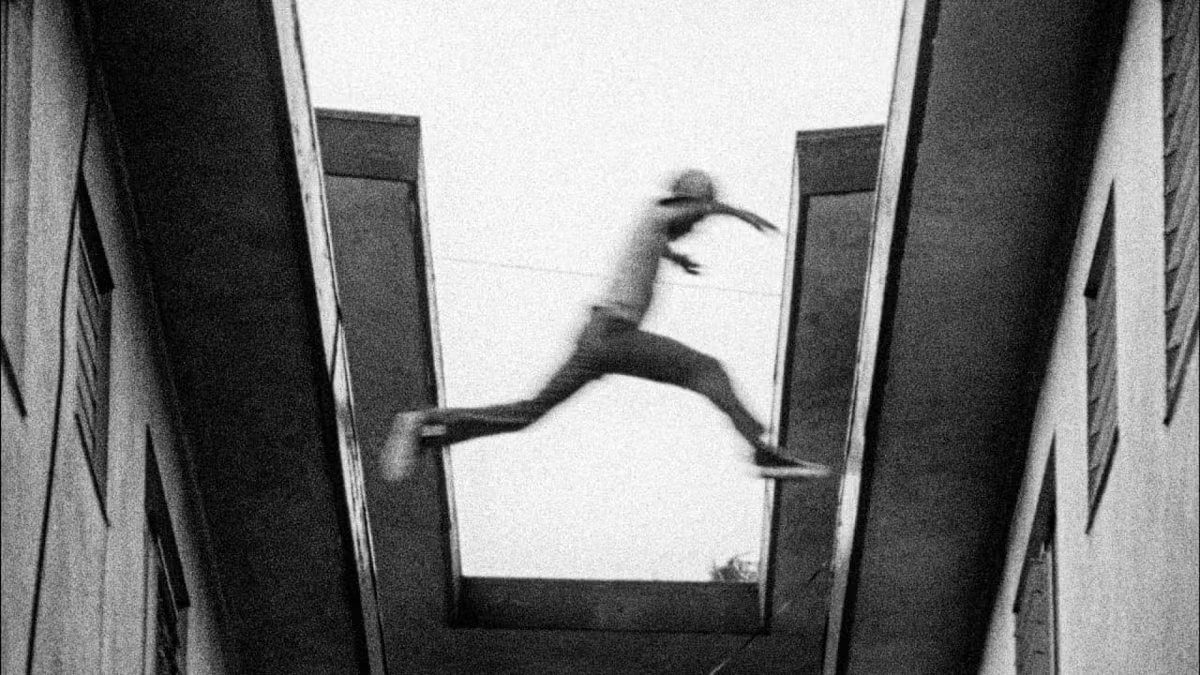
In some respects, it’s a tale of two cities that happen to share the same space. There’s the oppressive Watts experienced by Stan and the rubble-strewn playground of the younger generation, who bounce and—in the film’s most famous moment—seem to fly through Watts’ streets. I think there’s two ways of looking at this: They’re not yet aware of the limitations placed on their lives by their birthplace or, more optimistically, they might not be as burdened by the past as their parents. In one scene, Stan’s daughter bounces to an Earth, Wind & Fire song that sounds like it belongs to another universe than the blues that soundtracks the older generation’s lives.
Scott, I feel like I’ve already thrown out a bunch of questions you might want to address, but I’ll rephrase them a bit. What kind of film is this? Do you see an arc to its narrative? What do you make of Stan as a character? What about the use of children? It’s a film with many striking moments. I’ve thrown out a few we should dig into more, but I’m sure you have some of your own as well.
Scott: What kind of film is this, you ask? One of the fundamental truths of movies is that the line between fiction films and documentaries are much fuzzier than the categorization of the two suggests: Every fiction film documents certain realities. No documentary is so pure as to avoid the artifice of fiction. Cinema exists on a spectrum between those two poles, and some films operate in the middle of that spectrum. (My favorite festival, True/False, which I’ve attended for us several times, was constructed around that very thought. It’s mostly a doc festival, but Boyhood, Tangerine, and the Nathan For You finale all screened there.) I think that borderless quality is part of what makes Killer of Sheep so special. It defies genre. It defies any traditional storytelling arc. It both reflects the realities of Watts at a specific period and includes scenes and techniques that are strikingly imagined and impressionistic. So I don’t know what kind of film it is, Keith!
Okay, well maybe it’s a slice-of-life. Given the kinds of limitations that he faced while making Killer of Sheep, a thesis project shot during weekends over a long period of time, Burnett could have tried to stitch together a Frankenstein’s monster of disparate episodes and broken continuity, but he instead turns his production liabilities into an asset. How better to express the Sisyphean miseries of Stan’s life than to deny him the sort of story arc where he might experience progress and change? And isn’t it liberating for Burnett to free himself from the conventions of linear storytelling in order to capture pieces of this world as he sees it and hears it? The film isn’t so experimental that it deals in symbols or other abstractions, but the Italian neo-realism comparison only goes so far. With a gorgeous soundtrack full of blues and soul music, Burnett establishes a rhythm of his own, somewhere between Bicycle Thieves and Scorpio Rising.
That’s not to say that the sum of the film’s parts don’t often add up to something. You mentioned the sequence with the car motor, where Stan and his buddy pool their meager wages together, haul this immensely heavy engine down a flight of stairs and onto the bed of a pickup truck, only to lose their investment immediately when it tumbles to the pavement and cracks. Burnett also spends time at the liquor store where Stan cashes his paycheck and we can see how much people like and trust him, because there’s an entire scene before he arrives when another check-casher is turned away. There’s some compelling detail in that scene, too, as Stan politely declines an offer by the manager to work there, because he’s worried about the likelihood of liquor stores getting held up. But there’s a subtle impact to including this extra step to Stan using his hard-earned money to buy the motor. It’s no small matter for him to invest in it.
It also feeds into the importance of cars in Killer of Sheep as a metaphor for escape and an example of the terrible precariousness of these characters’ lives. There’s more than one scene of men working on car repairs and talking about fixing up their vehicles, which would allow them to motor out of the neighborhood, at least for a day. But then we get this sequence where Stan, his wife, and some friends pile into a car and drive out of the city, only to get waylaid by a flat at the side of the road. They have no spare tire, which is the insurance most people have to protect themselves in just such an emergency, and now they’re in such a bad spot that they have to drive back on the rims. (Which, of course, will put them in a much deeper hole, given how damaging it will be to do that.) One detail that I love from this entire ordeal is a character who desperately wants them to get to the racetrack, so he can bet on the long-shot that he’s convinced himself is a sure thing. It’s a bad gamble, but opportunities for a financial windfall don’t come easy.
Keith, you mentioned the scene where Stan and his wife dance to the Dinah Washington song and another scene where their daughter plays with her doll while listening to an Earth, Wind and Fire album on her record player. What are your overall impressions of the soundtrack here and how much it sets the tone for the movie in various spots? I’m also curious to know your thoughts on the film’s depiction of this marriage and maybe some of the images that stayed with you after watching this movie. I know this was a first-time watch for both of us—I had seen Burnett’s To Sleep With Anger in college and The Glass Shield when it was released theatrically—and I thought it lived up to its reputation.
Keith: It definitely lives up to its reputation. I’d only seen The Glass Shield and Nightjohn, one of several TV movies Burnett made in the ’90s and ’00s prior to this and caught up with To Sleep with Anger after watching Killer of Sheep. My memory of the first two is distant (but admiring). To Sleep with Anger has plenty of themes in common with Sheep, but they’re quite different stylistically and in their milieu. (Think magical realism instead of neo-realism and middle class instead of working class.) I don’t think it’s a stretch to call Killer of Sheep one of a kind, a unique movie made by a major talent making the most of restrictive conditions. Honestly, I think I kept punting watching it in large part because I knew there were slaughterhouse scenes, but sometimes you have to look at the unpleasant images films want to show you. What’s more, the hazy images of sheep making their way through the pens and narrow passageways on their way to their fates are among the most disturbingly beautiful in the movie.
Whether these images directly reflect the lives of the film’s characters is a fuzzier question. As you point out, without cars they’re physically restricted, particularly in Los Angeles, a sprawling city that’s famously unfriendly to pedestrians. (There’s even a song about it.) Nobody in Stan’s circle has it easy, but Stan’s sadness often sets him apart from everyone around him. Does he sense he’s penned in and being shuffled toward a destiny not of his choosing in the way others don’t? Or is there something in his character that alienates him from any possibility of finding joy in what he has?
I don’t think the film offers a definitive answer. It’s not a howl of protest but it’s also honest about the limitations faced by the residents of Watts and what keeps those limitations from expanding, be it civic indifference or active and racist suppression. (And the latter often takes the shape of the former.) Yet the scenes between Stan and his wife suggest that Stan’s consciousness of these limitations has created a distance between him and those around him. Stan’s wife sees her husband drifting away and keeps trying to draw him back but can’t. Killer of Sheep is, among its other qualities, a haunting depiction of depression. In Dubliners, James Joyce describes a character as feeling “he was outcast from life’s feast.” It’s easy to imagine Stan thinking of himself in those terms.
As for the music, in an interview with Burnett on the Criterion disc, the director says something to the effect of being too young to really get the blues when he made Killer of Sheep. Blues music was the soundtrack of the previous generation. Burnett and Sanders were pretty much the same age when they made Killer of Sheep—in the last years of their twenties and first years of their thirties—and everything about the film grounds it in the decade in which it was made, but it might be useful to think of it as an attempt to understand the experiences of a slightly older generation, or that of a younger generation unable to escape their parents’ shadow. The Earth, Wind and Fire song feels like a transmission from another era. The blues, jazz, and soul music lingers like the past from which Stan and others his age cannot escape.
That almost certainly oversimplifies things, however, since Burnett uses each song so purposefully throughout the film. “This Bitter Earth” ends with Dinah Washington wishing she’ll find someone that would make her life “not be so bitter after all.” The scene that features it plays as if Stan feels the weight of every line leading up to that hopeful conclusion but can’t hear the song’s final lines. Music rights issues helped keep Killer of Sheep out of circulation for decades and the 2007 reissue reprised “This Bitter Earth” for the film’s final scene. I can see that working, but the more recent restoration brings back Burnett’s original choice, Nat King Cole’s “Unforgettable,” an even more haunting song, particularly watching the film now, when time and change have swept over the world it depicts.
Burnett has said he was inspired to make Killer of Sheep partly because of his dissatisfaction with the portrayal of Black lives he saw in the blaxploitation films of the 1970s, which had little in common with his own experiences and created a distorted sense of what it was to be Black in America for the rest of the world. (Elsewhere in the interview referenced above, he talks about an audience member telling him they didn’t know Black people had washing machines after a screening of To Sleep with Anger.) I don’t think it’s helpful to see Burnett’s film as a rebuttal of those movies because that reduces Sheep to a mere answer film, but it does provide a fascinating bit of context. There’s The Mack and then there’s the rather pathetic character in pimp regalia in Killer of Sheep who can’t even charm his way into cashing a bad check at a corner store.
Scott, am I off about Stan’s marriage? Also, what do you make of the film’s opening scene, in which a boy is punished by his parents for not defending his brother and told “You are not a child anymore”? It feels like Burnett is in some ways telling us what the film’s about, but, as with much of what follows, it’s not easy to pin down exactly what that is.
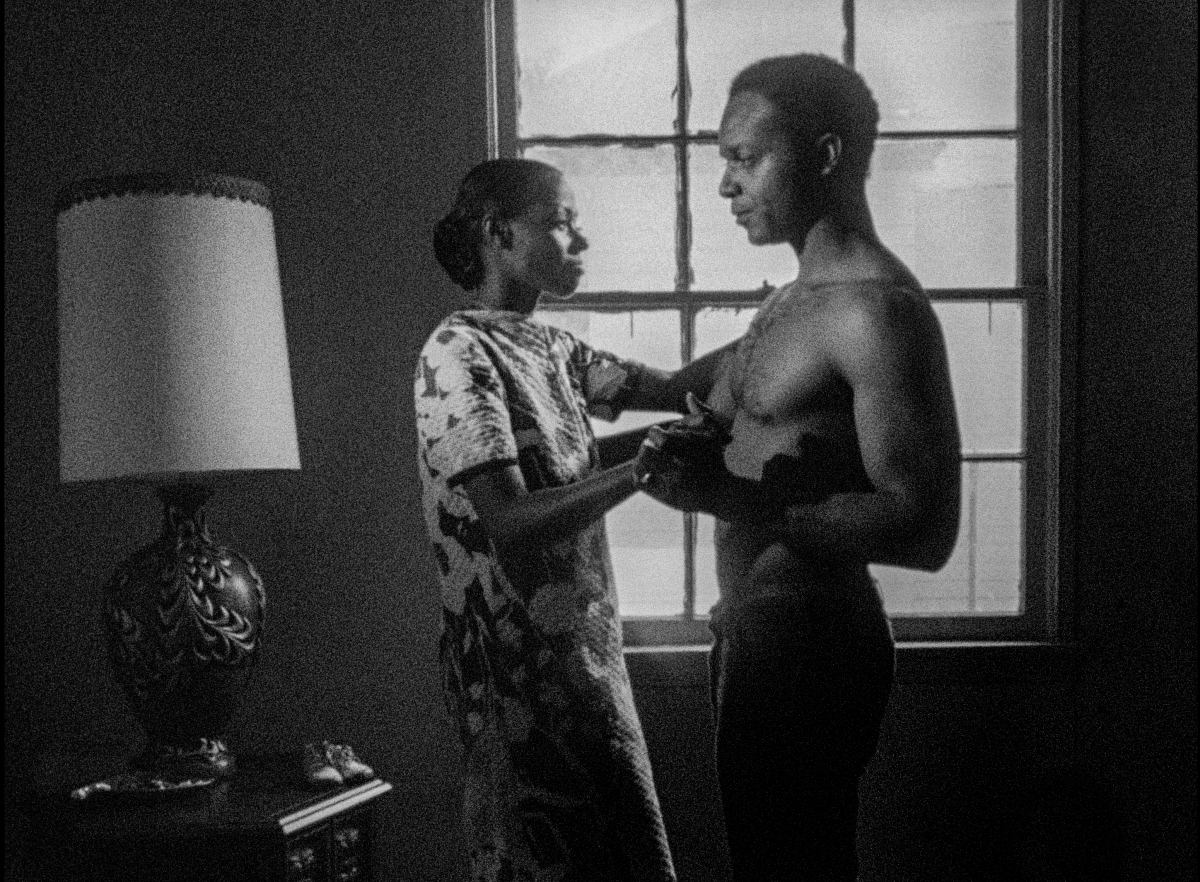
Scott: Stan’s marriage is one of the most compelling aspects of Killer of Sheep for me, in part because Burnett is notably sensitive to his wife’s perspective, even if she’s never given a name. She loves Stan. It seems like everyone else at least respects him, too, as a decent and hard-working family man and a pillar of the neighborhood. (In the interview you mentioned, Burnett said he was keen to make a film that showed respect to the grown-ups who lived in neighborhoods like Watts and had weathered substantial obstacles with their dignity intact.) There are several poignant scenes in the film where you can see her trying to lift his spirits but to no avail. You feel like she’s lost him to his depression, and the two of them dancing to “This Bitter Earth” suggests both his despair and an abiding warmth that still exists between them.
There are so many great moments in Killer of Sheep, but perhaps the shot that sticks with me the most is the way Burnett frames a scene where Stan is spending a little time with his daughter. We’ve just seen a moment at the kitchen table where his wife is trying to cheer him up (“Tomorrow’s Saturday” is followed shortly by “Let’s go to bed”) and gets so frustrated by his lack of response that she clears the dishes in a huff. Then his daughter sidles up to him and he smiles as she snuggles up and massages his shoulders, intuitively responding to his mood. Burnett cuts to the wife witnessing this scene from another room, her lips trembling and her eyes welling with tears, and then we get this wonderful shot from behind her shoulder where the kitchen is framed by the doorway. From that frame within a frame, Burnett has us watching her watching him, and we can really feel the distance between her and her husband. And the daughter keeps looking back at her, too, as if to gain her mom’s approval over how she’s taking care of him. Lovely stuff.
I’m glad you brought back the opening scene, Keith, because I wanted to talk more about the children in the film and how childhood itself is depicted here. A boy being told that sharply that he’s “not a child anymore” really sets the tone, doesn’t it? Because it makes us ask the obvious question: “Why not?” We both have kids, Keith, and even as they’ve grown into teenagers who are mature and can do a lot of things for themselves, I don’t think there would have been a point, at the boy’s age, where we would have thought of them as not being children. They still need our guidance and, what’s more, we don’t want to deny them this carefree stretch of their lives where they don’t have to shoulder as much responsibility. But that’s not the hardscrabble world that the boy occupies, and it’s too dangerous for him to make the mistakes that come with being a kid. There are no guardrails in the Watts of Killer of Sheep.
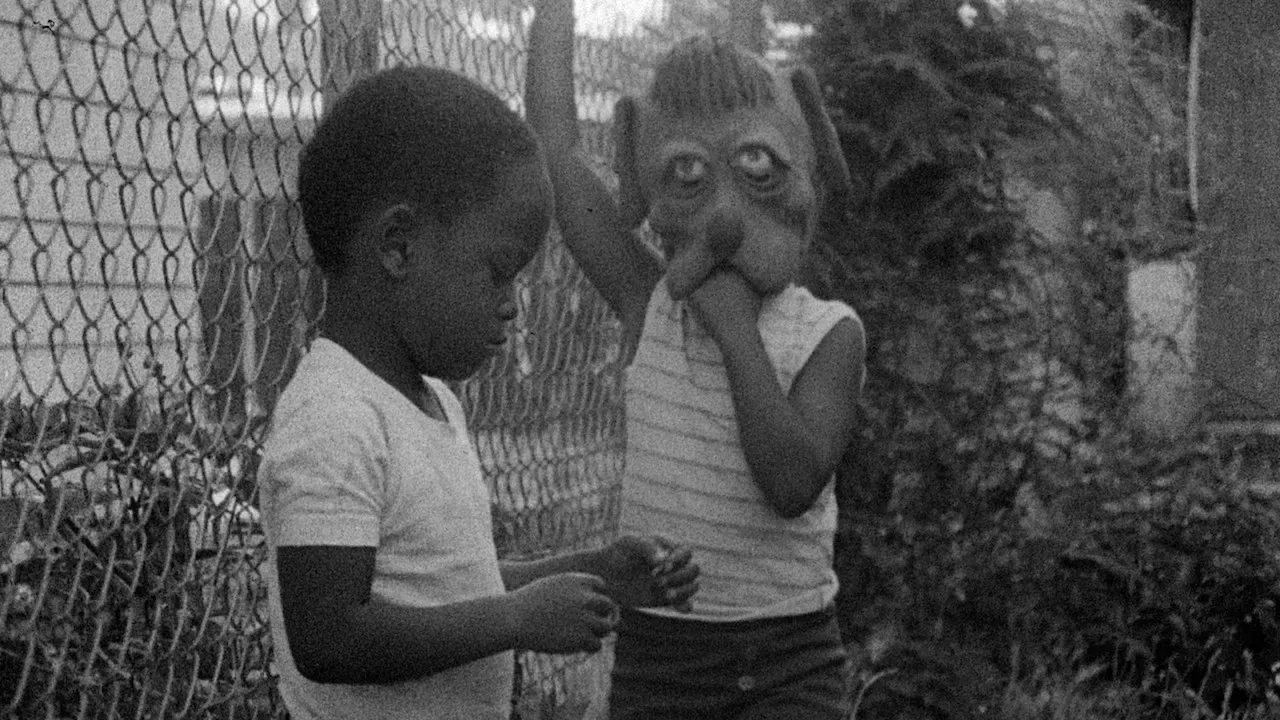
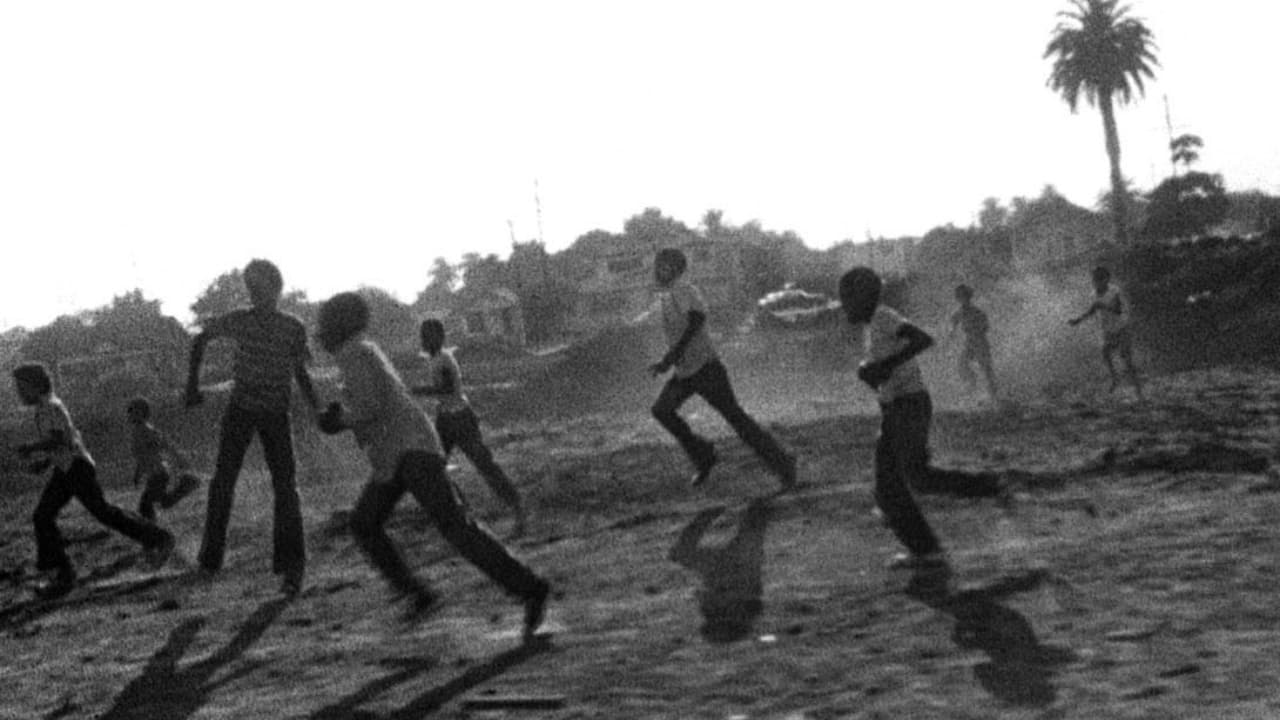
Killer of Sheep exists in this continuum of movies about the preciousness of childhood, preceded by classics like Bicycles Thieves and Los Olvidados and an influence on American independent films like George Washington and Moonlight. On the one hand, you admire the resilience of children who are able to make fun out of limited resources, whether it’s Stan’s daughter playing with a ragged undressed doll, three boys sharing a single bicycle, or roughhousing in train yards or abandoned lots. But there’s so much danger embedded in those unsupervised afternoons with what Principal Skinner would call “free-range children.” How about the sequence where kids on opposing teams hurl rocks at each other while hiding behind wooden shields? Or another where a boy lays down under a railway car and asks everyone else to push it down the track? (Fortunately, trains are heavy.) In the latter scene, Stan Jr. is talking about going back home to fetch his BB gun, though there’s no follow-through on that.
While Burnett treats Stan and his neighborhood with abundant sympathy, I think Killer of Sheep is ultimately a despairing treatment of its characters’ lives, and I’m not convinced that the children, resilience though they may be, are in a position to improve their lot in life. As I wrote earlier in our discussion, there’s no narrative arc to the film, no story (or motor vehicle) we can follow that’s going to carry Stan and those around him from Point A to Point B. We’re just left with images of those sheep being led down the narrow pen of inevitability. Surely Stan’s been on the job long enough to pick up on the metaphor.
No worries, though, Keith, because surely our next Sight and Sound discussion will boost our spirits! Oh wait, sorry. It’s Andrei Tarkovski’s 1979 sci-fi classic Stalker, about a descent into the strange and unimaginable horrors of a post-apocalyptic no-man’s-land.
Previously:
#95 (tie): Get Out
#95 (tie): The General
#95 (tie): Black Girl
#95 (tie): Tropical Malady
#95 (tie): Once Upon a Time in the West
#95 (tie): A Man Escaped
#90 (tie): Yi Yi
#90 (tie): Ugetsu
#90 (tie): The Earrings of Madame De…
#90 (tie): Parasite
#90 (tie): The Leopard
#88 (tie): The Shining
#88 (tie): Chungking Express
#85 (tie): Pierrot le Fou
#85 (tie): Blue Velvet
#85 (tie): The Spirit of the Beehive
#78 (tie): Histoire(s) du Cinéma
#78 (tie): A Matter of Life and Death
#78 (tie): Celine and Julie Go Boating
#78 (tie): Modern Times
#78 (tie): A Brighter Summer Day
#78 (tie): Sunset Boulevard
#78 (tie): Sátántangó
#75 (tie): Imitation of Life
#75 (tie): Spirited Away
#75 (tie): Sansho the Bailiff
#72 (tie): L’Avventura
#72 (tie): My Neighbor Totoro
#72 (tie): Journey to Italy
#67 (tie): Andrei Rublev
#67 (tie): The Gleaners and I
#67 (tie): The Red Shoes
#67 (tie): Metropolis
#67 (tie): La Jetée
#66: Touki Bouki
#63 (tie): The Third Man
#63 (tie): Goodfellas
#63 (tie): Casablanca
#60 (tie): Moonlight
#60 (tie): La Dolce Vita
#60 (tie): Daughters of the Dust
#59: Sans Soleil
#54 (tie): The Apartment
#54 (tie): Battleship Potemkin
#54 (tie): Blade Runner
#54 (tie): Sherlock Jr.
#52 (tie): Contempt
#52 (tie): Ali: Fear Eats the Soul
#50 (tie): The Piano
#50 (tie): The 400 Blows
#48 (tie): Wanda
#48 (tie): Ordet
#45 (tie): North by Northwest
#45 (tie): The Battle of Algiers
#45 (tie): Barry Lyndon

You might also like
#38 (tie): ‘Rear Window’: The Reveal discusses all 100 of Sight & Sound’s Greatest Films of All Time
#38 (tie): ‘Breathless’: The Reveal discusses all 100 of Sight & Sound’s Greatest Films of All Time
Discussion