#38 (tie): ‘Some Like It Hot’: The Reveal discusses all 100 of Sight & Sound’s Greatest Films of All Time
Billy Wilder's crossdressing comedy continues to delight audiences of all kinds, and remains a model of Hollywood craft.

On December 1st, 2022, Sight & Sound magazine published “The Greatest Films of All Time,” a poll that’s been updated every 10 years since Bicycle Thieves topped the list in 1952. It is the closest thing movies have to a canon, with each edition reflecting the evolving taste of critics and changes in the culture at large. It’s also a nice checklist of essential cinema. Over the course of many weeks, months, and (likely) years, we’re running through the ranked list in reverse order and digging into the films as deep as we can. We hope you will take this journey with us.
Some Like It Hot (1959)
Dir. Billy Wilder
Ranking: #38 (tie)
Previous ranking: #42 (2012), #33 (2002), #29 (1992), #41 (1982).
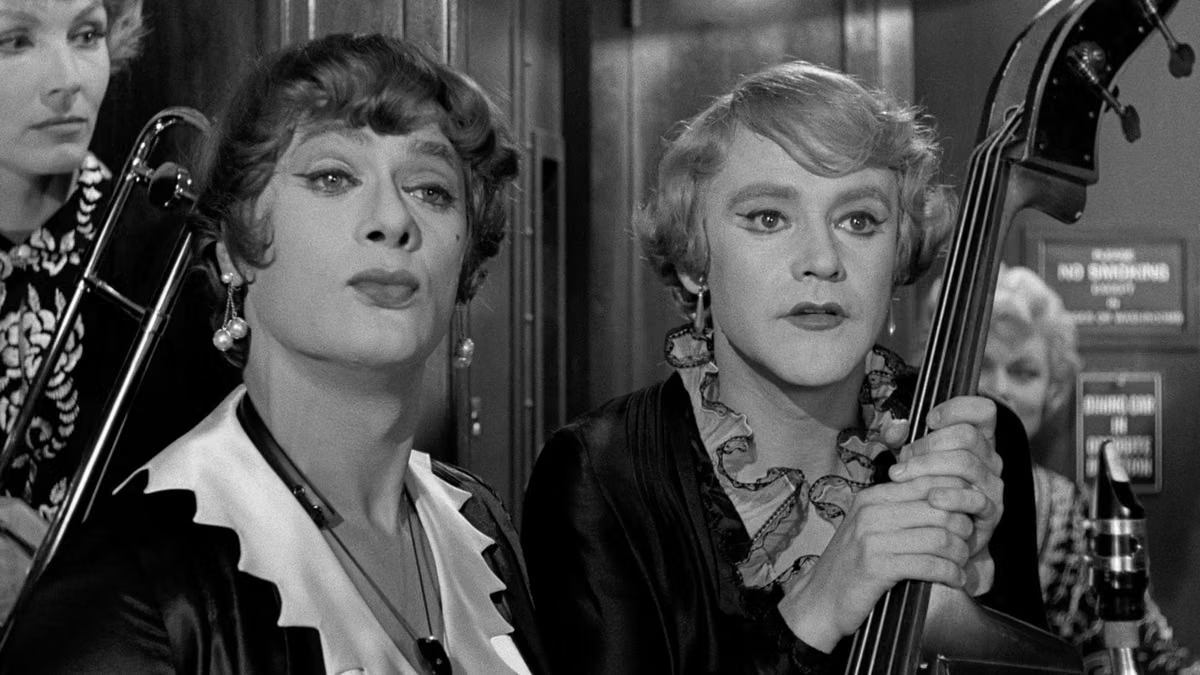
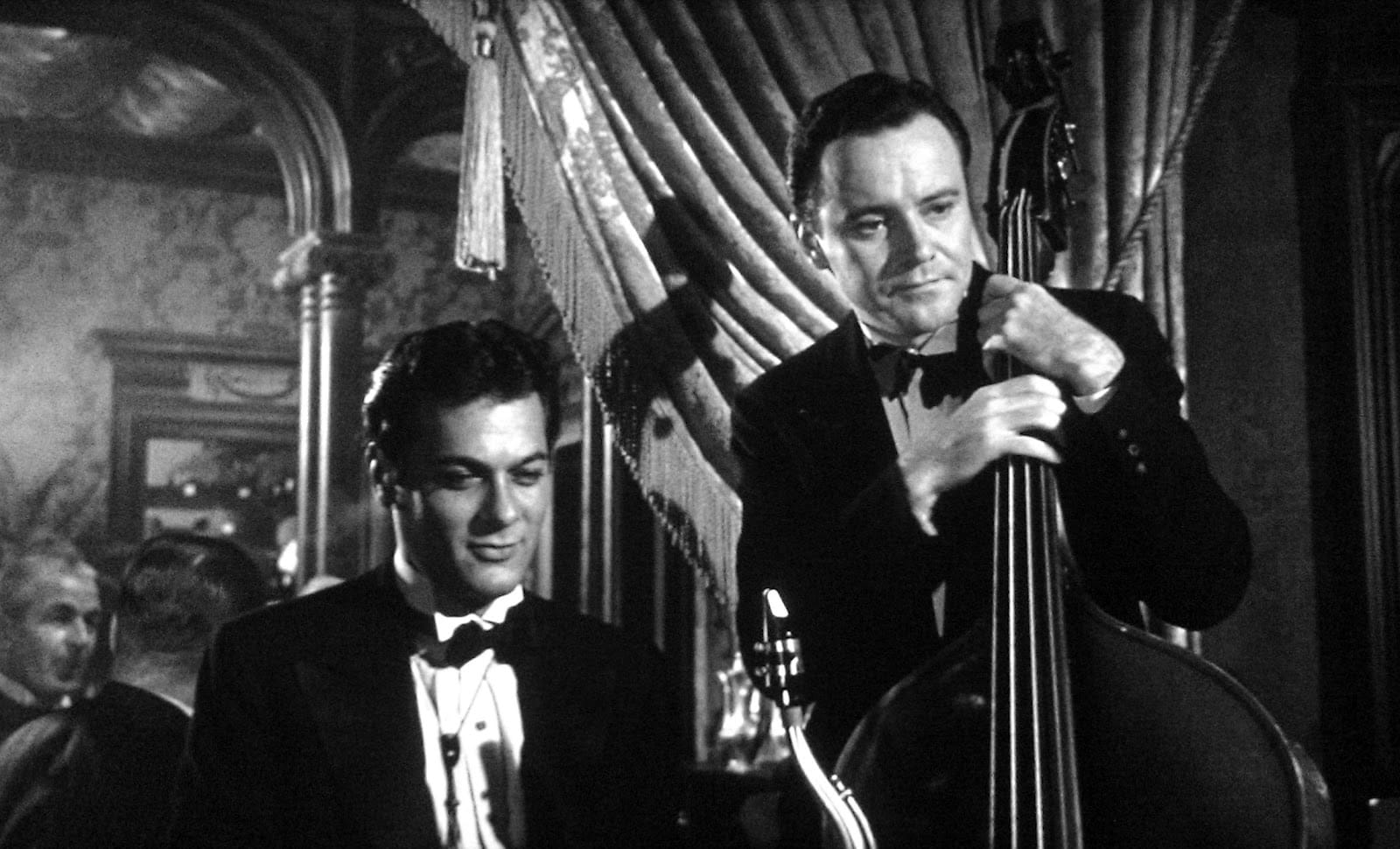
Premise: Chicago, 1929: After jazz musicians Joe (Tony Curtis) and Jerry (Jack Lemmon) witness the St. Valentine’s Day Massacre, they decide to flee town as members of the all-female band Sweet Sue and Her Society Syncopators. To this end, they dress in drag and become, respectively, Josephine and Daphne. While traveling to Florida via train, they befriend singer/ukulele player Sugar Kane (Marilyn Monroe). But while it at first seems as if Joe and Jerry will compete for her affections, the situation grows more complicated upon arrival.
Keith: Where to start with this feast of a film? For some reason watching it again, for the umpteenth time, I found myself thinking a lot about the glasses worn by Mister Bienstock (Dave Barry), the manager of Sweet Sue and Her Society Syncopators. They serve the function of a funny prop on his face, accentuating the character’s eggheadish appearance. And for a lot of comedies, that would have been enough. But the script, by Billy Wilder and I.A.L. Diamond, is the sort in which nothing serves just one purpose, not even a pair of glasses. First they go missing. Then they reappear when we see that Joe has grabbed them as part of a scheme to seduce Sugar, who’s confided in him (or rather, in “Josephine”) that she has a thing for men in glasses. When they turn up again on his face in his guise as the heir to the Shell Oil fortune, they’re funny in a different way, becoming part of his impression of wealth and privilege that’s, frankly, pretty thin, unless you’re a too-trusting singer/ukulele player who, despite her past heartbreak, still believes her dreams might come true. (It’s also a pretty funny send-up of Cary Grant, an actor with whom Wilder always wanted to work but who would never commit to one of his films.) And this lends those glasses another layer, giving them a tragicomic quality. Here’s the man of her dreams at last, but it’s just another illusion.
Enjoying The Reveal? Now's a great time to become a paid subscriber. You'll get access to everything we publish—from articles to audio commentaries—and help support independent film criticism.
But illusions aren’t necessarily bad things in Some Like It Hot, are they? When Joe and Jerry put on dresses, they experience a near-instantaneous spike in empathy. Jerry’s baffled that women can walk in heels and not suffer from draftiness. By the film’s end, playing the part of a woman seems to have unlocked something in him. What it is isn’t exactly clear, but he seems genuinely enraptured the morning after accepting the proposal of his rich admirer Osgood Fielding III (Joe E. Brown). His later explanation that he plans to have the wedding annulled and live off this settlement money doesn’t sound that convincing. Joe, on the other hand, begins by attempting to trick Sugar into falling for him then genuinely falls for her in a way that makes him realize how crappy he’s been toward the other women in his life. (And because Wilder and Diamond love complications, it’s Curtis who seems genuinely feminine in drag while Lemmon, whose character seems to be happy to settle into the feminine role, always looks like Jack Lemmon wearing a dress.)
Scott, this Top 100 list is, if I’ve done my math correctly, 3% Billy Wilder movies, with Some Like It Hot joining The Apartment (#54) and Sunset Boulevard (#78). I’ve always thought of Some Like It Hot and The Apartment as kind of companion pieces. That makes sense in part because Wilder partnered with Diamond on both. (He worked with his earlier partner, Charles Brackett, and the otherwise obscure D.W. Marshman Jr on Sunset Boulevard and co-wrote Double Indemnity, a James M. Cain adaptation, with Raymond Chandler.) Both are extremely funny, of course, and models of airtight screenwriting. But I think they’re comedies that unfold against dark backgrounds. The possibility of suicide hangs over The Apartment up to its final seconds. Here Joe and Jerry are running for their lives—a threat made all the more real by the fairly graphic staging of the gangland massacre—but I think it’s Sugar, and Monroe’s performance, that gives the movie a depth it wouldn’t otherwise have. She’s a fragile beauty who seems one more heartbreak away from falling into despair. Over the course of the film, Joe comes to realize what it means to be responsible for someone’s happiness other than his own, a huge leap that Some Like It Hot makes feel both real and permanent.
Or maybe it’s just really funny. We could spend the rest of this conversation just trading favorite lines, couldn’t we? Scott, why do you think this film works so well? And what do you make of the three central performances, which are all quite different yet gel together brilliantly?
Scott: I feel like I need to start by noting that we’re only looking at two other comedies, City Lights and Playtime, ahead of Some Like It Hot on the Sight and Sound list, and those two films seem to me like separate species, both from comedy auteurs who direct and star, and both not as overtly silly and universal in their appeals. (As a quick demonstration of my point, I’d pause to consider whether I’d be pushing it to take my teenage kids to see the Chaplin or Tati, but I’d absolutely drag them out to see this film, which has absolutely no barriers to entry.) I’m also heartened by the support Wilder has gotten from S&S poll contributors in general, in part because it reveals an appreciation for mainstream craft and in part because I’m always happy to get some relief from titles with a high fiber content. Has anyone in human history ever slogged their way through Some Like It Hot?
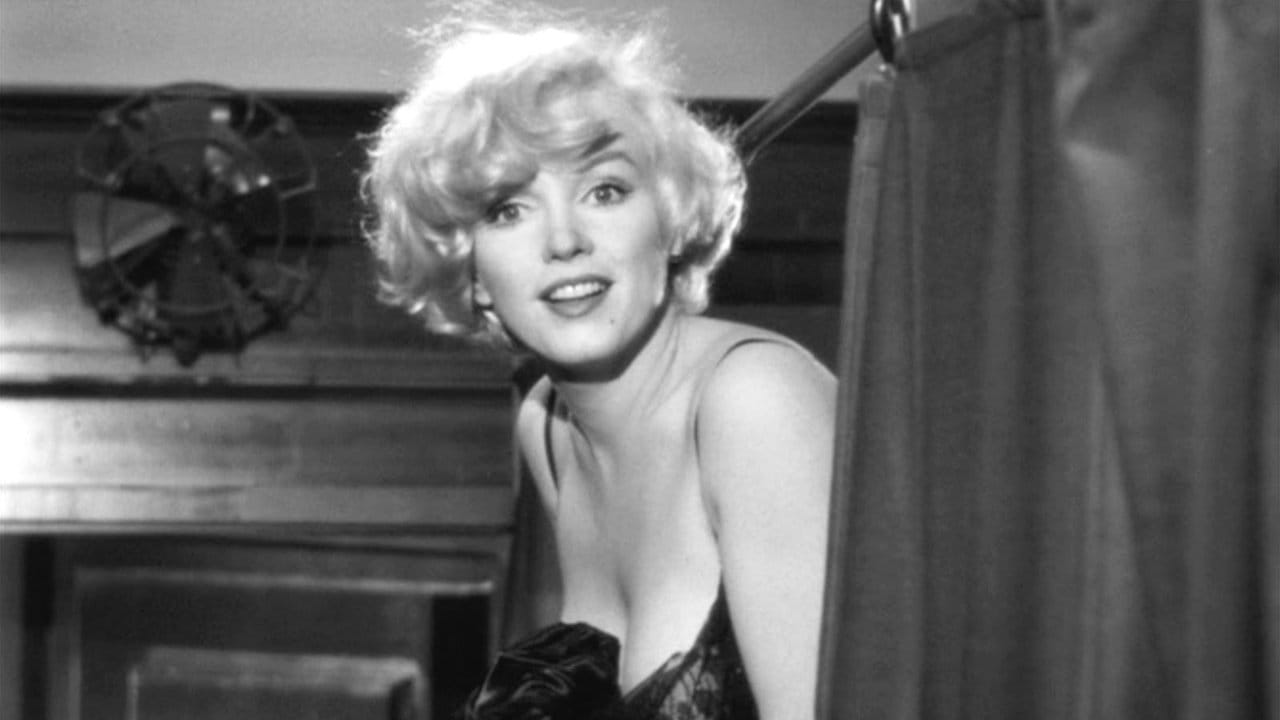
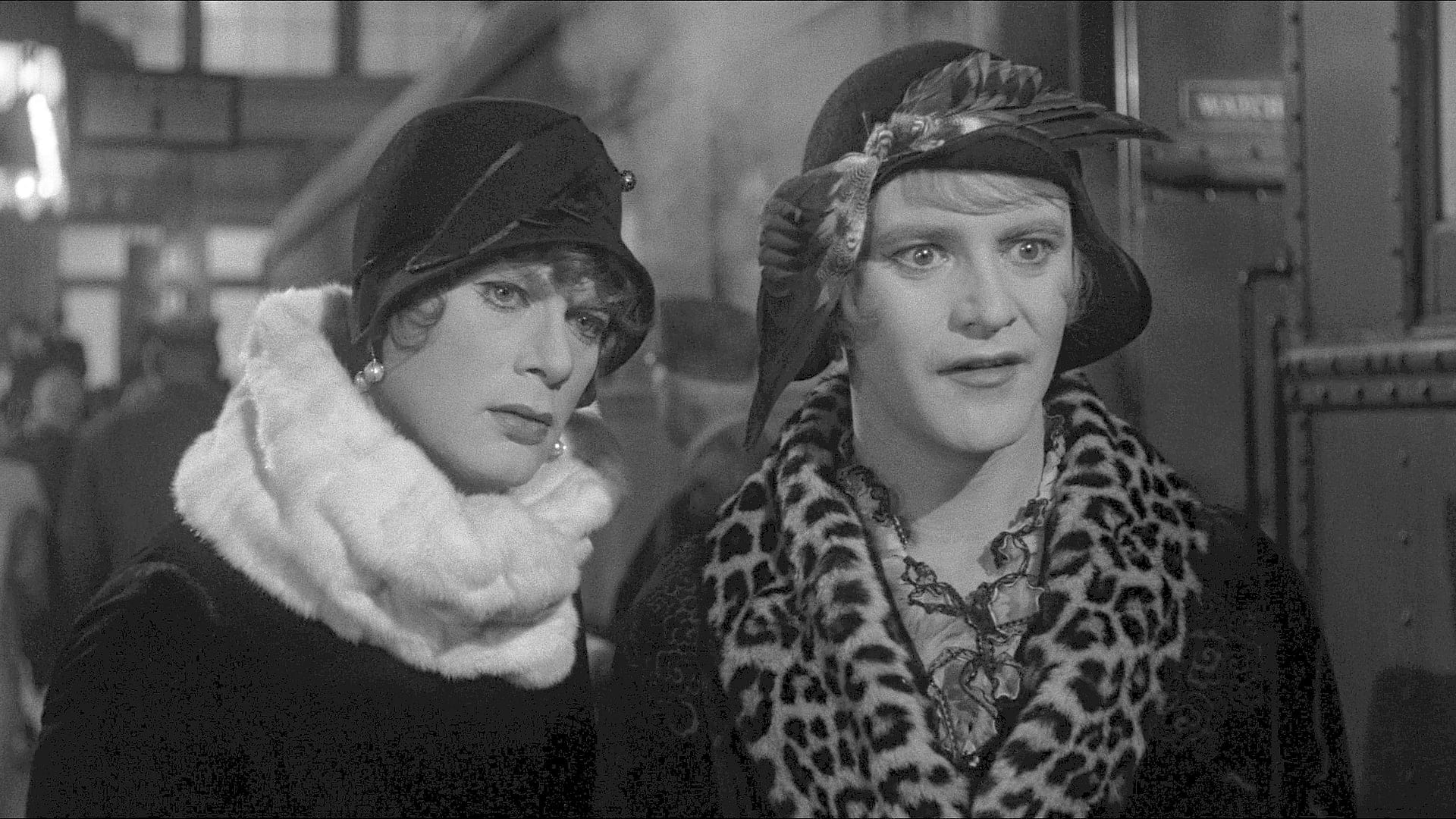
I’m glad you mentioned right off the top how much Joe and Jerry—and, by implication, the film itself—immediately sympathize with the experience of being a woman. Empathy is when you imagine walking in someone else’s shoes and it happens literally when the two men, as Josephine and Daphne, try rushing to the train in heels to fill out the band. And the relationship both of them have with Sugar, the hubba-hubba object of their affection (and, in Marilyn Monroe, a good portion of the audience’s, too), serves to deepen their understanding of women as, well, more than just objects. Part of the joy of Some Like It Hot, beyond the one-liners and comic performances and Swiss-watch plot mechanics, is its generosity of spirit. It makes you laugh, yes, but it also makes you believe in a broad set of possibilities.
The thing I love most about Some Like It Hot is how much Joe and Jerry (and the actors who play them) commit to the bit, even though the situation demands that they be as inconspicuous as possible. If you’re on the run from the mob and you’re trying to pass for a woman for the first time (and none-too-convincingly), then your instinct should be to keep a low profile. There’s some of that in those early moments in the train car, where Joe makes sure that Jerry stays in his bunk because he’s overexcited about being around all these beautiful women and he needs to bottle it up. But circumstances make it impossible—and even if they didn’t, the two men are temperamentally disinclined to keep it on the down low. Once installed at the hotel in Florida, Joe is hustling between his Josephine and Shell Oil Jr. get-ups to get closer to Sugar and Jerry is off entertaining a legitimate millionaire in Osgood, who’s too smitten to notice anything’s amiss. Granted, you cannot have a comedy without Joe and Jerry getting into shenanigans of some kind, but they make more trouble for themselves, not the other way around.
Now, Keith, I hate to be the old fuddy-duddy who revisits a comedy like Some Like It Hot and laments that “they don’t make ‘em like they used to,” but there’s so much to marvel over here about the care and wit put into screenplay and direction, apart from a zingers. The opening shootout in Chicago between the police and the gangsters blazing down the street in a hearse mimics a sequence we might see in a film like Scarface or Little Caesar, but to reveal the Prohibition angle by having the shot-up coffin leak alcohol from the bottles inside is so elegant. Or take the shot of Osgood and “Daphne” doing the tango, which is funny enough on its own but much funnier with each of them holding the same flower in their mouth as they dance toward the camera. For all the attention Wilder (and company) tend to get for their screenplays, it’s always worth recognizing how much he thought he puts into visual gags or touches that are enhanced by cinema as a medium.
I also want to second your praise for Sugar and Monroe’s performance. If we’re talking about Wilder’s cinematic flair, then you have to appreciate how well he exploits Monroe’s obvious appeals as a lust object, like when she performs her breathy rendition of “I Wanna be Loved by You” as part of the stage show. But I like how quickly the film picks at Sugar’s vulnerabilities with the incident on the train where she slips into the bathroom for a drink and complains about her bad luck with men. Jerry is sufficiently inspired to cover for Sugar when her flack slips from underneath her dress, and even though Joe leverages her thing for sax players to his advantage, he can’t bring himself to hurt her in the end. We know so much now about the off-screen anguish that Monroe herself felt throughout her time in the spotlight, and that creates a meta-narrative in Some Like It Hot that’s touchingly rendered by Wilder and through Monroe’s performance.
Keith, I’m sure you have thoughts on Wilder’s understated and underrated artistry. But I’m ready to open up the floor, too, on the lines and moments that really make you laugh here.
Keith: How much space do we have? You know when I think the movie really kicks into high gear? When Jerry’s intimate hang-out with Sugar the first night on the train spins out of control to become a party involving the whole band. It’s a bit like the stateroom scene from A Night at the Opera, but the underlying tension comes from the way Jerry’s desire gets transformed into panic as the situation transforms him from a would-be seducer to a fraud who comes this close to being exposed (with a dash of sexual humiliation for spice).
Jerry really goes on quite a journey. It might be too tempting to look at the film through the lens of our contemporary understanding of sexual identity, but Some Like It Hot kind of invites it, doesn’t it? Joe and Jerry spend the early stages of their time undercover realizing all the downsides of living as a woman, from impractical footwear to sexual harassment, but I’m always amused by the way Jerry spends the latter stages pining for the upsides. Another favorite moment: “Who’s the lucky girl?,” Joe asks after Jerry says he’s engaged, to which Jerry replies, “I am.” It’s not entirely clear what has changed his mind over the course of his night with Osgood, but at the very least, he yearns for the comfort of being taken care of as a trophy wife. (“Why would a guy want to marry a guy?” “Security!”) Yet the way he repeatedly says “I’m a boy. I’m a boy” sounds like his disappointment might go even further.
I also love every moment between Sugar and “Shell Oil Jr.” They’re both trying to put on airs of sophistication without really knowing what they’re doing. It’s funny, but also pretty touching. These are two people who’d be perfect for one another if they both dropped their masks but they feel they have to be someone better than who they already are. And for all the fun Some Like It Hot has with disguises and adopted personae, it’s also deeply invested in who these characters are once those fall away.
I now realize I didn’t address your first question, but I think you kind of covered it. Maybe it’s just that the dazzling brilliance of Wilder’s best scripts get in the way of appreciating his visual artistry. It’s there, though. Just look at the last scene: Would the dialogue and performances work nearly as well without the framing or the movement as the foursome heads toward an unknown destination?
Scott, before we close this out, I’m curious about where you see Some Like It Hot’s influence? Tootsie is one obvious example, but beyond the crossdressing, I’m just as interested in if you see its DNA in the rom-coms that would follow? Sitcoms? What is its legacy?
Scott: Finally you’ve given me the space to talk about Big Momma’s House! But really, there are so many movies (e.g. Mrs. Doubtfire) and TV shows (e.g. Bosom Buddies) that seized on the crossdressing comedy idea as a premise, not to mention many others where crossdressing is busted out for a sequence or a sketch. (I imagine the Kids in the Hall guys were familiar with the film, for example.) As far as its DNA being in other comedies, I’m drawing a bit of a blank because Some Like It Hot would have to be a broad influence in terms of superior craft, both in the cascading silliness of the writing and the brilliance of Lemmon and Curtis’ wholly committed performances. And, to be honest, the writing feels like a lost art in Hollywood comedies, which tend to write or improvise jokes around a premise rather than pay off a more sophisticated structure.
It would be enough, for example, for Wilder and Diamond to squeeze all the juice that could out of the idea of two musicians trying to pass themselves off as women in a Miami hotel band. But Joe and Jerry are still young, skirt-chasing men who’ve shown a willingness to gamble, so they wind up adding to their high degree of difficulty by trying to pull off a second swindle on top of the first. So we get “Shell Oil, Jr.,” Joe’s ridiculous millionaire petroleum heir, conceived as the “gentle,” bespectacled man of Sugar’s dreams. And because there’s still a powerful bro code between the two men, Joe convinces Jerry to go along with this elaborate deception by drawing Osgood away from his yacht and giving Joe the opportunity to have a romantic evening with Sugar. Wilder and Diamond have now introduced another layer to the cake: Joe having to crossdress as a woman saxophonist and a Cary Grant type without being terribly persuasive in either capacity. Then Spat and a bunch of other mobsters descend on the hotel for the “Friends of the Italian Opera Society” get-together, and the shenanigans are kicked up yet another notch.
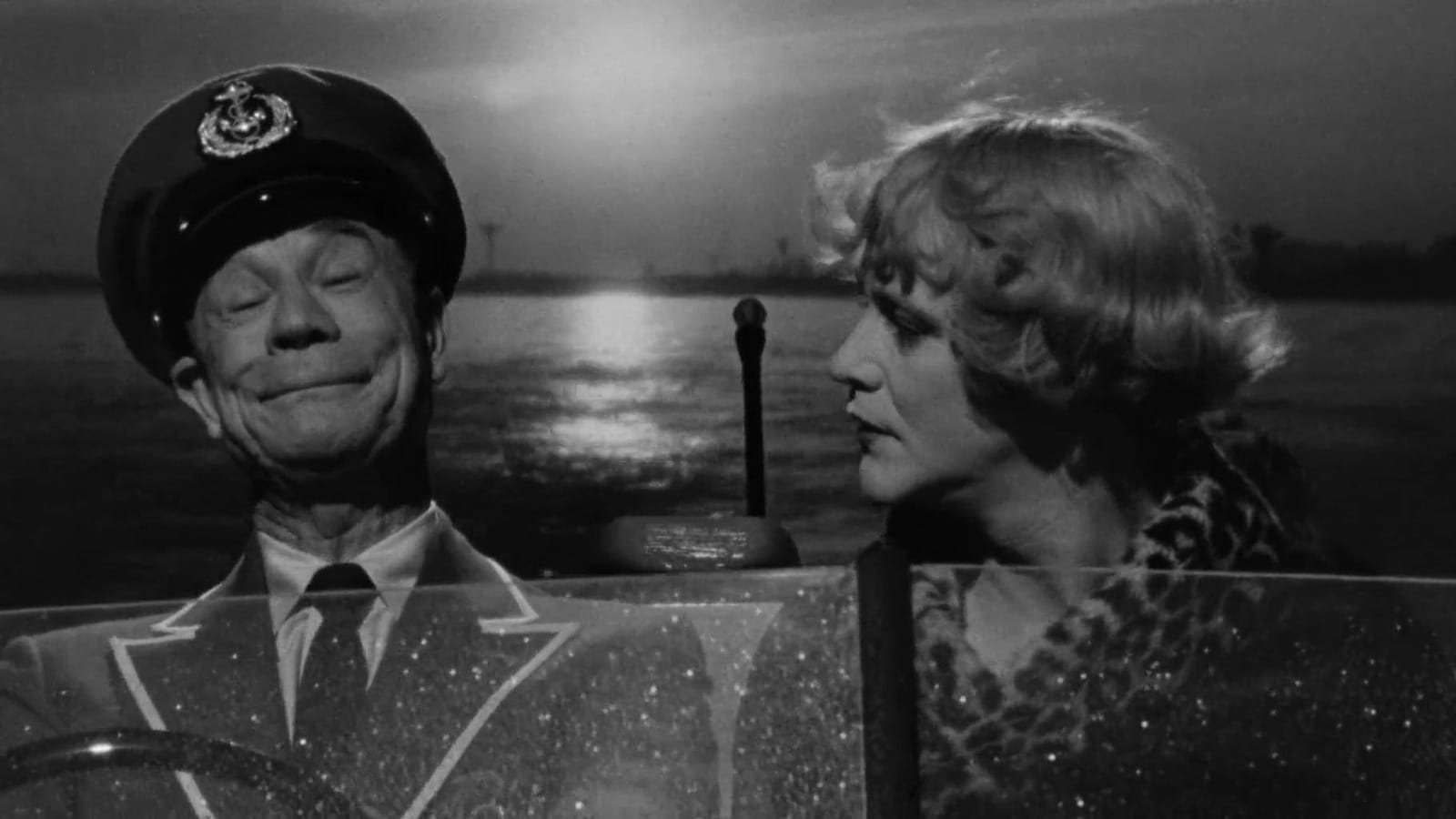
There are delightful gags all over Some Like It Hot—and I’ll share some of my favorites in a second, of course—but I think a big reason the film landed so high on the Sight and Sound list is an appreciation of its comic architecture. There are plenty of comedies that fire off great jokes, but I never considered putting Duck Soup, my all-time favorite comedy, on my own S&S ballot because it doesn’t have anything like the cinematic artistry that Wilder brings to the writing and direction here. There are so many payoffs here that come from the construction and rhythm of the film, and how elegantly it unwinds its way to the greatest topper in screen history. When Wilder uses a swish-pan and cut to transition from “Shell Jr.”’s evening with Sugar to “Daphne” doing the tango with Osgood, that’s brilliant filmmaking paying off brilliant writing.
As for favorite moments, I probably laugh hardest this time at Curtis trying to pull off his rich-guy persona on the yacht, from his improvised nautical terminology to his assumption about what sorts of sports trophies a guy like Osgood might have received over the years. (“Water polo? Isn’t that terribly dangerous?” “I’ll say! I had two ponies drown under me.”) I also love how Jerry’s date with Osgood, which he had dreaded, turns out to be so enchanting that he forgot who he was and accepted a marriage proposal. (“He wants to go to the Riviera, but I kind of lean towards Niagara Falls.”) While Some Like It Hot isn’t actively trying to comment on gender or sexuality fluidity, it has an “anything goes” quality that’s so generous and refreshing and timeless. Early in the film, Jerry has to keep repeating “I’m a girl, I’m a girl” to remember he’s supposed to be “Daphne.” Later, he has to say “I’m a boy, I’m a boy” to remember he’s actually Jerry. The line between girl and boy is not so firmly drawn in this movie, and it feels more liberated because of it.
Good news, Keith (and readers), because that liberated feeling doesn’t stop after Some Like It Hot. Next up in our Sight and Sound project is the Jean-Luc Godard classic that changed cinema forever, 1960’s Breathless.
Previously:
#95 (tie): Get Out
#95 (tie): The General
#95 (tie): Black Girl
#95 (tie): Tropical Malady
#95 (tie): Once Upon a Time in the West
#95 (tie): A Man Escaped
#90 (tie): Yi Yi
#90 (tie): Ugetsu
#90 (tie): The Earrings of Madame De…
#90 (tie): Parasite
#90 (tie): The Leopard
#88 (tie): The Shining
#88 (tie): Chungking Express
#85 (tie): Pierrot le Fou
#85 (tie): Blue Velvet
#85 (tie): The Spirit of the Beehive
#78 (tie): Histoire(s) du Cinéma
#78 (tie): A Matter of Life and Death
#78 (tie): Celine and Julie Go Boating
#78 (tie): Modern Times
#78 (tie): A Brighter Summer Day
#78 (tie): Sunset Boulevard
#78 (tie): Sátántangó
#75 (tie): Imitation of Life
#75 (tie): Spirited Away
#75 (tie): Sansho the Bailiff
#72 (tie): L’Avventura
#72 (tie): My Neighbor Totoro
#72 (tie): Journey to Italy
#67 (tie): Andrei Rublev
#67 (tie): The Gleaners and I
#67 (tie): The Red Shoes
#67 (tie): Metropolis
#67 (tie): La Jetée
#66: Touki Bouki
#63 (tie): The Third Man
#63 (tie): Goodfellas
#63 (tie): Casablanca
#60 (tie): Moonlight
#60 (tie): La Dolce Vita
#60 (tie): Daughters of the Dust
#59: Sans Soleil
#54 (tie): The Apartment
#54 (tie): Battleship Potemkin
#54 (tie): Blade Runner
#54 (tie): Sherlock Jr.
#52 (tie): Contempt
#52 (tie): Ali: Fear Eats the Soul
#50 (tie): The Piano
#50 (tie): The 400 Blows
#48 (tie): Wanda
#48 (tie): Ordet
#45 (tie): North by Northwest
#45 (tie): The Battle of Algiers
#45 (tie): Barry Lyndon
#43 (tie): Killer of Sheep
#43 (tie): Stalker
#41 (tie): Bicycle Thieves
#41 (tie): Rashomon

Discussion